Pest Control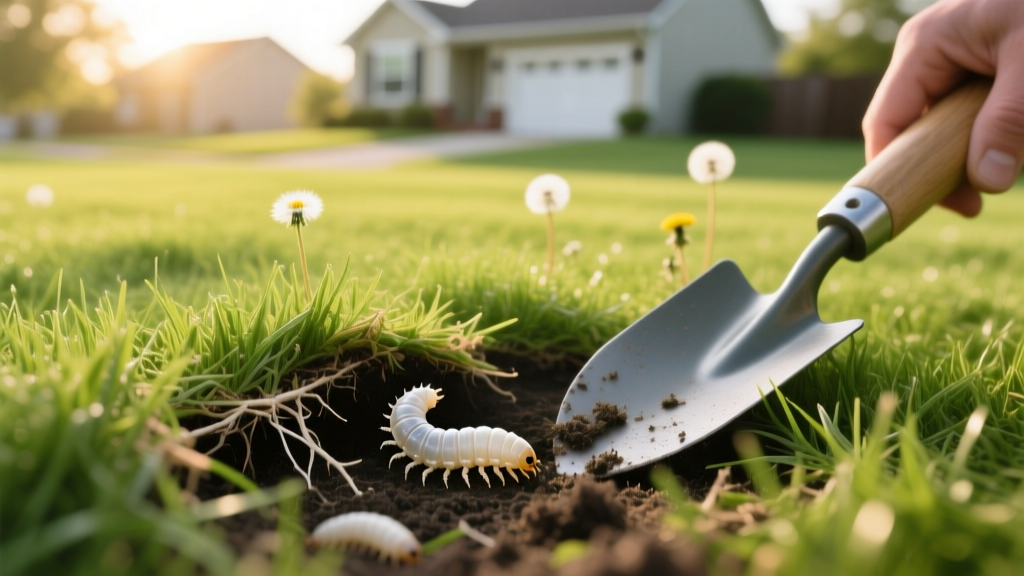
5 Common Lawn Grub Control Mistakes and How to Fix Them
Lisa ThompsonPublished
The Hidden Cost of Grub Damage
White grubs—the larval stage of Japanese beetles, June bugs, and European chafers—are among the most destructive pests in North American lawns. Feeding aggressively on grassroots, these C-shaped, milky-white larvae can turn a lush, green yard into a patchwork of dead, easily peeled-back turf. However, in the rush to save their lawns, many homeowners fall victim to preventable errors that waste money, harm the environment, and ultimately fail to solve the problem. According to Penn State Extension, integrated pest management (IPM) relies on precise timing and accurate identification rather than blanket chemical applications. Below, we explore the five most common lawn grub control mistakes and provide actionable fixes to protect your turf.
Mistake #1: Treating at the Wrong Time
The most frequent and costly mistake homeowners make is applying grub control products at the wrong time of year. Grub life cycles are highly predictable, and applying the wrong product in the wrong season guarantees failure.
The Fix: Match the Product to the Season
Grub control products are divided into two categories: preventatives and curatives.
- Preventatives (May to mid-July): Products containing Chlorantraniliprole (e.g., Scotts GrubEx1) or Imidacloprid (e.g., Bayer Advanced Season-Long Grub Control) must be applied before the eggs hatch. These chemicals take weeks to break down into the soil and are ingested by the newly hatched, tiny grubs in late summer. Cost: roughly $25 for 5,000 sq. ft.
- Curatives (Late August to October): If you missed the preventative window and notice active damage in the fall, you need a fast-acting curative like Trichlorfon (e.g., Bayer Advanced 24 Hour Grub Killer). This chemical kills actively feeding older grubs within 24 hours but breaks down quickly, offering no long-term residual control. Cost: roughly $20 for 5,000 sq. ft.
Mistake #2: Skipping the 'Tug Test' and Misdiagnosing
Brown patches in late summer are not always caused by grubs. Drought stress, fungal diseases like dollar spot, or even dog urine can mimic grub damage. Broadcasting insecticides over a lawn suffering from a fungal infection wastes money and introduces unnecessary chemicals into the ecosystem.
The Fix: Verify the Threshold
Before buying any product, perform the Tug Test. Grab a handful of brown turf and pull. If the grass peels back easily like a loose carpet, grubs have severed the roots. Next, use a flat-edged spade to cut a 1-foot by 1-foot square of sod, about 3 inches deep, and fold it back. Count the grubs.
'Treating a lawn without first verifying the presence of an economic threshold of grubs (typically 5 to 10 per square foot) is a waste of resources and an unnecessary environmental risk.' — University of Kentucky Entomology
If you find fewer than 5 grubs per square foot, your lawn can recover with proper watering and fertilization. If you find 10 or more, treatment is justified.
Mistake #3: Failing to Water In Granular Products
Granular insecticides are highly effective, but they are completely useless if they remain sitting on the thatch layer. UV light from the sun will rapidly degrade the active ingredients, and the grubs—which live 2 to 4 inches beneath the soil surface—will never come into contact with the poison.
The Fix: The 0.5-Inch Irrigation Rule
Immediately after applying a granular preventative or curative, you must water the lawn. Use a rain gauge or an empty tuna can to ensure you deliver exactly 0.25 to 0.5 inches of water. This washes the chemical off the grass blades, through the thatch, and into the root zone where the grubs feed. If you apply a product and a heavy thunderstorm washes it away before it binds to the soil, you may need to reapply.
Mistake #4: Ignoring Biological and Organic Controls
Many homeowners default to broad-spectrum synthetic chemicals, which can harm beneficial earthworms, ground-nesting bees, and local watersheds. Relying solely on harsh chemicals disrupts the natural soil food web and can lead to pest resistance over time.
The Fix: Deploy Beneficial Nematodes and Milky Spore
For an organic, highly targeted approach, utilize biological warfare:
- Beneficial Nematodes (Heterorhabditis bacteriophora): These microscopic worms actively hunt and infect grubs, releasing bacteria that kill the host within 48 hours. Apply them via a hose-end sprayer in the late afternoon when soil temperatures are between 60°F and 85°F. You must keep the soil consistently moist for 10 days post-application. Cost: ~$35 for 10 million nematodes (covers ~3,000 sq. ft.).
- Milky Spore (Paenibacillus popilliae): This naturally occurring bacterium specifically targets Japanese beetle grubs. It takes 1 to 3 years to establish in the soil, but once established, it can provide 10 to 15 years of protection. Apply using a drop spreader or grid-injection method in early fall.
Mistake #5: Neglecting Cultural Lawn Practices
Pests are opportunistic. A lawn with a massive thatch layer, shallow roots, and compacted soil is a beacon for egg-laying adult beetles. Female beetles prefer to lay their eggs in thin, stressed, and overly irrigated lawns.
The Fix: Build a Resilient Turf
Adopt IPM cultural practices to make your lawn naturally hostile to grubs:
- Core Aeration: Perform core aeration in the fall to relieve soil compaction and break up the thatch layer where grubs hide and feed.
- Deep, Infrequent Watering: Water your lawn deeply (1 inch per week) rather than giving it a light sprinkle every day. Deep watering encourages grassroots to grow 6 inches down, out of the reach of shallow-feeding young grubs.
- Mow High: Keep your mower blade set to 3.5 or 4 inches. Taller grass shades the soil, making it less attractive to egg-laying beetles who prefer warm, exposed dirt.
Grub Control Product Comparison Chart
To help you choose the right solution, refer to the table below comparing the most common active ingredients used in modern grub control.
| Active Ingredient | Product Type | Best Application Timing | Target Stage | Approx. Cost (per 5k sq ft) |
|---|---|---|---|---|
| Chlorantraniliprole | Preventative | May to mid-June | Early instar (newly hatched) | $25.00 |
| Imidacloprid | Preventative | June to mid-July | Early instar (newly hatched) | $22.00 |
| Trichlorfon | Curative | August to October | Late instar (actively feeding) | $20.00 |
| Hb Nematodes | Biological | August to September | All active larval stages | $55.00 |
Conclusion: Work Smarter, Not Harder
Effective grub control is not about applying the strongest chemical you can find; it is about understanding the pest's life cycle and leveraging the right tool at the right time. By verifying the grub threshold, timing your preventatives correctly, watering them in properly, and integrating biological controls, you can maintain a pristine lawn while adhering to the environmental best practices recommended by the EPA's Safe Pest Control guidelines. Stop guessing, start testing, and reclaim your turf from destructive white grubs.