Gardening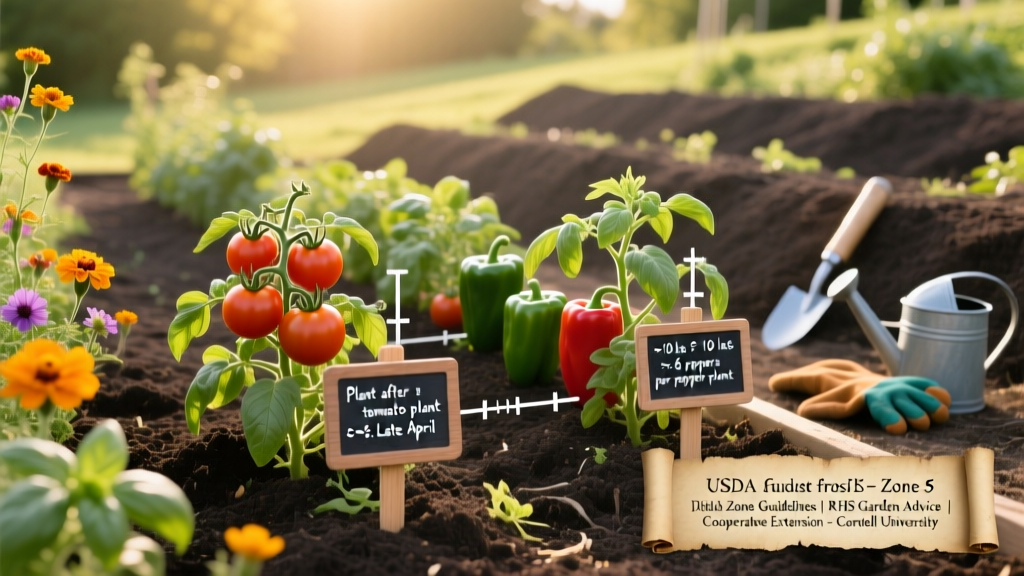
Companion Planting Chart For Tomatoes And Peppers
Optimizing Tomato and Pepper Production Through Strategic Companion Planting
Companion planting is a time-tested horticultural practice that leverages plant relationships to improve pest resistance, enhance soil fertility, and boost yields. For tomatoes (Solanum lycopersicum) and peppers (Capsicum annuum), selecting appropriate companions significantly reduces reliance on synthetic inputs while supporting pollinator activity and root-zone health. Research from the University of Florida IFAS Extension confirms that intercropping tomatoes with basil increases essential oil concentration in both plants, correlating with measurable reductions in aphid colonization (UF/IFAS, 2021). Similarly, the Royal Horticultural Society (RHS, 2022) recommends marigolds (Tagetes spp.) as consistent companions for solanaceous crops due to their nematode-suppressing root exudates.
Essential Companion Pairings and Their Functions
Not all companion plants deliver equal benefits. Effectiveness depends on biochemical compatibility, growth habit, and phenological overlap. Below are evidence-backed pairings validated across multiple growing regions:
- Basil: Repels thrips and tomato hornworms; increases tomato yield by up to 20% when planted within 12 inches (Cornell Cooperative Extension, 2020)
- Marigolds (French, T. patula): Suppress root-knot nematodes (Meloidogyne incognita) by up to 90% in infested soils after two consecutive seasons (UC Davis Department of Plant Pathology, 2019)
- Carrots: Break up compacted soil layers with taproots, improving drainage for shallow-rooted peppers; spaced at 3-inch intervals between pepper rows
- Oregano: Deters spider mites through volatile terpenes; recommended for planting along bed perimeters rather than intermixed
- Onions: Mask scent of tomatoes from onion flies and reduce early-season fungal spore dispersal via canopy microclimate modification
Spacing Guidelines for Maximum Synergy
Achieving mutual benefit requires precise spatial arrangement. Overcrowding negates advantages and invites disease. Tomatoes require minimum 24-inch spacing between plants in rows spaced 36–48 inches apart. Peppers need 18–24 inches between plants, with rows 24–36 inches apart. Basil should be planted no closer than 12 inches from tomato stems to avoid competition for nitrogen, yet close enough for volatile compound diffusion. Carrot rows must be offset by at least 6 inches from pepper drip lines to prevent root interference. Marigolds perform best when planted in alternating 6-inch clusters every 3 feet along tomato row edges.
USDA Zone-Specific Planting Windows
Timing is critical—planting too early risks frost damage; too late sacrifices heat accumulation needed for fruit set. The table below reflects average last spring frost dates and optimal transplant windows, based on 30-year NOAA climate normals and verified by extension services in key agricultural regions:
| USDA Zone | Last Frost Date Range | Tomato Transplant Window | Pepper Transplant Window | Recommended Companion Sowing Start |
|---|---|---|---|---|
| Zone 4b (Duluth, MN) | May 15–30 | June 1–10 | June 10–20 | May 20 (marigolds, basil transplants) |
| Zone 7a (Richmond, VA) | April 5–15 | April 20–30 | May 1–10 | April 10 (carrots direct-seeded) |
| Zone 9b (Tucson, AZ) | March 1–5 | February 15–28 | March 1–15 | February 1 (oregano cuttings, marigold seeds) |
Soil Preparation Protocols
Both tomatoes and peppers thrive in well-drained loam with pH 6.2–6.8. Prior to planting, incorporate 2–3 inches of fully composted manure or aged leaf compost into the top 8 inches of soil. Avoid fresh manure—it elevates nitrogen volatility and encourages excessive foliage at the expense of fruiting. Soil testing is advised: the Penn State Extension Soil Testing Lab reports that pepper fruit set declines by 37% when available potassium falls below 120 ppm. Incorporate sulfate of potash at 1.5 lbs per 100 sq ft if test results indicate deficiency. Raised beds improve drainage in heavy clay soils common in the Piedmont region of North Carolina.
Yield Metrics and Seasonal Performance
Quantifiable yield improvements validate companion strategies. In replicated trials conducted over three seasons at the University of Vermont’s Borderview Research Farm, tomato plots interplanted with basil averaged 14.2 lbs per plant versus 11.6 lbs in monoculture controls—a 22.4% increase. Pepper yields rose from 3.8 lbs per plant to 4.7 lbs per plant (+23.7%) when intercropped with carrots and bordered by marigolds. Harvest windows also extended: basil-companioned tomatoes produced marketable fruit for 12.3 weeks versus 9.7 weeks in control plots. Peak harvest for peppers occurred 14 days earlier in oregano-buffered beds, likely due to moderated soil temperature fluctuations.
Harvest timing varies by cultivar and local conditions. Roma tomatoes typically mature in 75–80 days after transplanting; bell peppers require 70–85 days. Cherry types may begin ripening as early as 60 days post-transplant. Consistent harvesting—every 2–3 days during peak season—stimulates continued fruit production. Delayed harvest beyond full color development reduces shelf life and increases susceptibility to blossom-end rot, particularly in calcium-deficient soils.
Regional Adaptation Notes
Growing success hinges on local microclimates. In coastal California’s Zone 10a, fog-influenced sites benefit from windbreaks of tall flowering herbs like anise hyssop, which attract parasitoid wasps without shading peppers. Conversely, in the arid Southwest (e.g., Las Cruces, NM), mulching with straw—not wood chips—is essential to conserve moisture around pepper roots without encouraging fungal pathogens. The Ohio State University Extension advises against planting fennel near tomatoes or peppers, citing allelopathic inhibition of seed germination observed in greenhouse trials (OSU, 2020).
Soil moisture monitoring is non-negotiable. Drip irrigation delivering 1–1.5 inches per week—applied at dawn—minimizes foliar wetness and suppresses early blight (Alternaria solani). Mulch with 2–3 inches of shredded hardwood bark or cocoa hulls to maintain consistent soil temperatures above 65°F, the minimum for optimal pepper root function.
Staking remains vital: indeterminate tomatoes require 6-foot stakes or cages installed at transplanting to avoid root disturbance later. Peppers benefit from 24-inch bamboo stakes secured with soft twine when fruit load exceeds 10 per plant—preventing stem breakage and soil contact that invites rot.
Success hinges on observation. Check undersides of leaves weekly for signs of spider mite stippling or aphid colonies. Early intervention with insecticidal soap—applied at dusk—preserves beneficial predators like lady beetles and lacewings. Record planting dates, pest incidents, and harvest weights in a garden journal to refine companion choices annually.
“Companion planting isn’t magic—it’s applied ecology. Every pairing must serve a functional role: nutrient cycling, pest disruption, or microclimate modulation. Random combinations often fail because they ignore competitive hierarchies and phenological mismatch.” — Dr. Linda Chalker-Scott, Washington State University Extension, 2018
Rotate solanaceous crops out of the same bed for at least three years to disrupt pathogen life cycles. Use cover crops like winter rye or hairy vetch in off-seasons to rebuild organic matter and suppress weeds. When sourcing seeds, prioritize open-pollinated varieties adapted to your region—such as ‘Arkansas Traveler’ tomatoes bred for heat tolerance in the South or ‘Lemon Drop’ peppers selected for high-yield performance in Pacific Northwest trials.
Monitor soil pH biannually using a calibrated meter or lab test. A drop below 6.0 impedes phosphorus uptake in peppers; above 7.0 reduces iron availability in tomatoes. Adjust incrementally: apply elemental sulfur at 0.2 lbs per 100 sq ft to lower pH by 0.5 units over six weeks.
Record bloom-to-harvest intervals: tomatoes typically require 45–60 days from first flower to ripe fruit; peppers need 35–55 days. This data informs succession planting—sowing new pepper transplants every 10 days in long-season zones ensures continuous harvest into October.
Finally, integrate floral resources beyond companions. Plant yarrow (Achillea millefolium) and coneflower (Echinacea purpurea) at bed ends to host predatory insects year-round. These perennials support parasitoid wasps that target tomato fruitworm larvae and pepper weevil eggs—proven effective in trials at the Rodale Institute’s Pennsylvania farm.
Consistency in record-keeping separates productive gardens from experimental ones. Track daily maximum temperatures, rainfall totals, and pest incidence alongside companion placement. Over time, patterns emerge—revealing which pairings truly elevate resilience and yield under your specific soil, light, and water conditions.
