Gardening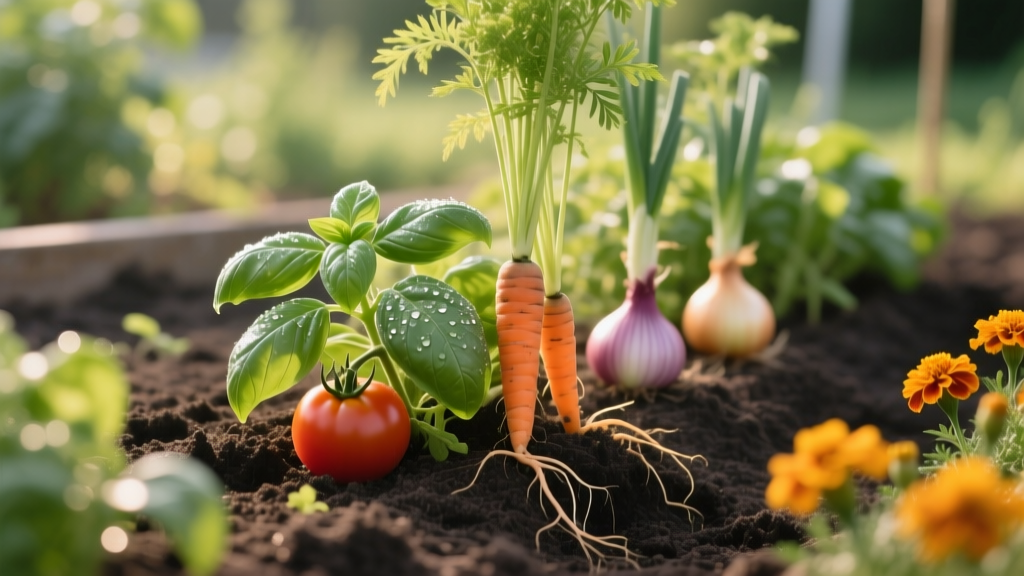
Companion Planting Combinations That Actually Work
Companion planting is one of the oldest agricultural practices in the world. Indigenous farmers and traditional growers have long known that certain plants help each other grow — and modern research backs this up. But not every pairing you see online or hear about at garden club has real evidence behind it. Some combinations that sound right on paper can actually slow things down. This article sticks to pairings that have been tested — in field trials, university studies, and real home gardens.
The Science Behind Plant Partnerships
Plants interact in several ways: through chemicals released by roots (allelopathy), scents given off by leaves, physical structures that change light or airflow, and by attracting or repelling insects. A 2021 Rodale Institute study found that growing nitrogen-fixing legumes like beans alongside heavy feeders like corn cut synthetic fertilizer use by up to 30%, without dropping yields. That adds up to lower costs and better soil over time.
Root exudates matter a lot. Some plants send out compounds that keep soil pathogens in check, shift pH near their roots, or feed helpful microbes. Basil, for example, gives off linalool and other terpenes. Controlled studies show these compounds reduce thrips and aphids on nearby tomato plants. It’s not a total fix, but it shows up consistently in garden conditions.
The Three Sisters: Corn, Beans, and Squash
The Three Sisters system — corn, beans, and squash — was developed by Indigenous peoples of North America, especially the Haudenosaunee (Iroquois) Confederacy. It’s been fine-tuned over thousands of years and remains one of the best-documented examples of intercropping. Cornell University’s horticulture department has run multiple trials showing the system produces more food per square foot than growing each crop alone.
Planting Dates and Spacing by Zone
Timing matters with the Three Sisters because each crop needs different temperatures. Corn should be up and about 6 inches tall before you plant beans next to it — otherwise, the beans will shade out the young corn.
- USDA Zones 3–4 (Minnesota, northern Wisconsin): Plant corn after the last frost, usually late May to early June. Add beans 2–3 weeks later. Squash goes in at the same time as the beans.
- USDA Zones 5–6 (Ohio, Missouri, mid-Atlantic): Sow corn from late April through mid-May. Add beans and squash in mid-May to early June.
- USDA Zones 7–8 (Texas Hill Country, Georgia Piedmont): Corn can go in as early as late March. Most gardeners finish the full Three Sisters setup by late April.
- USDA Zones 9–10 (Southern California, South Florida): You can plant twice — once in February–March, and again in September–October.
The traditional layout uses mounds: hills spaced 36 inches apart in all directions, with 4–6 corn seeds per hill, later thinned to 3 plants. Plant beans 6 inches from the base of the corn stalks — 3–4 seeds per hill. Squash goes between the mounds, 12 inches from the center. This gives squash room to spread while keeping beans close enough to climb the corn.
Yield Estimates
In the Midwest, a well-tended Three Sisters plot covering 100 square feet might give you about 15–20 lbs of dried beans, 25–35 lbs of fresh corn, and 30–50 lbs of winter squash. Per plant, that’s roughly 0.5–0.75 lbs of dried beans, 1–2 ears of corn, and 8–15 lbs of squash — depending on the variety.
Tomatoes and Basil: More Than a Kitchen Pairing
Tomato and basil is probably the most talked-about companion pair in home gardening — and there’s solid research to back it up. A 2019 University of Florida study found that basil planted within 12 inches of tomatoes cut thrips numbers by about 22% compared to tomatoes grown alone. Since thrips spread tomato spotted wilt virus, even that drop helps keep fruit quality up and plants healthier longer.
Both crops like similar soil pH: tomatoes do best between 6.0–6.8, basil between 6.0–7.0. So one soil amendment usually works for both. If your soil tests below 6.0, add ground limestone at the rate your soil test recommends — usually 5–10 lbs per 100 square feet for sandy soils, 10–15 lbs for heavier clay.
Spacing and Planting Logistics
Set basil 12–18 inches from the tomato stem — not right under the plant where it’ll get shaded out. A simple pattern is one basil plant between every two tomatoes along the row. Space tomatoes 24–36 inches apart if they’re indeterminate (vining), or 18–24 inches if they’re determinate (bush types). Try: tomato — basil — tomato — basil, with the basil slightly toward the edge of the row so it catches more sun.
Pinch off basil flower buds as they appear. Once basil starts flowering, it puts energy into seed instead of leaves — and the aromatic oils that help tomatoes fade fast.
Carrots and Onions: Mutual Pest Deterrence
This pairing works simply: onions and related plants release sulfur compounds that throw off carrot flies (Psila rosae), while carrot foliage seems to confuse onion flies (Delia antiqua). A 2018 study from the UK’s Organic Research Centre found alternating rows of carrots and onions cut carrot fly damage by up to 40% compared to carrots grown alone.
Soil needs line up well: carrots prefer pH 6.0–6.8 and loose, deep, stone-free soil. Onions do fine at pH 6.0–7.0. Both are light feeders, so they don’t demand much fertilizer — making them easy to grow together.
For spacing, sow carrot seeds in rows 12 inches apart, then thin to 3 inches between plants. Plant onion sets or transplants in adjacent rows, also 12 inches apart, with 4–6 inches between each plant. One row of carrots, one row of onions — that setup gives the best pest protection.
"Intercropping with aromatic plants remains one of the most underutilized tools in organic pest management. The evidence base has grown substantially in the past decade, yet adoption in home and market gardens lags far behind what the research supports."
— Dr. Linda Chalker-Scott, Washington State University Extension, 2022
Brassicas and Nasturtiums: The Trap Crop Strategy
Nasturtiums (Tropaeolum majus) are among the most reliable trap crops for home gardeners. Aphids — especially black bean aphid and cabbage aphid — land on nasturtiums first, often skipping nearby brassicas like kale, broccoli, and cabbage. That doesn’t get rid of aphids entirely, but it keeps them clustered where you can deal with them: pull off infested stems, or blast them off with water without risking your food crops.
Texas A&M University’s AgriLife Extension has seen this effect across several garden trials. Brassica beds with nasturtium borders had 35–50% fewer aphids on the food crops than beds without nasturtiums. The key is placement: plant nasturtiums around the edges of the brassica patch, not mixed in — so aphids head for the border instead of the middle.
Timing and Zone Considerations
Nasturtiums handle cool weather but not hard frost. In Zones 5–7, sow seeds 2–3 weeks before your last frost date — they’ll survive light frosts down to about 28°F once they’ve sprouted. In Zones 8–10, nasturtiums work as a fall and winter annual, sown from September through November. Brassicas go in early spring (4–6 weeks before last frost) or late summer for fall harvest, so nasturtiums fit right in — plant them just before or alongside your brassica transplants.
Nasturtium seeds are big and easy to handle. Plant them 1 inch deep, 10–12 inches apart. They sprout in 7–14 days if the soil is above 55°F. No thinning needed if you space them right the first time.
Companion Planting Data at a Glance
| Combination | Primary Benefit | Spacing (inches) | Soil pH Range | Documented Effect |
|---|---|---|---|---|
| Corn + Beans + Squash | Nitrogen fixation, weed suppression, structural support | 36 (hills), 6 (beans from corn) | 6.0–6.8 | Up to 30% reduced fertilizer need (Rodale Institute, 2021) |
| Tomato + Basil | Thrips deterrence, flavor enhancement | 12–18 (basil from tomato) | 6.0–6.8 | 22% reduction in thrips (University of Florida, 2019) |
| Carrot + Onion | Mutual fly pest deterrence | 12 (row spacing), 3–6 (in-row) | 6.0–7.0 | 40% less carrot fly damage (Organic Research Centre, 2018) |
| Brassica + Nasturtium | Aphid trap cropping | 10–12 (nasturtium perimeter) | 6.0–7.5 | 35–50% lower aphid pressure (Texas A&M AgriLife) |
| Pepper + Marigold | Nematode suppression | 12–18 (marigold between peppers) | 6.0–6.8 | Significant nematode reduction after one full season |
Peppers and Marigolds: Underground Pest Management
French marigolds (Tagetes patula) put out a compound called alpha-terthienyl from their roots. It’s toxic to root-knot nematodes (Meloidogyne spp.), which damage pepper and tomato roots. The effect takes time — marigolds need a full season in the ground to make a dent in nematode numbers. But in beds where nematodes have been a problem, planting marigolds the season before peppers — or packing them in tightly among the peppers — cuts nematode counts in the top 12 inches of soil.
The University of Georgia Cooperative Extension suggests one marigold per 1–2 square feet for nematode control — denser than most people plant them for looks. At that spacing, the roots cover enough ground to treat the soil. When the season ends, till the marigolds into the soil instead of pulling them out — as they break down, they keep releasing nematicidal compounds.
Peppers and marigolds both like pH 6.0–6.8 (marigolds stretch to 5.8–7.0), and both thrive in well-drained, moderately fertile soil. Don’t overdo nitrogen — too much pushes both plants into leafy growth instead of flowers, and marigold blooms are where pollinators and beneficial insects hang out.
Building a Companion Planting Plan That Works
The biggest mistake gardeners make is treating companion planting as a list of separate pairs instead of part of a whole-garden plan. These combinations work best when they fit into your rotation, bed layout, and how insects move through your space. Beneficial insects — parasitic wasps, ground beetles, lacewings — need connected patches of flowers to travel, feed, and settle in. A few scattered companion plants won’t do it; a thoughtful layout will.
Start by sketching your beds and picking your highest-priority crops — the ones most likely to get hit by pests or most important to your table. Build companions around those first. Then fill in edges and gaps with flowering plants: dill, fennel, yarrow, and phacelia all attract helpful bugs and fit easily alongside vegetables without crowding them.
- Test your soil pH before planting and adjust if needed — most of these combos do well in the 6.0–6.8 range.
- Put trap crops like nasturtiums or blue hubbard squash around the garden edges before or with your main crops.
- Grow nitrogen-fixing legumes in any bed that will host heavy feeders next season — and rotate them as part of your plan.
- Keep notes on what you plant where and what pests show up — your own garden records over a few seasons tell you more than any general guide.
- Leave spent companion plants standing until spring — many beneficial insects spend winter in stems and debris.
Companion planting won’t wipe out every pest or fix every soil issue. But the combinations with real research behind them — the Three Sisters, tomato-basil, carrot-onion, brassica-nasturtium, pepper-marigold — deliver steady, repeatable benefits. Over time, those benefits build: soil life improves, beneficial insects stick around, and plants stay healthier with less outside help. The effort is small — a packet of basil, a row of onions, a border of nasturtiums. What you get back — stronger plants, fewer pests, less fertilizer — makes the planning worth it.
