Gardening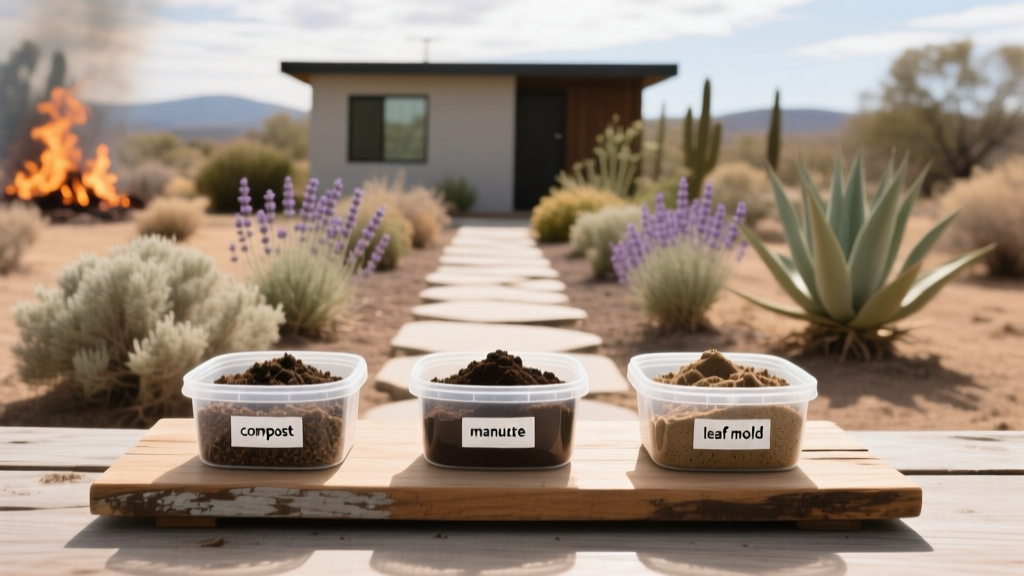
Fire-Safe Soil Amendments 2026: Compost vs Manure vs Leaf Mold
Robert HayesPublished
The 2026 Wildfire Reality: Why Soil Health is Your First Line of Defense
As we navigate the extended and increasingly unpredictable wildfire seasons of 2026, homeowners in fire-prone regions are rethinking their landscaping strategies. While clearing dead brush and maintaining hardscapes are critical components of defensible space, the underlying soil health of your fire-resistant plantings is often overlooked. The premise is simple: well-hydrated, deeply rooted plants are significantly more resistant to ignition and radiant heat than stressed, shallow-rooted vegetation. To achieve this, gardeners rely on soil amendments to boost organic matter and water retention. However, not all amendments are created equal when it comes to fire safety. Improperly chosen or applied soil additives can inadvertently introduce combustible materials to your landscape's most vulnerable zones. In this guide, we compare the three most popular organic soil amendments—compost, manure, and leaf mold—specifically through the lens of fire-resistant landscaping and defensible space management.
The Science of Soil Moisture and Fire Resistance
According to the CAL FIRE Defensible Space guidelines, creating a buffer between your home and approaching wildfires requires maintaining healthy, low-growing, and high-moisture plants. Soil organic matter (SOM) acts like a sponge; every 1% increase in SOM can help soil hold up to 20,000 additional gallons of water per acre. This moisture retention is vital for keeping fire-resistant plants—such as Agave, Rockrose, Yarrow, and native succulents—plump and hydrated during peak fire season. However, as noted by the Colorado State University Extension, the type of organic matter you add affects not just water retention, but also nutrient levels, salt content, and surface combustibility. Let us break down how compost, manure, and leaf mold perform in a fire-wise garden.
Compost: The All-Around Fire-Safe Champion
Compost is the product of controlled aerobic decomposition of diverse organic materials, including yard waste, food scraps, and agricultural byproducts. For fire-resistant landscaping in 2026, fully finished compost is widely considered the safest and most effective soil amendment.
Pros for Fire-Resistant Landscaping:
- Balanced Nutrition: Compost provides a slow release of macro and micronutrients. This prevents the rapid, weak, and overly lush growth that can quickly turn into dry, flashy fuel in late summer.
- Superior Water Retention: It improves soil structure in both clay and sandy soils, ensuring deep water penetration and prolonged moisture availability for drought-tolerant, fire-resistant plants.
- Low Surface Combustibility: When properly incorporated into the top 4 to 6 inches of soil, compost does not pose a surface fire hazard. It lacks the dry, fibrous structure of raw mulches.
Cons:
- Cost and Volume: High-quality, screened compost can be expensive in 2026, averaging $35 to $50 per cubic yard in bulk. It requires significant volume to alter soil structure meaningfully.
Manure: High Nutrients but Hidden Fire Risks
Manure (typically from cows, horses, or poultry) is a potent, nitrogen-rich amendment. While it has been a staple in traditional vegetable gardening for centuries, its role in fire-resistant landscaping is highly problematic and generally discouraged for defensible space zones.
Pros for Fire-Resistant Landscaping:
- High Organic Matter: Like compost, aged manure improves soil structure and moisture retention over time.
Cons and Fire Hazards:
- Excessive Nitrogen: Manure is notoriously high in nitrogen. In fire-wise landscaping, excess nitrogen forces plants to produce rapid, succulent growth. While these leaves may be wet initially, they lack structural resilience and dry out into highly combustible material during late-summer heat domes.
- Salt Accumulation: Many manures contain high salt levels, which can damage the roots of native, fire-resistant shrubs like Ceanothus or Manzanita, causing them to die back and create dry, dead fuel loads.
- Surface Combustibility: If used as a top-dressing rather than fully incorporated, dried manure forms a crusty, highly flammable layer. A stray ember landing on a bed of dry, surface-applied manure can easily ignite the surrounding area.
Leaf Mold: Excellent Hydration with Severe Surface Risks
Leaf mold is created by the fungal decomposition of fallen leaves over one to three years. It is a dark, crumbly, earthy-smelling material that is unparalleled in its ability to hold moisture.
Pros for Fire-Resistant Landscaping:
- Unmatched Moisture Retention: Leaf mold can hold up to 300% to 500% of its own weight in water, making it an incredible tool for keeping soil cool and hydrated during prolonged droughts.
- Soil Biology: It introduces beneficial mycorrhizal fungi, which form symbiotic relationships with the roots of native trees and shrubs, enhancing their drought tolerance and overall health.
Cons and Fire Hazards:
- Extreme Surface Flammability: This is the critical drawback. If leaf mold is applied as a surface mulch or top-dressing in Zone 0 (0-5 feet from the home) or Zone 1 (5-30 feet), it acts exactly like dry leaf litter. The National Fire Protection Association (NFPA) Firewise USA program strictly prohibits the use of combustible mulches, including dry leaves and leaf mold, within 5 feet of any structure. If you use leaf mold, it must be fully tilled into the soil and covered with a fire-safe mulch alternative, such as decomposed granite or river rock.
2026 Comparison Chart: Soil Amendments for Defensible Spaces
| Amendment | Water Retention | Nitrogen Level | Surface Fire Risk | Best Defensible Zone | 2026 Avg. Cost |
|---|---|---|---|---|---|
| Finished Compost | High | Moderate / Balanced | Very Low (if incorporated) | Zones 1 & 2 (Incorporated) | $35 - $50 / cu. yd. |
| Aged Manure | Moderate | Very High | High (if surface applied) | Not Recommended | $25 - $40 / cu. yd. |
| Leaf Mold | Very High | Low | Extreme (if surface applied) | Zone 2 ONLY (Deeply tilled) | $6 - $8 / cu. ft. (bagged) |
Best Practices for Applying Amendments in Defensible Zones
To maximize the fire-resistant qualities of your landscape in 2026, follow these strict application guidelines based on defensible space zoning:
Zone 0: The Ember-Resistant Zone (0-5 Feet)
In the immediate 5-foot perimeter around your home, the goal is zero combustible material. Do not use any organic amendments as surface mulch here. If you are planting fire-resistant succulents or installing hardscaping, incorporate finished compost deeply into the soil prior to planting to ensure the plants establish strong, hydrated roots. Cover the surface exclusively with non-combustible materials like crushed rock, gravel, or pavers.
Zone 1: The Lean, Clean, and Green Zone (5-30 Feet)
This zone requires low-growing, well-irrigated, and fire-resistant plants. You can use finished compost to amend the soil before planting native shrubs and perennials. Avoid manure entirely to prevent the growth of weak, nitrogen-fueled foliage that will dry out and burn in late summer. If you use leaf mold, it must be mixed thoroughly into the top 6 inches of soil and capped with a thin layer of compost or an inorganic mulch to prevent surface ignition from wind-blown embers.
Zone 2: The Reduced Fuel Zone (30-100 Feet)
In the outer reaches of your defensible space, you have more flexibility. Deeply tilling leaf mold into the soil around established native oaks or pines can vastly improve their drought resilience without creating a surface fire hazard, provided the soil surface is kept clear of loose, dry organic debris. Compost remains an excellent choice for establishing new fire-resistant tree saplings and large shrub borders in this zone.
Conclusion
As wildfire seasons continue to challenge homeowners in 2026, fire-resistant landscaping must evolve beyond simple brush clearing. The foundation of a truly fire-resilient garden lies beneath the surface. By choosing finished compost over high-nitrogen manure, and by carefully managing the severe surface-combustibility risks of leaf mold, you can cultivate a landscape that is deeply hydrated, structurally sound, and capable of withstanding the radiant heat and embers of an approaching fire. Always prioritize deep soil incorporation over surface top-dressing, and consult your local fire marshal or extension office for region-specific defensible space mandates.
