Gardening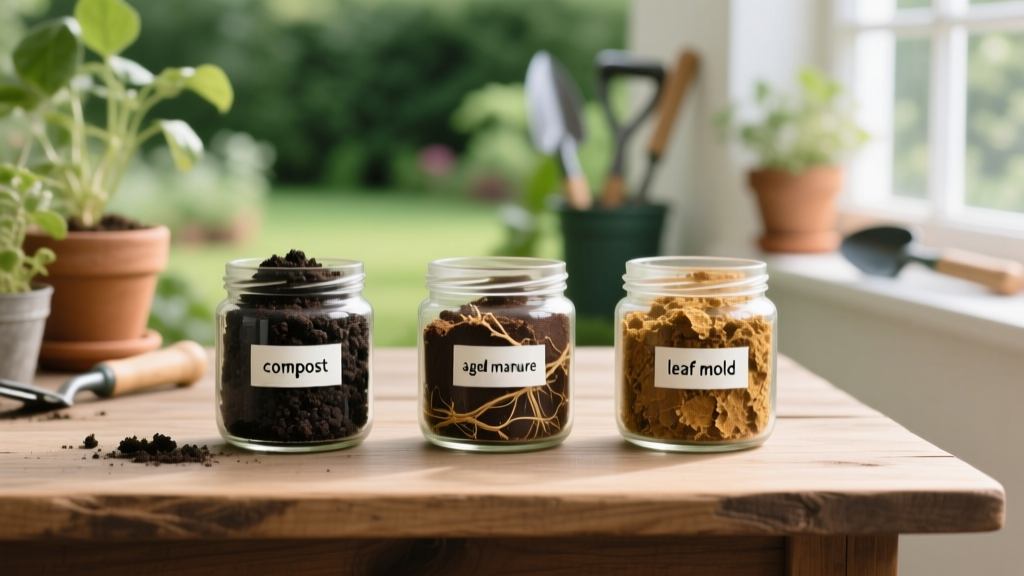
Compost vs Manure vs Leaf Mold for Containers: 2026
James MillerPublished
The Container Conundrum: Why In-Ground Rules Don't Apply
As we navigate the 2026 gardening season, container and pot gardening continues to dominate urban and suburban landscapes. However, the confined environment of a pot fundamentally changes how soil amendments behave. In traditional in-ground beds, excess salts leach deep into the subsoil, and roots can wander away from localized nutrient hotspots. In a container, roots are trapped. This means that choosing the wrong organic amendment can lead to rapid salt accumulation, root burn, and catastrophic drainage failure.
With the widespread 2026 mandates phasing out peat moss in many global markets to protect endangered peatland bogs, container gardeners are aggressively pivoting to alternative organic matter. The big three contenders are compost, manure, and leaf mold. While all three are stellar additions to an open garden bed, their performance in pots varies wildly. Let us break down how compost, manure, and leaf mold compare specifically for container gardening this year.
Compost: The All-Around Workhorse for Pots
Compost is the product of controlled aerobic decomposition of diverse organic materials, including kitchen scraps, yard waste, and sometimes wood chips. For container gardening, high-quality compost acts as both a mild fertilizer and a crucial structural component.
Pros for Containers
- Nutrient Density: Compost provides a broad spectrum of macro and micronutrients. According to the University of Maryland Extension, well-cured compost slowly releases nutrients, reducing the risk of fertilizer burn in confined root zones.
- Microbial Inoculation: It introduces beneficial bacteria and fungi that help container plants absorb nutrients and resist soil-borne pathogens.
- Buffering Capacity: Compost helps stabilize the pH of your potting mix, which is vital since container soils can easily become acidic from synthetic fertilizers or alkaline from hard tap water.
Cons for Containers
- Compaction Risks: If the compost is too fine or lacks lignin, it can break down rapidly in a pot, leading to soil shrinkage and poor aeration over a single growing season.
- Quality Variance: Municipal composts available in 2026 can sometimes contain high levels of soluble salts or residual herbicides, which are magnified in the small volume of a container.
Manure: High-Risk, High-Reward in Confined Spaces
Manure (typically from cows, horses, or poultry) is incredibly rich in nitrogen and organic matter. However, using manure in container gardening requires extreme caution. While it is a staple for heavy-feeding in-ground crops like corn or squash, its role in pots is highly controversial.
Pros for Containers
- Nitrogen Boost: Aged manure provides a rapid nitrogen source, which can be beneficial for container-grown leafy greens or heavy feeders like patio tomatoes, provided it is used sparingly.
Cons for Containers
- Salt Accumulation: This is the fatal flaw of manure in pots. Manure naturally contains high levels of soluble salts. As the Penn State Extension notes, these salts can accumulate to toxic levels in container soils because they cannot leach away as they would in open ground. This leads to osmotic stress, where plant roots are unable to take up water, resulting in 'fertilizer burn' and plant death.
- Weight: Manure is dense and heavy. Filling large raised beds or patio planters with manure-heavy mixes can make them virtually immovable and put excess strain on balcony structures.
- Weed Seeds and Pathogens: Unless commercially composted at high sustained temperatures, manure can introduce weeds and pathogens into your sterile potting environment.
Leaf Mold: The Moisture Manager and Soil Conditioner
Leaf mold is created through the slow, fungal-driven decomposition of autumn leaves. Unlike the bacterial breakdown of compost, leaf mold is a fungal product. In 2026, as peat-free potting mixes become the industry standard, leaf mold has emerged as the premier substitute for peat moss in container recipes.
Pros for Containers
- Unmatched Water Retention: The Royal Horticultural Society highlights that leaf mold can hold up to 500 times its own weight in water. For containers placed on hot, exposed patios, this drastically reduces watering frequency and prevents the soil from pulling away from the pot edges.
- Superior Structure and Aeration: Leaf mold does not break down as quickly as compost. It maintains a spongy, open structure that promotes excellent drainage and oxygen flow to the roots, preventing the dreaded 'perched water table' effect at the bottom of pots.
- Low Salt Content: Unlike manure, leaf mold has virtually zero soluble salts, making it incredibly safe for sensitive container plants, seedlings, and ericaceous (acid-loving) species.
Cons for Containers
- Negligible Nutrients: Leaf mold is a soil conditioner, not a fertilizer. Its NPK (Nitrogen-Phosphorus-Potassium) value is near zero. You must pair it with a separate feeding regimen or nutrient-rich compost.
- Acidity: Depending on the tree species (like oak or pine), leaf mold can be slightly acidic, which may require buffering with garden lime for plants that prefer neutral pH.
Head-to-Head Comparison Chart for Container Use
| Feature | Compost | Manure (Aged) | Leaf Mold |
|---|---|---|---|
| Primary Role | Nutrients & Biology | High Nitrogen Boost | Moisture & Structure |
| Water Retention | Moderate | Low to Moderate | Extremely High |
| Salt Risk in Pots | Moderate (if municipal) | Very High | None |
| Decomposition Rate | Medium (1 season) | Fast | Slow (Multi-season) |
| Best Container Use | General purpose base | Avoid or use <5% volume | Peat-substitute, moisture control |
| Avg. 2026 Cost (per cu ft) | $8.00 - $12.00 | $5.00 - $9.00 | $10.00 - $15.00 (or free DIY) |
Crafting the Ultimate 2026 Peat-Free Container Recipe
Given the unique constraints of pot gardening, relying on a single amendment is rarely the best strategy. The most successful container gardeners in 2026 are using a blended approach that mimics the structure of forest soil while providing adequate nutrition.
The Golden Ratio for Patio Planters and Pots
- 40% Coconut Coir: Provides the base bulk and initial water retention. Ensure it is buffered and washed to remove natural sodium.
- 30% High-Quality Compost: Supplies the microbial life, trace minerals, and baseline fertility. Opt for a wood-chip-based compost to ensure long-lasting structure.
- 20% Leaf Mold: Acts as the sponge, holding moisture and preventing the coir and compost from compacting over the summer months.
- 10% Perlite or Pumice: Essential for mechanical drainage and aeration.
Pro-Tip for 2026: Skip the manure entirely in this mix. The nutrient density of the compost, combined with a slow-release organic granular fertilizer top-dressed in mid-summer, will provide all the nitrogen your container plants need without the toxic salt risks associated with manure.
Sourcing and Sustainability in 2026
When sourcing these amendments for your containers, provenance matters. Municipal compost facilities have improved their screening technologies by 2026, but it is still wise to perform a simple 'bag test' (smelling for ammonia and checking for a dark, crumbly texture) before buying in bulk. For leaf mold, many local municipalities now offer it for free at recycling centers in the spring, a massive cost-saver for urban gardeners filling dozens of pots.
Ultimately, understanding the physical and chemical differences between compost, manure, and leaf mold is the key to mastering container gardening. By leveraging compost for nutrition, leaf mold for structure and moisture, and avoiding the salt-trap of manure, your potted plants will thrive with vigorous root systems and lush foliage all season long.
