Gardening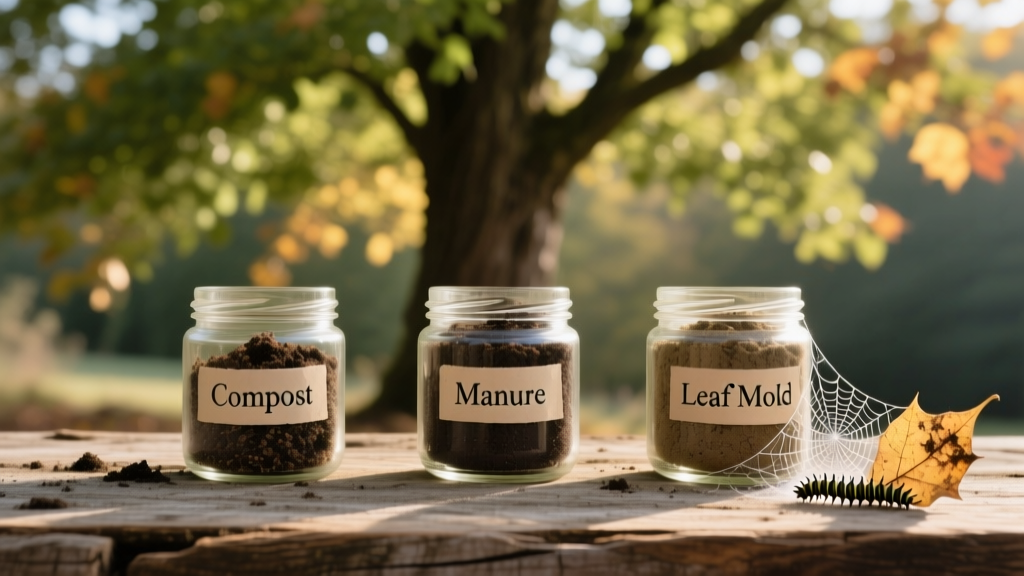
Compost vs Manure vs Leaf Mold for Webworm Trees 2026
Robert HayesPublished
The Hidden Battle Below Ground: Webworms and Soil Health
When fall webworms (Hyphantria cunea) and Eastern tent caterpillars invade your landscape, the immediate instinct is to look up. The unsightly silken webs and rapid defoliation of pecan, hickory, walnut, and ornamental fruit trees demand attention. However, as we navigate the erratic spring temperatures and extended pest seasons of 2026, arborists and master gardeners are increasingly focused on what happens below ground. Direct pest control is only half the battle; the other half is soil amendment.
Defoliation strips a tree of its photosynthetic engine. To survive the winter and push out a secondary flush of leaves, the tree must draw heavily on stored carbohydrate reserves in its root system. If the soil is compacted, nutrient-poor, or biologically dead, the tree cannot recover, making it highly susceptible to secondary borers and fungal pathogens. Choosing the right soil amendment—compost, manure, or leaf mold—is critical for building systemic resilience against webworm damage.
Compost: The Balanced Recovery Engine
High-quality, fully decomposed compost is the gold standard for general tree recovery. It provides a slow-release, balanced spectrum of macro and micronutrients while introducing beneficial bacteria to the rhizosphere. For trees that have suffered moderate webworm defoliation (less than 50% canopy loss), compost offers the steady nutrition needed to rebuild energy reserves without forcing weak, vulnerable late-season growth.
Application Strategy for Compost
- Rate: Apply a 2 to 3-inch layer of compost.
- Placement: Spread from just outside the root flare out to the tree's drip line (the outer edge of the canopy).
- 2026 Tip: With summer droughts becoming more unpredictable in 2026, top-dressing with compost and covering it with a layer of arborist wood chips will lock in moisture and keep soil temperatures stable during the critical late-summer webworm feeding window.
Manure: The High-Nitrogen Emergency Response
Aged cow, horse, or poultry manure is a powerhouse of nitrogen. When a tree is completely stripped of its leaves by a severe webworm outbreak, it may require a rapid nitrogen infusion to force a secondary leaf-out before autumn. However, manure must be used with extreme caution.
The Risks and Rewards of Manure
Fresh or "hot" manure will burn delicate feeder roots and introduce excess salts into the soil, which inhibits water uptake. You must only use composted, aged manure (aged for at least 6 to 12 months). Furthermore, manure is often high in phosphorus, which can accumulate in the soil over time and inhibit the uptake of essential micronutrients like zinc and iron—nutrients already stressed trees desperately need.
- Best Use Case: Severely defoliated, established trees in sandy soils that leach nutrients quickly.
- Rate: Maximum 1 to 2 inches, lightly scratched into the topsoil, never piled against the trunk.
Leaf Mold: The Fungal and Moisture Champion
Leaf mold is simply decomposed leaves, broken down by fungi rather than bacteria. While its NPK (Nitrogen-Phosphorus-Potassium) value is very low, its structural and biological benefits for stressed trees are unmatched. According to the Royal Horticultural Society, leaf mold can hold up to 500 times its own weight in water. More importantly, it feeds the mycorrhizal fungi network.
Why Mycorrhizae Matter for Webworm Recovery
Mycorrhizal fungi form a symbiotic relationship with tree roots, acting as an extended root system that scavenges for water and phosphorus. When a tree is defoliated by webworms, it stops sending sugars to the roots, which in turn starves the mycorrhizae. Applying leaf mold provides a carbon-rich food source for these fungi, keeping the network alive so the tree can rapidly re-establish its nutrient pathways once new leaves emerge.
For a comprehensive understanding of how defoliation impacts tree vitality and the importance of maintaining soil health to prevent secondary pest invasions, the Penn State Extension provides excellent integrated pest management guidelines that emphasize the role of plant vigor in pest resistance.
2026 Comparison Chart: Choosing the Right Amendment
| Feature | Compost | Aged Manure | Leaf Mold |
|---|---|---|---|
| Primary Benefit | Balanced nutrition & bacterial diversity | Rapid nitrogen boost | Moisture retention & fungal support |
| NPK Profile | Moderate (e.g., 1-1-1) | High Nitrogen (e.g., 3-1-1) | Very Low (Trace elements) |
| Water Retention | High | Moderate | Exceptional |
| Risk to Stressed Trees | Very Low | Moderate (Salt burn risk) | None |
| Best Webworm Scenario | Moderate defoliation; general maintenance | Severe defoliation; poor, sandy soils | Drought-stressed trees; clay soils |
Step-by-Step Application Guide for 2026
To maximize tree recovery from webworm damage, timing and technique are everything. Follow this protocol to amend your soil effectively:
- Clear the Base: Remove any grass, weeds, or old, matted mulch from around the tree trunk. Expose the root flare (where the trunk widens at the base) to prevent rot and allow the tree to breathe.
- Aerate Gently: Using a hand fork or an air-spade (for larger properties), gently fracture compacted soil in the top 2 inches out to the drip line. Do not till, as this will sever the fine feeder roots the tree needs to survive.
- Apply the Amendment: Based on the chart above, apply your chosen amendment. A blended approach is often best for 2026's extreme weather: mix 50% compost for nutrition with 50% leaf mold for moisture and fungal support.
- Water Deeply: Amendments require moisture to activate and integrate into the soil profile. Water the drip line deeply immediately after application.
- Top with Mulch: Cover the amendment with 2 inches of coarse arborist wood chips, keeping the mulch at least 6 inches away from the trunk bark.
Integrating Soil Care with Direct Webworm Control
Soil amendments build long-term resilience, but they do not kill the caterpillars currently eating your tree's canopy. An effective 2026 webworm management plan requires an Integrated Pest Management (IPM) approach. The University of Minnesota Extension recommends monitoring for early web formation in late summer.
When webs are small and localized, prune them out and destroy them. If the infestation is widespread, apply Bacillus thuringiensis var. kurstaki (Btk), a naturally occurring soil bacterium that specifically targets caterpillars without harming beneficial insects, pollinators, or the soil microbiome you are working so hard to build. Avoid broad-spectrum synthetic insecticides, as these will decimate the soil biology and predatory insects that keep webworm populations in check naturally.
By combining targeted biological controls with a strategic soil amendment regimen using compost, manure, or leaf mold, you ensure your trees not only survive the 2026 webworm season but emerge with a deeper, more resilient root system ready to thrive in the years to come.
