Gardening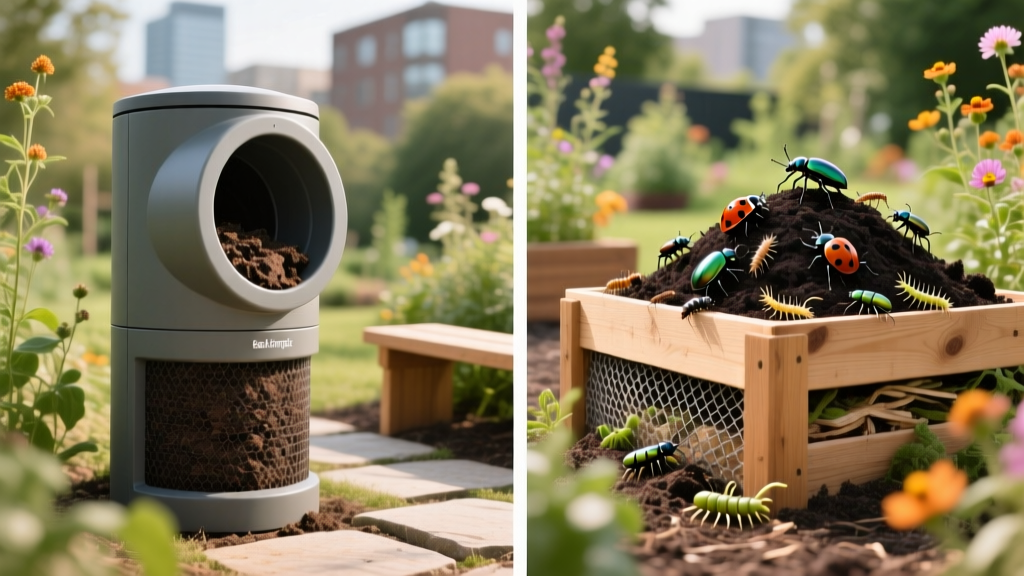
Tumbling vs Stationary Compost: 2026 Beneficial Insect Guide
James MillerPublished
The Intersection of Composting and Bio-Control in 2026
As home gardeners adapt to the shifting climate patterns and evolving pest pressures of 2026, the role of the compost pile has expanded far beyond simple waste reduction. Today, a well-managed compost system is recognized as a critical hub for biological control (bio-control). With the rising costs of commercial beneficial insects and organic pesticides, cultivating your own native predatory insect populations is both an ecological and economic necessity. However, the physical design of your composting system dictates the biodiversity it can support. The ongoing debate between tumbling composters and stationary compost piles takes on a new dimension when viewed through the lens of beneficial insect habitat. Which method truly fosters the predatory beetles, parasitic wasps, and composting worms that keep your garden's pest populations in check?
Stationary Compost Piles: The Ultimate Beneficial Insect Nursery
Stationary compost bins, particularly those built directly on the soil, are unparalleled when it comes to fostering a complex ecosystem of beneficial macro-organisms and insects. Because they maintain direct contact with the earth, stationary piles allow native soil-dwelling predators to migrate into the compost, feed, reproduce, and eventually disperse into your surrounding garden beds.
Key Beneficial Insects in Stationary Piles
- Black Soldier Flies (Hermetia illucens): The larvae of these flies are voracious consumers of nitrogen-rich kitchen scraps. While they do not directly prey on garden pests, their rapid decomposition process creates a nutrient-dense frass that boosts soil microbiology, indirectly supporting plant immune systems against sap-sucking insects.
- Rove Beetles and Ground Beetles: These predatory beetles use the cooler, outer edges of a stationary pile as an overwintering sanctuary. In the spring, they emerge to hunt slugs, snail eggs, and root-destroying grubs in your garden beds. According to University of Minnesota Extension, maintaining undisturbed overwintering habitats is crucial for sustaining native ground beetle populations.
- Predatory Mites and Nematodes: A stationary pile teems with microscopic and macroscopic predatory nematodes that hunt fungus gnat larvae and harmful root-knot nematodes. When you apply finished compost from a stationary pile to your garden, you are actively inoculating your soil with these bio-control agents.
The Soil Connection Advantage
The primary advantage of a stationary pile is the 'soil bridge.' Earthworms, specifically red wigglers (Eisenia fetida) and native nightcrawlers, move freely between the subsoil and the compost. This migration aerates the pile from the bottom up and distributes beneficial microbes throughout the garden profile. In 2026, regenerative gardening practices heavily emphasize this unbroken soil-food-web connection, which tumbling bins inherently sever.
Tumbling Composters: High Heat and Low Biodiversity
Tumbling composters are elevated, enclosed barrels designed to be rotated via a hand crank or spinning mechanism. They are engineered for rapid, hot composting through aggressive aeration. While they excel at breaking down organic matter quickly and keeping rodents out, they are notoriously hostile environments for beneficial insect life cycles.
Why Tumblers Disrupt Bio-Control
- Mechanical Disruption: Beneficial insects require stable environments to lay eggs and pupate. The constant tumbling and shifting of the compost mass crushes delicate larvae and destroys the intricate fungal hyphae networks that predatory mites rely on for habitat.
- Extreme Heat Spikes: Tumblers are designed to reach thermophilic temperatures (130°F to 160°F) rapidly. While this heat is excellent for killing weed seeds and plant pathogens, it is equally lethal to beneficial insect eggs and overwintering predators.
- Isolation from Native Populations: Because tumblers are elevated and enclosed, native predatory beetles and earthworms cannot access the interior. The resulting compost is largely 'sterile' regarding macro-biology, requiring you to manually reintroduce beneficial organisms after the compost is applied to the garden.
When to Choose a Tumbler
Despite their shortcomings for insect biodiversity, tumblers still have a place in the 2026 garden. If you live in a dense urban environment with strict municipal ordinances regarding rodent control, or if you are dealing with a severe rat infestation, a sealed tumbler is necessary. Furthermore, if you are composting heavily diseased plant material (like late blight-infected tomato vines), the high heat of a tumbler is required to sanitize the material before it can be safely returned to the garden.
Feature Comparison: Tumbler vs. Stationary Pile
| Feature | Stationary Compost Pile | Tumbling Composter |
|---|---|---|
| Insect Biodiversity | High (Supports complex life cycles) | Low (Hostile to larvae and pupae) |
| Bio-Control Value | Excellent (Nursery for predatory beetles) | Poor (Produces biologically sterile compost) |
| Soil Food Web Integration | Direct (Earthworms and nematodes migrate) | None (Elevated and enclosed) |
| Pest Exclusion (Rodents) | Moderate (Requires 1/4 inch hardware cloth) | Excellent (Fully sealed elevation) |
| Composting Speed | Slow to Moderate (6-12 months) | Fast (4-8 weeks) |
| Average 2026 Setup Cost | $50 - $150 (DIY Pallet or Wire Bin) | $120 - $350 (Commercial Dual-Batch) |
How to Build a Bio-Control Optimized Stationary Bin for 2026
To maximize the beneficial insect output of your compost, follow these specific construction and layering guidelines tailored for the modern bio-control gardener.
Step 1: Siting and Dimensions
Choose a partially shaded area with good drainage. The ideal size for a stationary bin is 3 feet wide by 3 feet long by 3 feet high (1 cubic yard). This volume is large enough to retain heat in the core for breaking down tough carbon materials, while the outer edges remain cool enough to serve as a habitat for rove beetles and earthworms.
Step 2: Rodent-Proofing Without Blocking Insects
Lay down a base of 1/2-inch galvanized hardware cloth before building your bin. This gauge is small enough to deter mice and rats but allows larger beneficial insects, earthworms, and soil microbes to pass through. Avoid using solid plastic bases or concrete pads, which completely sever the soil bridge.
Step 3: Strategic Layering for Insect Habitats
According to the Environmental Protection Agency (EPA), maintaining the correct balance of greens and browns is vital for compost health, but the physical arrangement of these materials also dictates insect habitat quality.
- The Core (Heat Zone): Pack your nitrogen-rich greens (vegetable scraps, coffee grounds) and fresh grass clippings into the center. This will generate the heat required to break down materials and kill pathogens.
- The Mantle (Habitat Zone): Surround the core with a thick layer of carbon-rich browns (dry autumn leaves, shredded cardboard, straw). This outer layer remains cooler and drier, providing the perfect microclimate for predatory beetles to overwinter and for beneficial fungi to colonize.
- The Inoculation Layer: Every time you add a new layer of kitchen scraps, sprinkle a handful of finished compost or native garden soil over the top. This introduces local predatory mites and nematodes directly to the new food source, establishing a bio-control presence immediately.
Inoculating Your Garden with Compost-Derived Bio-Control
Once your stationary pile has finished decomposing and cured for at least 30 days, it becomes a potent bio-control amendment. In the spring of 2026, apply a 1-inch top-dressing of this insect-rich compost to your vegetable beds. As the soil warms, the predatory nematodes and mites housed within the compost will migrate into the root zones of your crops, establishing a defensive perimeter against root-feeding pests.
For gardeners utilizing tumblers due to space or pest constraints, you can artificially inoculate your finished compost. After the tumbler's hot cycle has finished and the compost has cooled to ambient temperature, mix in a few handfuls of native leaf litter or worm castings. Allow the tumbler to sit open and undisturbed for two weeks before application, giving local beneficial insects a window to colonize the material.
Conclusion
When the primary goal of your composting system is to support beneficial insects and enhance garden bio-control, the stationary compost pile is the undisputed champion. While tumbling composters offer convenience and speed, their enclosed, high-heat, and mechanically disruptive environments are fundamentally incompatible with the delicate life cycles of predatory beetles, parasitic wasps, and beneficial nematodes. By investing in a well-structured, soil-connected stationary bin, you are not just recycling organic waste; you are actively manufacturing the biological army your garden needs to thrive in 2026 and beyond.
