
Landscaping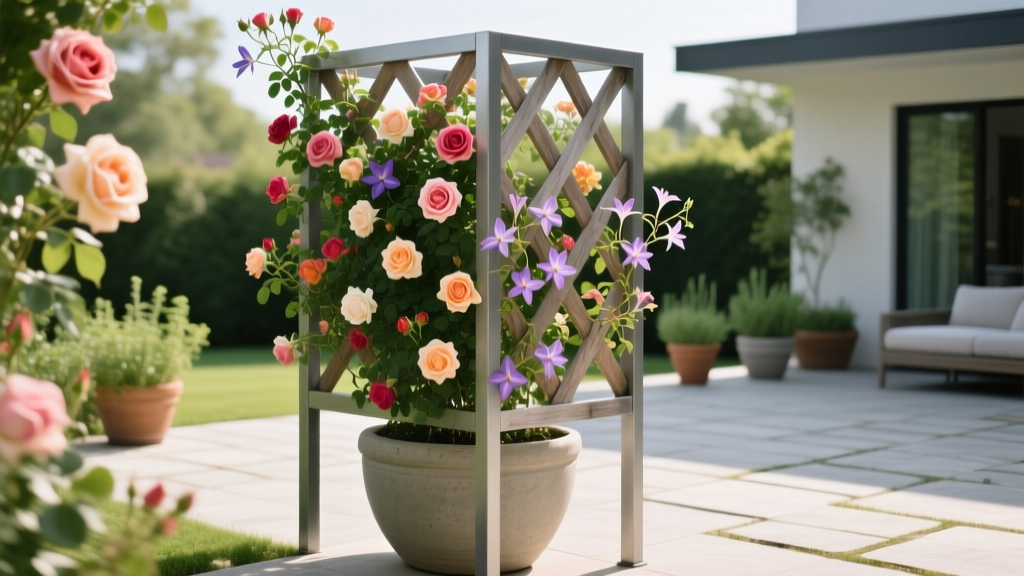
Best Container Trellises For Roses And Clematis 2026
James MillerPublished
The Magic of the Rose and Clematis Pairing in Containers
Growing climbing roses and clematis together is a time-honored landscaping tradition that has found a new home in modern container gardening. As urban spaces shrink and patio living continues to dominate outdoor design trends in 2026, vertical gardening in pots has become an essential skill for home gardeners. The pairing of these two iconic vines is often described by horticulturists as a perfect marriage: the rose provides a sturdy, thorny framework and classic fragrance, while the clematis weaves its delicate, sprawling blooms through the rose canes, offering a spectacular, multi-layered floral display.
However, translating this vigorous in-ground pairing to a container environment requires careful planning. Climbing roses and clematis are deep-rooted, heavy-feeding plants that demand substantial soil volume, robust structural support, and meticulous moisture management. In this comprehensive 2026 guide, we will explore the best container trellis systems, ideal pot dimensions, soil formulations, and anchoring techniques to ensure your potted rose and clematis duo thrives for years to come.
Selecting the Ideal Container for Deep-Rooted Vines
The most common mistake gardeners make when growing climbing vines in pots is choosing a container that is too small. Both roses and clematis require deep, cool root runs to sustain their massive top growth and prolific blooming cycles. According to the Royal Horticultural Society (RHS), clematis are particularly sensitive to hot, dry roots, which can lead to stress and the dreaded clematis wilt.
For a combined rose and clematis planting, your container must meet the following minimum specifications:
- Dimensions: At least 24 inches wide and 24 inches deep (approx. 60 cm x 60 cm). Half-barrels, large architectural resin planters, or custom-built wooden troughs are ideal.
- Volume: A minimum capacity of 15 to 20 gallons (approx. 50 to 75 liters) of soil.
- Drainage: Multiple large drainage holes at the base, elevated on pot feet or bricks to prevent waterlogging and root rot.
- Material: In 2026, thick-walled composite planters and frost-proof fiberglass are highly recommended. They insulate the roots against summer heat and winter freezes far better than thin terracotta or metal pots.
Top Trellis Styles for Container Gardening in 2026
When integrating a trellis with a container, you generally have two options: a trellis that sits inside the pot (an obelisk or stake) or a trellis that is attached to the exterior of the pot or a nearby wall. Because climbing roses can become incredibly heavy when laden with blooms and wet foliage, the structural integrity of your trellis is paramount.
Below is a comparison of the most effective trellis systems for potted roses and clematis, reflecting 2026 market availability and pricing.
| Trellis Style | Best For | Material (2026 Standard) | Wind Resistance | Avg. Cost (USD) |
|---|---|---|---|---|
| Garden Obelisk | Compact patios, corner placements | Powder-coated recycled steel | Moderate (requires deep pot insertion) | $85 - $140 |
| Wall-Mounted Fan | Balcony railings, privacy screens | Composite bamboo or cedar | High (when bracketed to solid structures) | $60 - $110 |
| Freestanding Panel | Dividing patio spaces, backdrop | Heavy-duty wrought iron | Low (must be heavily weighted or tied) | $120 - $200 |
| Lattice Tower | Aggressive climbers, large troughs | UV-stabilized PVC or vinyl | High (wide base footprint) | $90 - $150 |
For the classic rose and clematis combination, a steel garden obelisk placed directly into the center of a large half-barrel is often the most elegant and structurally sound choice. The obelisk provides 360-degree support, allowing the clematis to spiral upward while the rose canes are tied to the outer vertical struts.
Soil Formulation and Planting Techniques
Standard garden soil or lightweight potting mixes will not suffice for these vigorous perennials. You need a heavy, nutrient-rich, moisture-retentive medium that will not decompose and shrink rapidly over a single season. The Penn State Extension recommends using loam-based composts for long-term container plantings because they provide the necessary weight and mineral content to anchor large plants and buffer against rapid pH fluctuations.
The Ideal 2026 Soil Mix Recipe
- 60% Loam-Based Compost: Such as John Innes No. 3, which provides weight and sustained nutrients.
- 20% Peat-Free Multi-Purpose Compost: To improve moisture retention and lighten the overall mix slightly.
- 10% Coir or Perlite: For essential aeration and drainage.
- 10% Well-Rotted Manure or Organic Compost: Roses are heavy feeders and require rich organic matter.
Planting Strategy: Plant the climbing rose slightly off-center, leaning it toward the trellis. Plant the clematis on the opposite side of the container. Crucially, clematis require their roots to be kept cool and shaded. Place a layer of decorative pebbles, slate chippings, or a shallow planting of trailing annuals (like creeping Jenny or sweet alyssum) over the soil surface to act as a living mulch, protecting the clematis roots from direct sun.
Anchoring Your Container Trellis Against Wind
A fully grown climbing rose catching a strong summer gust of wind acts like a sail. If your trellis is not properly anchored, the entire container can tip over, snapping the vines and damaging your patio. Wind resistance is a critical factor in container landscaping.
Pro-Tip for Windy Balconies: Never rely solely on the weight of the soil to hold a tall, freestanding trellis. Always use physical brackets to secure the trellis to a load-bearing wall or heavy railing.
If you are using a freestanding obelisk or panel trellis inside the pot, ensure the legs of the trellis extend at least 12 to 18 inches deep into the soil. To lower the center of gravity, place a 2-inch layer of heavy gravel or river rocks at the very bottom of the pot before adding your soil mix. For freestanding panels, use discreet sandbags disguised by trailing plants at the base of the trellis feet, or use heavy-duty zip ties to secure the trellis frame to nearby architectural features.
Training, Tying, and Pruning for Potted Vines
Training your vines correctly from the first year will dictate the aesthetic success of your container garden. The RHS Rose Growing Guide emphasizes that horizontal training encourages more lateral blooming shoots in roses. While this is harder to achieve on a vertical obelisk, you can weave the flexible young rose canes in a gentle spiral around the trellis framework rather than pointing them straight up.
Training Materials
Avoid thin wire or plastic string, which can cut into the expanding canes and restrict nutrient flow. In 2026, biodegradable jute twine and soft velcro plant ties are the industry standards for securing vines to trellises without causing abrasion.
Pruning Schedule
Pruning a combined container planting requires synchronizing the habits of both plants:
- Winter (Late February): Prune your Group 3 clematis (like the popular 'Jackmanii' or 'Ernest Markham') back hard to about 12 inches above the soil line. This promotes vigorous new growth that will scramble up the rose canes in spring.
- Spring/Summer: Deadhead the rose blooms regularly to encourage repeat flowering. Tie in new, wayward clematis shoots to prevent them from tangling into a bird's nest at the top of the trellis.
- Autumn: Perform a light tidy-up prune on the rose, removing any dead, diseased, or crossing canes, and shorten the remaining canes by a third to prevent winter wind rock from loosening the root ball in the container.
Watering and Feeding Regimens
Containers dry out significantly faster than in-ground garden beds, especially when housing two thirsty vines. During the peak of summer, your 20-gallon container may require daily watering. Installing a simple, solar-powered drip irrigation system with a timer is a highly recommended investment for 2026 patio gardeners, ensuring consistent moisture without waterlogging the soil.
Feeding is equally critical. Because nutrients leach out of the bottom of the pot with every watering, you must replenish them. Apply a slow-release granular rose fertilizer in early spring as the buds break. Once the clematis begins to form flower buds, supplement with a liquid potash-rich tomato feed every two weeks to support massive, vibrant blooms from both plants.
Conclusion
Growing climbing roses and clematis together in containers is a rewarding landscaping endeavor that brings cottage-garden charm to balconies, courtyards, and small patios. By investing in a large, insulated container, selecting a robust steel or composite trellis, and utilizing a heavy loam-based soil mix, you create a resilient environment for these iconic vines. With proper anchoring against the wind and a synchronized pruning schedule, your potted rose and clematis trellis will serve as a breathtaking, fragrant focal point in your outdoor living space for many seasons to come.

