Lawn Care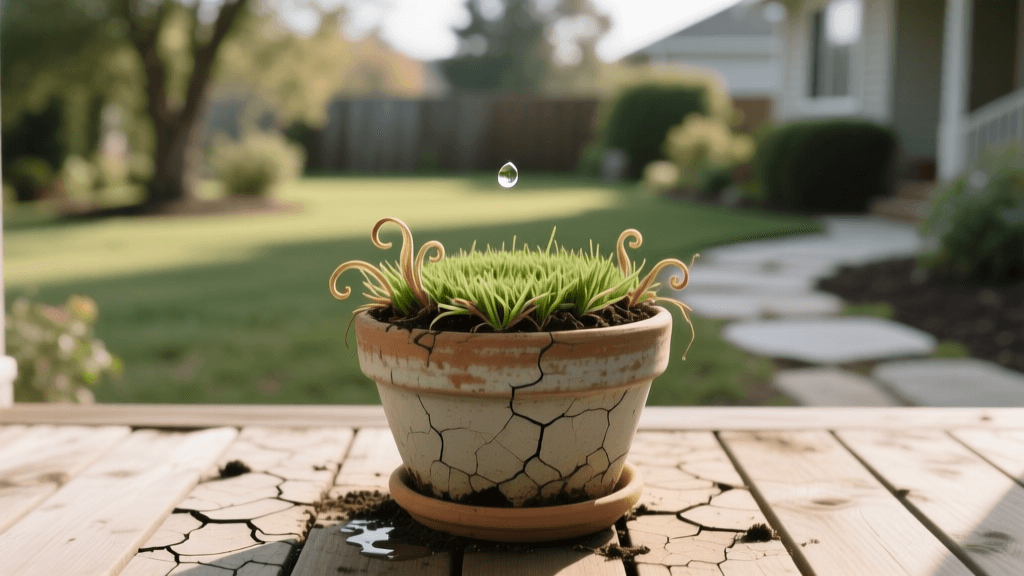
Potted Lawn Drought Recovery: 2026 Deep Watering Schedule
The Rise of the Container Lawn in 2026
Urban landscaping has evolved dramatically by 2026, with container lawns, balcony turf planters, and patio pocket lawns becoming mainstream solutions for homes lacking traditional yard space. Growing turfgrass in large pots and raised containers offers incredible aesthetic benefits, but it introduces a unique set of horticultural challenges. The most pressing of these is drought stress. Unlike in-ground lawns that can tap into deep subsoil moisture reserves, containerized grass is entirely dependent on the limited soil volume within its pot. When a heatwave strikes, potted lawns can transition from lush green to dormant brown in a matter of days.
If your container turf has fallen victim to severe drought stress, standard watering methods will not suffice. Simply spraying the surface of a dry pot often leads to water channeling down the sides and out the drainage holes, leaving the root zone completely parched. To save your potted lawn, you must implement a specialized deep watering schedule designed specifically for container environments. This comprehensive guide will walk you through the exact steps, tools, and schedules required to revive your drought-stressed container turf in 2026.
Why Potted Turf Experiences Severe Drought Stress
Container grasses, such as dwarf fescues, Zoysia 'Zeon', or specialized Bermuda blends, face an accelerated evaporation rate. The sun heats the sides of the container—whether it is terracotta, fiberglass, or galvanized steel—effectively baking the root zone from all angles. According to turfgrass research principles outlined by the University of Minnesota Turfgrass Science program, containerized plants experience a much narrower margin of error regarding soil moisture tension. Once the soil moisture drops below the permanent wilting point, the grass enters survival dormancy. Furthermore, the organic matter in potting mixes breaks down over time, reducing the soil's water-holding capacity and making the turf highly susceptible to rapid desiccation during mid-summer heat spikes.
Diagnosing Hydrophobic Soil in Grass Planters
Before initiating your deep watering schedule, you must check for hydrophobic soil. When peat-based or coir-based potting mixes dry out completely, they become hydrophobic, meaning they repel water. If you pour water onto a hydrophobic potted lawn, it will pool on the surface or run straight down the fissures between the soil and the pot wall. To test this, insert a long screwdriver or a soil probe into the center of the container. If it comes out dry despite recent watering, your soil is hydrophobic, and surface irrigation is entirely ineffective.
The 2026 Deep Watering Recovery Schedule
Reviving a drought-stressed potted lawn requires a phased approach. You cannot simply flood the pot on day one, as this can lead to anaerobic conditions and root rot once the soil structure finally absorbs the water. Below is the recommended 4-week recovery schedule for standard 24-inch to 36-inch diameter turf containers.
| Recovery Phase | Duration | Watering Technique | Frequency | Goal |
|---|---|---|---|---|
| Phase 1: Rehydration | Days 1-3 | Bottom-watering or slow drip with surfactant | Twice daily (Morning & Evening) | Break soil hydrophobia and restore baseline moisture |
| Phase 2: Root Stimulation | Days 4-10 | Deep top-watering to saturation point | Once daily (Early Morning) | Encourage new root hair growth and push out dry pockets |
| Phase 3: Acclimation | Days 11-21 | Cycle and soak method | Every other day | Train roots to seek deeper moisture within the pot profile |
| Phase 4: Maintenance | Day 22+ | Standard deep soak | Twice weekly (adjust for rain) | Maintain optimal turgor pressure and turf color |
Step-by-Step Deep Watering Techniques for Pots
Phase 1: Rehydration (Breaking Hydrophobia)
During the first three days, top-watering is often useless. Instead, utilize a soil surfactant (wetting agent) like AquaSpike or a mild, non-toxic liquid soap solution (one teaspoon per gallon of water) to reduce the water's surface tension. Apply this slowly using a drip emitter or a watering can with a fine rose head. If your container lacks drainage holes or has a built-in reservoir, bottom-watering by filling the saucer or reservoir allows the dry soil to wick moisture upward via capillary action, slowly rehydrating the root ball without causing runoff.
Phase 2: Root Stimulation (Deep Top-Watering)
Once the soil has accepted moisture, transition to deep top-watering. The goal is to water until you see a steady stream of water exiting the drainage holes at the bottom of the pot. This ensures the entire soil profile is saturated and flushes out any accumulated salts from previous fertilizations, which can concentrate during drought periods and burn turf roots. The EPA's WaterSense guidelines emphasize that targeted, efficient watering is crucial; using a drip ring specifically designed for large planters ensures water is distributed evenly across the entire root zone rather than pooling in one spot.
Phase 3: Acclimation (Cycle and Soak)
To build drought resilience, implement the 'cycle and soak' method. Water the container until runoff begins, wait 20 minutes for the soil to absorb the moisture, and then water a second time. This mimics a slow, steady rainstorm and forces the water to penetrate deeply into the lower third of the pot, encouraging the turfgrass roots to grow downward rather than staying near the hot surface.
Essential Tools and Soil Amendments for 2026
Successfully managing a potted lawn requires the right technology and amendments. In 2026, smart irrigation and soil monitoring are more accessible than ever for urban gardeners.
- Ecowitt WH51 Soil Moisture Sensor: This Bluetooth-enabled probe is essential for container lawns. Insert it into the center of the pot to monitor real-time moisture levels at the root zone. It prevents the guesswork that leads to both under-watering and fatal over-watering during the recovery phase.
- Rain Bird Xeri-Bug Drip Emitters: Rather than using a harsh hose nozzle, set up a temporary drip ring using 1-gallon-per-hour emitters. This delivers water exactly where the turf needs it, minimizing evaporation loss on hot patio surfaces.
- Yucca-Based Soil Surfactants: Organic wetting agents derived from yucca extract are critical for container turf. They coat the hydrophobic peat particles and allow water to adhere to the soil matrix, increasing the pot's water-holding capacity by up to 30%.
- Humic Acid Supplements: Applying a liquid humic acid during Phase 2 of the recovery schedule helps reduce plant stress, stimulates root growth, and improves the soil structure within the confined space of the container.
Preventing Future Drought Stress in Container Lawns
Once your potted lawn has fully recovered and returned to its vibrant green state, the focus must shift to prevention. The most effective long-term strategy is mulching the edges of the container and ensuring the pot itself is insulated. Dark-colored pots absorb immense amounts of heat; consider wrapping the interior of your planters with reflective insulation or cork lining before planting your next turf batch. Additionally, top-dressing your potted lawn with a thin layer of fine compost or calcined clay helps seal in moisture and protects the delicate crown of the grass from direct solar radiation.
Fertilization should be paused entirely during the initial drought recovery phase. Applying high-nitrogen synthetic fertilizers to a stressed, dehydrated potted lawn will force top growth at the expense of root survival, ultimately killing the plant. Wait until Phase 4 of the watering schedule, when the turf is actively growing and the soil moisture is stable, before introducing a slow-release, organic turf food.
By respecting the unique microclimate of containerized turf and adhering to a disciplined deep watering schedule, you can maintain a stunning, resilient pocket lawn on any patio or balcony. The key is recognizing that a pot is not a patch of ground; it is a closed ecological system that requires precise, intentional hydration strategies to thrive through the harshest summer conditions of 2026 and beyond.