Lawn Care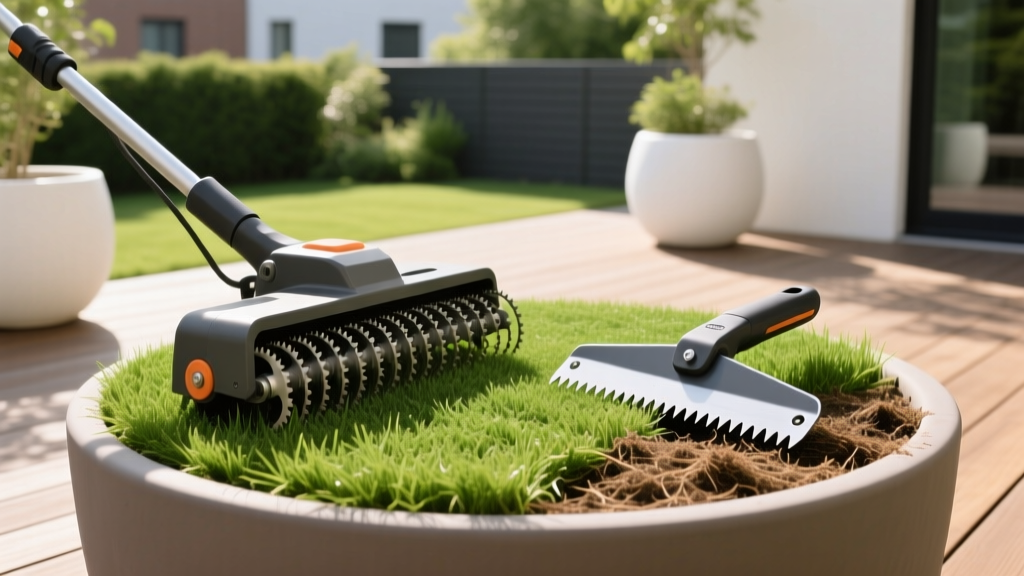
2026 Container Turf: Power Rake vs Dethatcher Blades Guide
Lisa ThompsonPublished
The Rise of Container Turf and the Thatch Problem
As urban landscaping evolves in 2026, the use of containerized turf has skyrocketed. Rooftop planter boxes, expansive balcony gardens, and large modular fiberglass pots are increasingly being planted with dwarf turfgrasses and ornamental grasses to create lush, elevated green spaces. However, growing grass in confined container environments introduces unique maintenance challenges—most notably, the rapid accumulation of thatch. When managing these elevated mini-lawns, homeowners and commercial landscapers face a critical decision: should you use a scaled-down power rake or a specialized dethatcher blade attachment? This guide breaks down the power rake vs. dethatcher blade comparison specifically for container and pot gardening applications.
The Unique Challenge of Container Turf Thatch
Thatch is a dense layer of dead and living grass shoots, stems, and roots that develops between the soil surface and the green vegetation. According to the University of Minnesota Extension, a thin layer of thatch is beneficial, but anything exceeding half an inch restricts water, air, and nutrient penetration. In container gardening, this threshold is even lower. Because large pots and rooftop planters rely on engineered, lightweight soil mixes and strict drainage protocols, a thick thatch layer can cause water to pool on the surface, leading to anaerobic conditions, root rot, and the rapid proliferation of fungal pathogens in the confined space.
Furthermore, standard lawn care equipment is rarely designed with containers in mind. Heavy, gas-powered dethatchers are impossible to maneuver on a balcony and can easily exceed the weight limits of rooftop gardens. Therefore, the 2026 market has shifted toward lightweight, battery-operated power rakes and specialized dethatcher blades designed for handheld trimmers or mini-cultivators, allowing for precise thatch removal without damaging the container's structural integrity or waterproof liners.
Why Potted Grass Accumulates Thatch Faster
Grass grown in containers and large pots often accumulates thatch much faster than grass grown in traditional in-ground lawns. This is primarily due to the intensive maintenance routines required for container gardening. Potted turf requires frequent, shallow watering and regular applications of liquid nitrogen fertilizers to maintain its color in a limited soil volume. This high-nitrogen, high-moisture environment promotes rapid top-growth and stolon production, but the confined root zone and lack of natural soil microbes (which help decompose organic matter) mean the dead plant material builds up faster than it can break down.
Additionally, ornamental grasses frequently used in large decorative pots—such as Pennisetum or dwarf Miscanthus—have incredibly dense, fibrous crowns. When these grasses are cut back in early spring, the remaining stubble quickly weaves into a thick, impenetrable thatch mat that chokes out new growth if not mechanically removed.
Evaluating Power Rakes for Container Gardens
In 2026, cordless power rakes have become the go-to tool for large-scale container lawns, such as modular rooftop trays and sprawling commercial planter boxes. Modern power rakes, like the latest 80V lithium-ion models, feature rotating cylinders equipped with steel or stiff-poly tines that dig into the thatch layer and fling it to the surface.
Pros of Power Rakes in Containers
- Efficiency: For large, rectangular rooftop planters or continuous balcony turf troughs, a compact 10-to-14-inch power rake can clear thatch in a fraction of the time it takes to use manual tools.
- Depth Control: Premium 2026 models offer micro-adjustable depth dials, allowing you to set the tines to exactly 1/4 inch, ensuring you penetrate the thatch without tearing the delicate EPDM waterproof liners at the bottom of your planters.
- Aeration Benefit: The aggressive scratching action lightly scarifies the surface of the container soil mix, improving water infiltration in hydrophobic potting soils.
Cons of Power Rakes in Containers
- Liner Damage Risk: If the depth is miscalibrated, steel tines will instantly shred the geotextile fabric and waterproof membranes essential for rooftop and balcony planters.
- Edge Maneuverability: Power rakes are rigid and struggle to navigate the curved edges of large ceramic or fiberglass pots, often leaving a ring of untouched thatch around the perimeter.
Dethatcher Blades and Tine Attachments for Planters
For smaller containers, curved planters, and individual ornamental grass pots, dethatcher blades offer a highly maneuverable alternative. These typically come in two forms: spring-tine attachments that bolt onto handheld string trimmers, or specialized bladed cultivator heads for mini-tillers. The 2026 iterations of trimmer-mounted dethatcher blades utilize flexible, heavy-gauge polymer tines rather than rigid metal, making them exceptionally safe for container gardening.
Pros of Dethatcher Blades in Containers
- Precision and Safety: The flexible polymer tines sweep the surface of the thatch without digging into the soil. This makes them 100% safe for delicate planter liners, shallow root zones, and the interior walls of expensive composite pots.
- Accessibility: Handheld dethatcher blades allow you to easily dethatch right up to the edge of a circular pot, navigating around irrigation drip emitters and decorative hardscaping elements within the planter.
- Weight: Weighing less than 5 pounds combined with a trimmer, they pose zero risk to rooftop weight restrictions or balcony structural limits.
Cons of Dethatcher Blades in Containers
- Labor Intensive: Clearing thatch from a massive 200-square-foot rooftop planter box using a handheld trimmer attachment is physically exhausting and time-consuming.
- Debris Management: Unlike power rakes that often feature collection bags, trimmer dethatcher blades scatter the thatch in all directions, requiring extensive manual cleanup with a specialized container rake or a wet/dry shop vacuum.
Head-to-Head Comparison: Power Rake vs. Dethatcher Blade
| Feature | Cordless Power Rake (12-inch) | Trimmer Dethatcher Blade (Poly-Tine) |
|---|---|---|
| Best Container Type | Large rectangular rooftop planters, modular turf trays | Circular pots, curved planters, ornamental grass pots |
| Liner Safety | Moderate (Requires strict depth calibration) | High (Flexible tines glide over membranes) |
| Weight / Ergonomics | ~25 lbs (Push-operated) | ~8 lbs (Handheld, causes arm fatigue) |
| Thatch Removal Rate | High (Aggressive extraction) | Moderate (Surface sweeping) |
| 2026 Avg. Cost | $220 - $350 (Tool only) | $35 - $60 (Attachment only) |
Step-by-Step Container Dethatching Guide
Whether you choose a power rake for your sprawling balcony lawn or a dethatcher blade for your ornamental potted grasses, the preparation and execution phases are critical to avoid shocking the confined root system.
- Hydrate the Container: Two days before dethatching, water the container deeply. Container soil mixes (often heavy in peat or coir) can become hydrophobic when dry. Moistening the thatch layer makes it more pliable and easier to extract without tearing living grass crowns.
- Mow or Trim Low: For container turf, lower your mowing height to about 1 inch. For potted ornamental grasses, trim the winter dieback down to the base. This exposes the thatch layer and prevents the tool from tangling in long foliage.
- Calibrate for the Liner: If using a power rake on a rooftop planter, test the depth on a small, inconspicuous corner first. You want the tines to just barely scratch the surface of the soil mix. As noted by the EPA Green Infrastructure Guidelines, protecting the waterproofing and root-barrier layers of elevated planters is paramount to preventing structural water damage to the building below.
- Execute in a Grid Pattern: Make one pass horizontally across the planter box, and a second pass vertically. This cross-hatching ensures you pull up the woven thatch mat from all angles.
- Extract the Debris: Do not leave the pulled thatch in the container. In a confined pot, decaying thatch will immediately invite mold and fungus gnats. Use a specialized narrow-head container rake or a cordless leaf blower to remove all dead material.
Post-Dethatching Container Care
Once the thatch is removed, the exposed root zone in your container will be vulnerable and requires immediate care. In traditional lawns, topdressing with heavy topsoil or compost is common. However, in container gardening, adding heavy soils will destroy the carefully engineered drainage profile of your pot.
Instead, topdress your dethatched container turf with a lightweight, porous material such as expanded shale, pumice, or calcined clay. According to research from the Texas A&M Aggie Turfgrass Program, inorganic topdressing materials improve soil porosity and prevent future thatch compaction without adding excess moisture-retaining organics that could rot container roots. Spread a quarter-inch layer of expanded shale over the turf and brush it down into the dethatched grooves.
Follow up with a light application of a liquid kelp or amino-acid-based biostimulant. Because container roots are easily stressed by the mechanical agitation of dethatching, biostimulants encourage rapid cellular recovery and root regeneration without the salt buildup associated with traditional synthetic fertilizers. Finally, water the container gently to settle the topdressing and wash any remaining dust off the grass blades.
Conclusion
Managing thatch in containerized turf and large potted grasses requires a delicate balance between aggressive removal and the protection of confined root zones and planter liners. For expansive, rectangular rooftop planters and modular balcony lawns, a modern, micro-adjustable cordless power rake is the undisputed champion of efficiency. Conversely, for curved fiberglass pots, individual ornamental grass containers, and spaces where liner safety is the absolute highest priority, a flexible poly-tine dethatcher blade attached to a string trimmer provides unmatched precision. By selecting the right tool for your specific container setup and following up with lightweight, inorganic topdressing, your elevated potted lawns will remain lush, drain properly, and thrive throughout the 2026 growing season and beyond.