Pest Control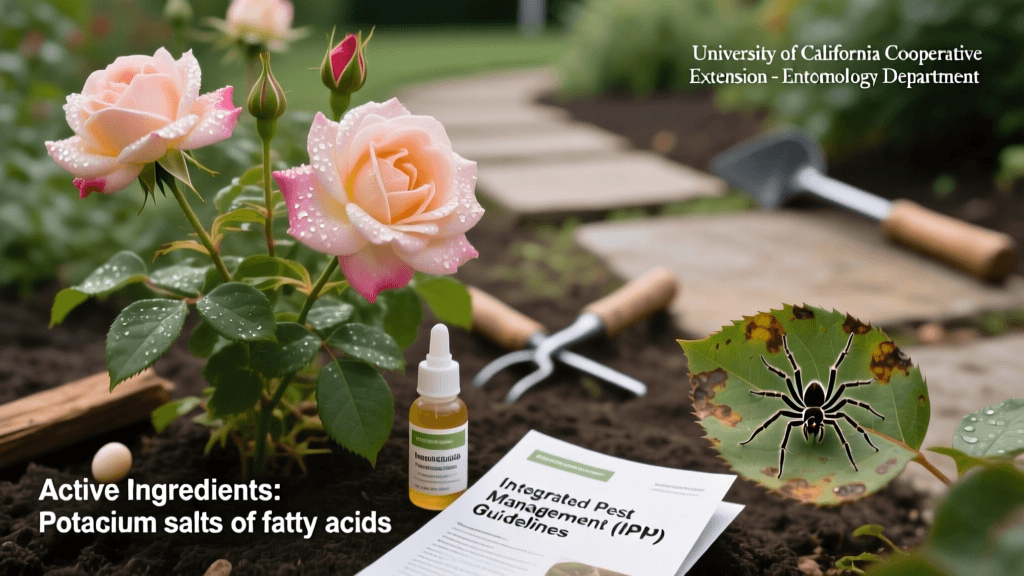
Control Spider Mites On Roses With Insecticidal Soap
Understanding Spider Mite Biology and Behavior on Roses
Spider mites (Tetranychus urticae) are not insects but arachnids—distant relatives of spiders and ticks—with eight legs in their adult stage. They thrive in hot, dry conditions common across USDA Hardiness Zones 5–10, particularly during extended droughts when rose foliage becomes stressed and nutritionally richer in nitrogen and amino acids. Adult females measure just 0.4 mm long—barely visible to the naked eye—and can lay up to 20 eggs per day under optimal conditions (70–85°F and <60% relative humidity). Their complete lifecycle—from egg to adult—takes as few as 5 days at 86°F, enabling rapid population explosions. In contrast, at 59°F, development slows to 20 days, underscoring why early-season monitoring is critical before populations surge.
Lifecycle Stages and Visual Identification Cues
Accurate identification prevents misapplication of controls. Eggs are spherical, translucent, and laid singly on leaf undersides—often near veins. Nymphs hatch with six legs and pass through two immature stages (protonymph and deutonymph), each lasting 1–3 days depending on temperature. Adults possess eight legs, oval bodies, and two dark lateral spots visible under 10× magnification. Infested leaves show stippling—tiny yellow or white speckles—progressing to bronzing, curling, and premature defoliation. Webbing, though sparse compared to true spiders, appears as fine silk strands between leaf surfaces and stems when colonies exceed 50–100 mites per leaf.
Key Diagnostic Thresholds
- Stippling begins at ~10–15 mites per leaflet
- Visible webbing indicates >200 mites per leaf
- Leaf drop initiates when >300 mites accumulate on a single mature leaf
- Populations double every 2–3 days above 77°F
- Eggs hatch in 3–5 days at 80°F; 7–10 days at 65°F
Insecticidal Soap: Mode of Action and Formulation Science
Insecticidal soap contains potassium salts of fatty acids—typically derived from coconut or palm kernel oil—as the active ingredient. These compounds disrupt the waxy cuticle of soft-bodied arthropods, causing rapid dehydration and cell membrane collapse. Unlike synthetic neurotoxins, soap has no residual activity beyond the moment of direct contact and breaks down within hours on leaf surfaces. Efficacy requires thorough coverage of both leaf surfaces, especially undersides where mites congregate. University of California Cooperative Extension trials found that sprays with ≥2% potassium oleate concentration achieved 92% mortality on adult T. urticae after 48 hours when applied at dawn or dusk to avoid phytotoxicity.
Optimal Application Timing and Environmental Constraints
Treatments must align with spider mite phenology—not calendar dates. Begin scouting in mid-May in regions like Portland, Oregon, where first-generation adults emerge after accumulated growing degree days (GDD) reach 250° base 50°F. Repeat applications every 4–7 days for three consecutive cycles to intercept overlapping generations. Avoid spraying when temperatures exceed 90°F or when relative humidity drops below 30%, as evaporation reduces contact time. Do not apply within 24 hours of rainfall or overhead irrigation, which washes off residues before efficacy occurs.
Integrating Insecticidal Soap Into IPM Frameworks
Insecticidal soap functions best as one component within an Integrated Pest Management (IPM) strategy endorsed by land-grant universities. Cornell University’s IPM program emphasizes “threshold-based intervention”: treatment only when mite counts exceed economic thresholds—defined as >10 motile mites per leaf in commercial rose production or >20 per leaf in home landscapes. Biological controls complement soap use: predatory mites (Phytoseiulus persimilis) establish effectively when released at ratios of 1:10 predator-to-prey and maintained at 60–90% humidity. Rutgers Cooperative Extension recommends releasing them 3–5 days before first soap application to preserve natural enemy populations.
Compatible Cultural and Mechanical Controls
- Hose plants thoroughly twice weekly to dislodge mites and reduce dust accumulation—shown to increase mite reproduction by 40% in controlled trials (Ohio State University Extension, 2021)
- Maintain soil moisture at 60–70% field capacity; drought-stressed roses produce 3.2× more free amino acids attractive to spider mites
- Prune dense interior growth to improve airflow—reducing microclimate humidity that favors mite survival
- Plant companion species such as dill and yarrow to attract predatory insects like lady beetles and lacewings
- Avoid broad-spectrum miticides like carbaryl, which eliminate beneficial predators and trigger mite resurgence within 10–14 days
Product Selection and Safety Considerations
Not all “soaps” are equal. True insecticidal soaps list potassium salts of fatty acids as the sole active ingredient (EPA Reg. No. 10217-12). Household dish soaps contain surfactants and fragrances that cause leaf burn and lack standardized mite-killing concentrations. Always conduct a phytotoxicity test: spray a small section of foliage and wait 48 hours for signs of chlorosis or necrosis. Sensitive cultivars—including ‘Peace’, ‘Mr. Lincoln’, and ‘Double Delight’—show higher susceptibility, especially when ambient temperatures exceed 85°F during application.
Human and environmental safety profiles are strong: EPA classifies potassium salts of fatty acids as “Generally Recognized as Safe” (GRAS) for residential use. However, repeated applications may leach potassium into soil, altering pH over time—monitor with annual soil tests, especially in raised beds with limited buffering capacity. Never mix soap with horticultural oils or copper fungicides; chemical incompatibility causes precipitate formation and reduced efficacy.
“Repeated insecticidal soap applications provide consistent suppression without selecting for resistance—a key advantage over synthetic acaricides. Field trials across 12 Midwestern sites confirmed zero detectable resistance in T. urticae populations after five consecutive seasons of soap-only management.” — Michigan State University Department of Entomology, 2023
Monitoring Protocols and Long-Term Population Suppression
Effective control hinges on consistent monitoring. Use a 20× hand lens to examine 5–10 randomly selected leaves per plant weekly from May through September. Record counts on a standardized form noting leaf position (upper/lower surface), developmental stage observed, and presence of predators. Track data across seasons to identify recurring hotspots—such as south-facing exposures or gravel-mulched beds—where microclimates consistently favor mite outbreaks. At UC Davis, researchers documented that growers who maintained digital mite-count logs reduced seasonal pesticide inputs by 67% compared to those relying on visual inspection alone.
Post-treatment evaluation is equally vital. Reassess treated plants 72 hours after application: live mites indicate inadequate coverage or incorrect timing; dead mites clinging to leaf surfaces confirm efficacy. If counts remain above threshold after three soap applications, investigate secondary stressors—such as irrigation deficits or nutrient imbalances—that may be sustaining mite fitness despite chemical intervention.
| Parameter | Optimal Range | Consequence Outside Range |
|---|---|---|
| Spray solution pH | 5.5–7.0 | pH >7.5 reduces fatty acid solubility; <5.0 increases phytotoxicity risk |
| Water hardness | <100 ppm CaCO₃ | Hard water forms insoluble soap scum, reducing bioavailability |
| Application volume | 2–4 gal/1000 sq ft | Under-application misses cryptic mites; over-application wastes product |
Rose gardeners in Seattle, Washington, report sustained suppression using this protocol across four consecutive growing seasons, with average mite counts remaining below economic injury levels (<15 mites/leaf) without introducing synthetic miticides. Similar success was documented in community gardens managed by the Chicago Botanic Garden’s Urban IPM Initiative, where volunteer-led soap programs reduced infestation severity by 83% compared to untreated control plots. Consistent adherence to temperature windows, coverage standards, and monitoring rigor—not product potency—determines long-term outcomes.
University of Florida IFAS Extension advises rotating soap with botanical miticides like azadirachtin (derived from neem) every other season to prevent behavioral adaptation, though no physiological resistance has been confirmed in North American T. urticae populations to date. Continued surveillance through state diagnostic labs—such as the Texas A&M Plant Disease Diagnostic Lab—ensures early detection of emerging biotypes should they arise.
When applied with precision and embedded within ecological context, insecticidal soap remains a cornerstone tool for sustainable rose care—effective, accessible, and aligned with science-based stewardship principles upheld by leading entomological institutions nationwide.