Home & Garden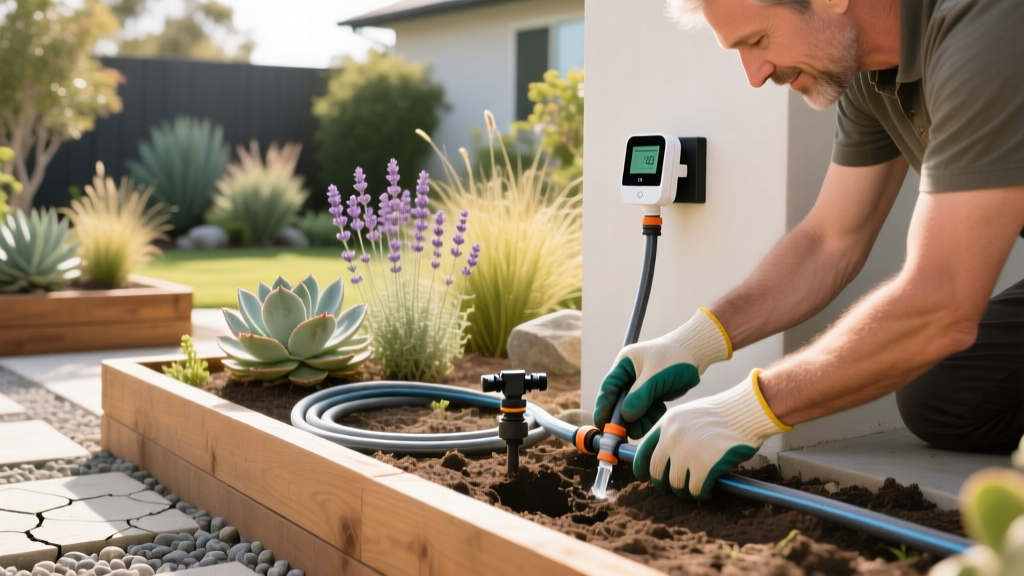
Convert Sprinklers to Drip Irrigation for Drought Savings
David ParkPublished
As climate patterns shift and severe droughts become a recurring challenge for homeowners, maintaining a lush, vibrant garden can feel like an uphill battle against nature and local water restrictions. Traditional landscaping methods, heavily reliant on broadcast spray sprinklers, are no longer sustainable in water-scarce regions. Fortunately, bridging the gap between a beautiful outdoor living space and responsible water stewardship is entirely possible. By converting your outdated sprinkler zones to drip irrigation and integrating a smart weather-based controller, you can drought-proof your landscape, slash your water bills, and ensure your garden thrives even under the harshest conditions. This comprehensive guide will walk you through the science, the materials, and the step-by-step process of upgrading your irrigation system for maximum water-wise efficiency.
The Hidden Inefficiencies of Spray Sprinklers
Traditional pop-up spray sprinklers were designed in an era of abundant water and cheap utility rates. While they are excellent for covering large, uniform expanses of turfgrass, they are notoriously inefficient when applied to mixed garden beds, shrubs, and trees. When water is blasted into the air, it becomes highly susceptible to environmental losses. Wind drift can carry water droplets onto paved driveways or neighboring properties, while high temperatures lead to rapid evaporation before the moisture ever reaches the soil surface. Furthermore, spray heads often suffer from poor distribution uniformity, leading to dry spots that encourage overwatering just to keep the thirstiest plants alive. According to the Environmental Protection Agency (EPA), traditional spray irrigation systems operate at an efficiency rate of only 50% to 70%, meaning nearly half of the water you pay for is lost to the atmosphere or hardscaping.
The Drip Irrigation Advantage
Drip irrigation flips the script on landscape watering by delivering moisture slowly and directly to the root zone of the plant. By utilizing a network of flexible poly tubing and low-flow emitters, drip systems bypass the air entirely, eliminating wind drift and drastically reducing evaporation. The EPA notes that properly designed drip irrigation systems can achieve up to 90% water efficiency. This targeted approach not only conserves water but also suppresses weed growth by keeping the surrounding topsoil dry, and reduces the prevalence of fungal leaf diseases caused by overhead watering. As highlighted by the regional conservation campaign Water Use It Wisely, transitioning to drip is consistently ranked as one of the most impactful changes a homeowner can make for long-term landscape water conservation.
"Outdoor water use can account for up to 60% of household water use in arid climates, making irrigation efficiency the single most impactful area for residential conservation." — Alliance for Water Efficiency
The Golden Rule: Hydrozoning Your Landscape
Before you purchase a single piece of tubing, you must understand the concept of hydrozoning. Hydrozoning involves grouping plants with similar water, sun, and soil requirements together and assigning them to a dedicated irrigation valve. A common mistake in residential landscaping is placing drought-tolerant succulents, water-loving ferns, and a thirsty lawn on the exact same sprinkler zone. If you convert a mixed zone to drip and run it long enough to satisfy the ferns, you will drown the succulents. To drought-proof your garden, map out your yard and separate your planting beds into distinct hydrozones. Trees and deep-rooted shrubs require infrequent, deep watering, while shallow-rooted perennials and annuals need more frequent, lighter applications. Each hydrozone should eventually have its own dedicated valve or be controlled independently via a smart manifold system.
Step-by-Step Guide to Converting a Sprinkler Zone
Converting an existing spray zone to drip is a highly manageable DIY project that typically requires a weekend of work and a modest investment in materials. Here is how to execute the conversion using a standard head-to-drip conversion kit.
Materials Needed
- Head-to-drip conversion kit (includes a 25 PSI pressure regulator and a 200-mesh filter)
- 1/2-inch blank polyethylene distribution tubing
- 1/4-inch micro-tubing and 2 GPH (gallons per hour) pressure-compensating drip emitters
- Tubing punch tool, barb fittings, and goof plugs
- Threaded PVC or poly caps to seal unused sprinkler heads
Step 1: Cap and Convert
Begin by excavating the soil around the existing spray heads in your target zone. Unscrew and remove all the spray nozzles and bodies. On all but one of the sprinkler risers, install a threaded cap to seal the line. On the remaining riser—ideally located at the highest elevation or the beginning of the garden bed—thread on your head-to-drip conversion kit. This crucial component reduces the household water pressure (which typically sits around 60-80 PSI) down to a safe 25-30 PSI for drip lines, while the integrated filter prevents sediment from clogging your emitters.
Step 2: Lay the Mainline Tubing
Attach the 1/2-inch blank poly tubing to the conversion kit using a compression fitting or barb connector. Unroll the tubing and allow it to sit in the sun for an hour; the heat will soften the plastic, making it pliable and easier to route through your garden beds. Lay the mainline tubing so it snakes through the bed, passing within a few feet of every target plant. Secure the tubing to the soil using metal or plastic landscape staples every three to four feet to prevent it from shifting.
Step 3: Connect the Emitters
Using your punch tool, create a small hole in the 1/2-inch mainline near the base of each plant. Insert a barbed connector, attach a length of 1/4-inch micro-tubing, and connect a 2 GPH drip emitter at the end. Place the emitter directly over the plant's root ball. For larger established trees or sprawling shrubs, use a drip ring or multiple emitters spaced evenly around the drip line (the outer edge of the plant's canopy) to encourage wide, stable root growth.
Integrating Smart Irrigation Controllers
A drip system is only as efficient as the schedule dictating its run times. Traditional timer-based controllers operate blindly, watering your garden whether it is 100 degrees and dry, or currently pouring rain. To truly optimize your water-wise landscape, upgrade your garage wall dial to a WaterSense labeled smart irrigation controller. These devices connect to your home Wi-Fi and utilize local weather data, soil type, slope, and plant material to automatically adjust watering schedules based on real-time evapotranspiration (ET) rates. The EPA reports that smart irrigation controllers can save the average home nearly 15,000 gallons of water annually. Popular models like the Rachio 3 or Orbit B-hyve allow you to manage your hydrozones directly from your smartphone, sending you alerts for freeze warnings, rain skips, and system leaks.
System Comparison: Spray vs. Standard Drip vs. Smart Drip
To understand the true return on investment for your landscape upgrade, consider how these three irrigation methodologies stack up against one another in a drought-prone environment.
| Feature | Traditional Spray | Standard Drip (Timer) | Smart Drip System |
|---|---|---|---|
| Water Efficiency | 50% - 70% | 85% - 90% | 90% - 95% |
| Evaporation & Wind Loss | High | Negligible | Negligible |
| Schedule Adaptability | None (Manual) | Fixed Schedule | Dynamic (Weather-based) |
| Weed Promotion | High (wets topsoil) | Low (targeted) | Low (targeted) |
| Estimated Annual Savings | Baseline | 30% - 50% | 50% - 70% |
Seasonal Maintenance for Drought Resilience
Drip systems require a different maintenance regimen than spray systems. Because the water pathways are narrow, they are susceptible to clogging from mineral deposits and debris. At the start of every spring, open the flush valves at the end of your 1/2-inch mainlines and let the system run for two minutes to blow out accumulated sediment. Inspect your 200-mesh filter and rinse it under a hose if it is coated in algae or dirt. During the peak of summer, periodically check your emitters while the system is running; a dry patch of soil beneath a thirsty shrub usually indicates a clogged emitter or a disconnected micro-tube. Finally, if you live in a region with hard freezes, you must winterize your drip system by shutting off the main water supply, opening the manual drain valves, and using an air compressor to blow out residual water, preventing cracked fittings and shattered pressure regulators.
Conclusion
Embracing water-wise landscaping does not mean sacrificing the beauty and tranquility of your outdoor living spaces. By taking the time to hydrozone your garden, converting wasteful spray heads to precision drip lines, and harnessing the power of smart weather-based technology, you build a resilient ecosystem capable of weathering severe droughts. Not only will you see a dramatic reduction in your monthly utility costs, but your plants will also exhibit deeper root systems, richer foliage, and improved overall health. In an era of shifting climates, smart irrigation is no longer just an eco-friendly bonus; it is an essential pillar of modern, sustainable home and garden care.
