Pest Control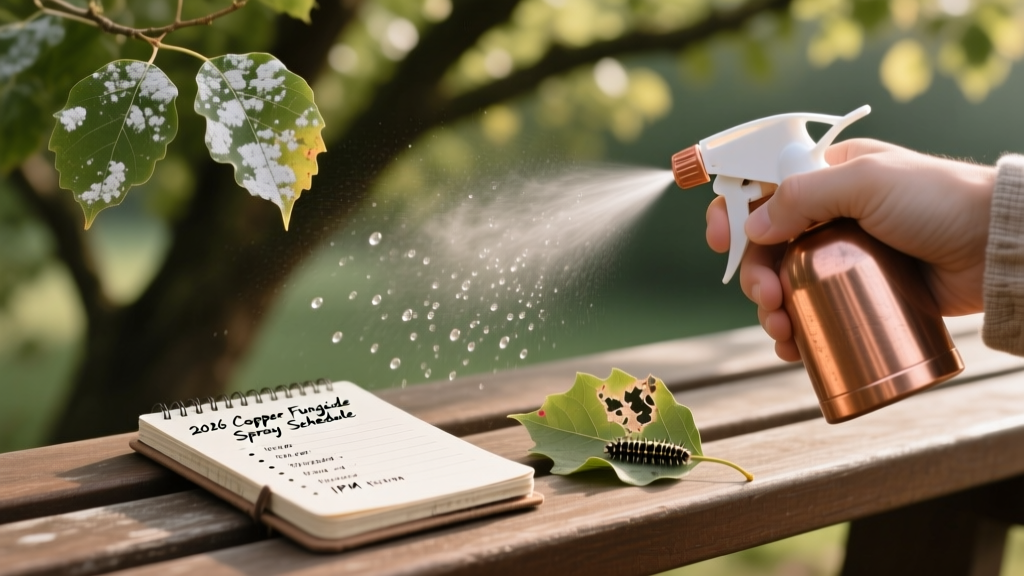
2026 Copper Fungicide Spray Schedule for Powdery Mildew
Lisa ThompsonPublished
Introduction to 2026 Tree IPM: Balancing Webworms and Fungal Pathogens
As we navigate the 2026 growing season, arborists, orchard managers, and home gardeners face a complex matrix of pest and disease pressures. Recent climate shifts have extended the humid microclimates that favor fungal pathogens, while simultaneously altering the life cycles of defoliating insects. For tree care professionals, mastering a copper fungicide spray schedule for powdery mildew prevention is not an isolated task; it must be seamlessly integrated into broader canopy management strategies, particularly Tree Web Worm Control. The fall webworm (Hyphantria cunea) remains a pervasive nuisance in North America, and the severe stress caused by its late-summer defoliation often leaves trees highly vulnerable to secondary fungal infections the following spring. This comprehensive guide outlines the precise 2026 copper spray protocols, ensuring you protect your trees from powdery mildew without disrupting your biological and chemical webworm management programs.
The Hidden Link Between Tree Web Worm Control and Powdery Mildew
At first glance, fall webworms and powdery mildew appear to be entirely separate issues. Webworms are insect pests that create unsightly silken tents in the outer canopy, while powdery mildew (caused by fungi such as Podosphaera leucotricha on apples or Erysiphe species on ornamentals) is a foliar disease that thrives in moderate temperatures and high humidity. However, from an Integrated Pest Management (IPM) perspective, they are deeply interconnected.
When fall webworms heavily defoliate a tree in late summer or early autumn, the tree is forced to expend valuable carbohydrate reserves to push out late, weak flushes of growth. These late-season shoots often fail to harden off properly before winter dormancy. According to the Penn State Extension guide on ornamental powdery mildew, tender, unhardened twigs and dormant buds are the primary overwintering sites for powdery mildew mycelium. Therefore, a tree stressed by webworm feeding is significantly more likely to harbor overwintering fungal spores, leading to explosive mildew outbreaks during the 2026 spring bud break. Furthermore, the physical webbing left behind by webworms can trap moisture and debris against the bark, creating localized microclimates that encourage secondary wood-decaying fungi and complicate dormant-season spray coverage.
Selecting the Right Copper Formulation for 2026
Copper fungicides remain a cornerstone of organic and conventional disease prevention. However, not all copper products are created equal. The efficacy and safety of a copper spray depend heavily on its Metallic Copper Equivalent (MCE) and its formulation. In 2026, the industry has seen a shift toward lower-MCE, highly dispersed copper formulations that provide superior coverage while minimizing the risk of phytotoxicity (plant tissue damage).
- Bordeaux Mixture: A traditional blend of copper sulfate and hydrated lime. While highly effective and rainfast, it is heavily alkaline (high pH). This alkalinity makes it completely incompatible with many biological insecticides used for webworm control, such as Bacillus thuringiensis (Bt).
- Copper Hydroxide: A widely used, relatively inexpensive formulation with a moderate MCE. It provides excellent preventive coverage but can cause russetting on sensitive fruit varieties if applied during cool, wet spring weather.
- Copper Octanoate (Copper Soap): A newer, highly refined formulation that is much gentler on emerging foliage. It is the preferred choice for 2026 IPM programs where sprays must be applied closer to bloom, as it poses a lower risk of damaging delicate floral tissues.
The 2026 Copper Fungicide Spray Schedule
Timing is everything when managing powdery mildew. The University of California Statewide Integrated Pest Management Program emphasizes that copper fungicides are strictly preventive; they cannot cure an active infection. Therefore, applications must be timed to protect emerging tissue before fungal spores can germinate. Below is the foundational 2026 spray schedule for susceptible trees (apples, crabapples, dogwoods, and sycamores).
| Phenological Stage | Timing / Season | Recommended Copper Type | Target Pathogen / Pest Interaction |
|---|---|---|---|
| Dormant Season | Late Winter (Pre-Bud Swell) | Bordeaux Mixture or High-MCE Copper Hydroxide | Kills overwintering mildew spores in buds; cleans up bark debris left by webworms. |
| Green Tip | Early Spring (Buds opening) | Copper Hydroxide (Moderate MCE) | Protects first emerging leaves from primary mildew inoculum. |
| Pink Bud | Pre-Bloom | Copper Octanoate (Low MCE) | Safe for delicate floral tissues; prevents blossom and shoot infection. |
| Petal Fall | Post-Bloom | Copper Octanoate or Sulfur | Protects new terminal shoots; safe to rotate with Btk for early webworm larvae. |
| Summer Cover | Early Summer | Alternative: Potassium Bicarbonate | Avoid copper in high heat to prevent phytotoxicity; focus on Bt for webworms. |
Phenological Breakdown and Application Timing
Dormant and Delayed Dormant Sprays
The most critical application for breaking the powdery mildew cycle occurs during the dormant season, typically in late February or early March of 2026, depending on your hardiness zone. A high-rate copper spray applied at this stage acts as a broad-spectrum sterilant, killing the fungal mycelium hidden within the bud scales. This is also an excellent time to address the remnants of tree webworm activity. While the webworms themselves overwinter as pupae in the soil or leaf litter, a thorough dormant spray helps clean the bark of secondary pathogens that may have entered through feeding wounds. Ensure you spray until the bark is thoroughly drenched and runoff occurs.
Green Tip to Pink Bud
As the buds begin to swell and show green tissue, the tree becomes highly susceptible to primary infection. The Penn State Extension fall webworm resource notes that while webworms are not active during this early spring window, the foundational health of the canopy is being established. Apply a moderate-rate copper hydroxide spray at the green tip stage. As you approach the pink bud stage (just before flowers open), switch to a gentler copper octanoate to avoid damaging the pollen or causing fruit russet. Never apply heavy copper formulations during bloom, as this can harm pollinators and disrupt fruit set.
Petal Fall and Early Summer
Once the petals have dropped, the tree enters a period of rapid vegetative growth. This is the danger zone for both powdery mildew and the first generation of fall webworms. At petal fall, a final copper application (or a switch to micronized sulfur, which is highly effective against mildew and safer for beneficial insects) is recommended. As summer approaches and temperatures consistently exceed 80°F (27°C), copper applications should be halted. High heat combined with copper can cause severe phytotoxicity, burning the foliage and stressing the tree, which ironically makes it more attractive to late-summer webworm moths looking for stressed hosts to lay their eggs.
Integrating Btk for Webworms Without Neutralizing Copper
A major challenge in modern arboriculture is tank-mixing compatibility. When fall webworm caterpillars emerge in mid-to-late summer, the gold standard for biological control is Bacillus thuringiensis var. kurstaki (Btk). Btk is a naturally occurring soil bacterium that, when ingested by caterpillars, disrupts their digestive tract, killing them within days without harming humans, pets, or beneficial insects.
However, Btk is highly sensitive to alkaline environments. Copper fungicides, particularly Bordeaux mixture and copper hydroxide, are inherently alkaline (often with a pH between 8.0 and 10.0). If you tank-mix Btk with a copper fungicide, the high pH will rapidly denature the Btk proteins, rendering your webworm control completely useless. To maintain a robust 2026 IPM strategy, you must separate your copper fungicide applications from your Btk applications by at least 7 to 10 days. If you must treat an early mildew flare-up and a simultaneous webworm hatching, apply the Btk first, allow it to dry and be ingested by the larvae, and then apply a pH-neutral fungicide (like potassium bicarbonate or a biological fungicide containing Ampelomyces quisqualis) instead of copper.
Environmental Safety and Phytotoxicity Prevention
While copper is an essential micronutrient for plant growth, excessive accumulation in the soil can lead to toxicity, harming earthworms and disrupting soil microbiology. In 2026, sustainable land management dictates that we use copper judiciously. Always calculate the exact amount of active ingredient needed based on the product's MCE, and avoid exceeding the annual limits recommended by local agricultural extensions. Furthermore, copper is highly toxic to aquatic life. Never spray near ponds, streams, or storm drains, and always respect buffer zones.
Phytotoxicity is another concern, particularly on cultivars with thin cuticles or during periods of slow drying. Copper sprays should be applied in the early morning or late evening when temperatures are mild and winds are calm. Avoid applying copper if rain is expected within 12 hours, as the slow drying process allows more copper ions to dissolve and penetrate the plant tissue, causing necrotic spotting. By adhering to this precise 2026 schedule and respecting the biological nuances of both powdery mildew and fall webworms, you can maintain a vibrant, healthy, and highly productive tree canopy year after year.