Gardening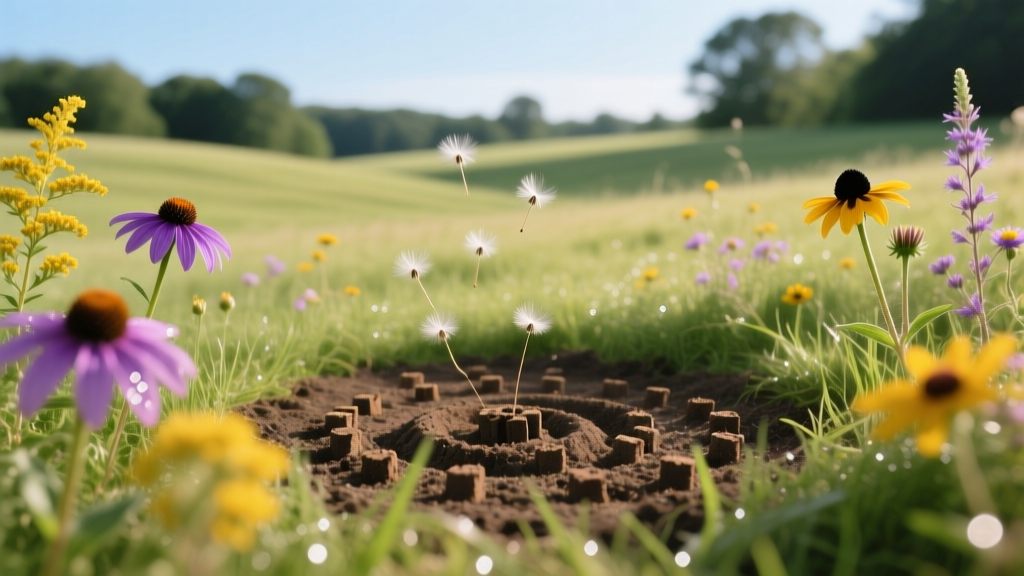
2026 Native Wildflower Meadow Aeration & Seeding Guide
David ParkPublished
The Shift to Native Meadows in 2026
As we navigate the environmental and climatic realities of 2026, the traditional American lawn is undergoing a massive transformation. Homeowners and land managers are increasingly replacing high-input, water-thirsty turfgrass with resilient native wildflower meadows. These ecosystems offer profound benefits, from drastically reducing water consumption and eliminating synthetic fertilizers to supporting critical pollinator populations. However, transitioning from a compacted lawn to a flourishing meadow is not as simple as tossing seeds onto the grass. The secret to a successful native meadow establishment lies in meticulous soil preparation, specifically the strategic use of aeration combined with precise seeding techniques.
Native wildflower seeds are often incredibly small—some resemble dust or fine sand. Unlike large turfgrass seeds, they require exceptional seed-to-soil contact, specific light conditions, and consistent moisture to germinate. If your soil is compacted, water will pool or run off, and tiny seeds will be washed away or eaten by birds before they can establish roots. This is where aeration becomes the cornerstone of your meadow installation strategy.
Why Aeration is Non-Negotiable for Meadow Success
Compacted soil is the enemy of native plant establishment. Years of foot traffic, mowing, and natural settling create a dense soil profile that restricts root penetration and water infiltration. According to USDA Forest Service wildflower resources, native prairie plants and wildflowers develop deep, extensive root systems that can reach several feet into the earth, providing them with drought tolerance and long-term resilience. However, they cannot achieve this if the topsoil is impenetrable.
Aeration solves this by physically fracturing the soil crust. When you core aerate, you create thousands of micro-depressions in the soil. These holes serve three vital functions for wildflower seeding:
- Seed Catchment: The holes act as tiny protective pockets that catch broadcasted seeds, preventing them from blowing away in the wind or washing away in the rain.
- Moisture Retention: Aeration holes collect dew and light rainfall, creating localized zones of higher humidity that keep delicate germinating seeds from drying out.
- Root Pathways: The channels left by removed soil cores provide an immediate, low-resistance pathway for young native taproots to dive deep into the subsoil.
Core Aeration vs. Liquid Aeration: Which is Best?
In 2026, the market offers both mechanical core aeration and chemical liquid aeration. While liquid aerators (typically composed of humic acids, fulvic acids, and saponins) are excellent for ongoing turf maintenance, they are insufficient for the heavy lifting required when establishing a new meadow from seed.
| Feature | Core Aeration (Mechanical) | Liquid Aeration (Chemical) |
|---|---|---|
| Soil Fracturing | Physical removal of 3-4 inch soil plugs | Chemical loosening of soil particles at a microscopic level |
| Seed Catchment | Excellent; holes catch and protect tiny seeds | Poor; leaves a flat surface prone to seed runoff |
| Compaction Relief | Immediate and deep relief | Gradual, superficial relief |
| Best Use Case | Initial meadow site preparation | Ongoing maintenance of established lawns |
For native wildflower meadow establishment, mechanical core aeration is the undisputed champion. You need the physical holes to protect the seed and the deep fracturing to welcome deep-rooted perennials like Purple Coneflower (Echinacea purpurea) and Swamp Milkweed (Asclepias incarnata).
Selecting Your 2026 Native Seed Mix
Before you rent an aerator, you must secure a high-quality native seed mix. The 2026 seed catalogs heavily emphasize climate-adapted ecotypes—seeds harvested from plants that have evolved in your specific regional microclimate. Avoid cheap, big-box-store mixes that contain invasive fillers or non-native annuals.
When shopping, look for the Pure Live Seed (PLS) percentage. This metric tells you exactly how much of the bag contains viable native seed versus chaff, dirt, and dead matter. As detailed in Prairie Moon Nursery's comprehensive planting guide, a higher PLS means you need to buy less bulk weight to achieve the correct seeding rate. Ensure your mix contains a balance of native grasses (like Little Bluestem or Prairie Dropseed) and diverse forbs (wildflowers) to create a structurally sound, weed-resistant meadow.
Step-by-Step Aeration and Seeding Process
Step 1: Eradicate Existing Turf (Without Tilling)
The biggest mistake beginners make is rototilling the soil before seeding a meadow. Tilling brings millions of dormant weed seeds to the surface, guaranteeing a nightmare of invasive weeds that will choke out your slow-growing natives. Instead, smother the existing grass using black silage tarps or thick cardboard covered in wood mulch for 8 to 12 weeks prior to seeding. This kills the turf and its root system while leaving the weed seed bank buried and dormant.
Step 2: The Core Aeration Pass
Once the turf is dead and the area is clear, it is time to aerate. Rent a heavy-duty walk-behind core aerator. Set the machine to pull cores that are at least 3 to 4 inches deep. Run the aerator over the entire area in a grid pattern, making one pass horizontally and a second pass vertically. This double-pass ensures the soil is thoroughly fractured and the holes are spaced no more than 2 to 3 inches apart. Leave the extracted soil cores on the surface; they will break down naturally and top-dress the area.
Step 3: Mix and Broadcast the Seed
Native seeds are notoriously difficult to broadcast evenly because of their tiny size. To solve this, mix your seed with a bulking agent. Damp sand, vermiculite, or fine sawdust works perfectly. Use a ratio of about 4 parts bulking agent to 1 part seed. This adds volume, making it easy to use a standard broadcast spreader or to sow by hand. Spread the mixture evenly across the aerated soil, ensuring the seeds fall directly into the aeration holes and settle against the exposed soil walls.
Step 4: Press and Hydrate
Do not bury native wildflower seeds under layers of topsoil or straw; many require light to trigger germination. Instead, focus on pressing the seed firmly into the soil. Rent a lightweight lawn roller (fill it only halfway with water so it isn't too heavy) and roll the entire area. This presses the seeds into the aeration holes and ensures intimate seed-to-soil contact. Follow up with a gentle, fine-mist watering to settle the soil around the seeds without washing them away.
First-Year Maintenance: The Crucial Mowing Strategy
Establishing a meadow is an exercise in patience. In the first year, your native perennials will focus almost entirely on building deep root systems, producing very little top growth. Meanwhile, opportunistic annual weeds will attempt to take over the space.
To manage this, implement a first-year mowing regimen. Set your mower deck to a height of 6 to 8 inches. Whenever the annual weeds grow taller than 12 inches, mow them down to the 6-inch mark. This chops off the weed seed heads before they can reproduce, while safely passing over the low-growing rosettes of your native perennials. As highlighted by The Xerces Society for Invertebrate Conservation, this minimal-impact maintenance protects the developing habitat while keeping aggressive weeds at bay.
Conclusion
Establishing a native wildflower meadow in 2026 is one of the most rewarding landscaping projects you can undertake. By prioritizing core aeration to relieve compaction and create protective micro-environments for your seeds, you bypass the most common pitfalls of meadow installation. Combine this rigorous soil preparation with high-quality, regional ecotype seeds, and you will be rewarded with a vibrant, resilient, and ecologically vital landscape that will thrive for decades with minimal intervention.
