
Landscaping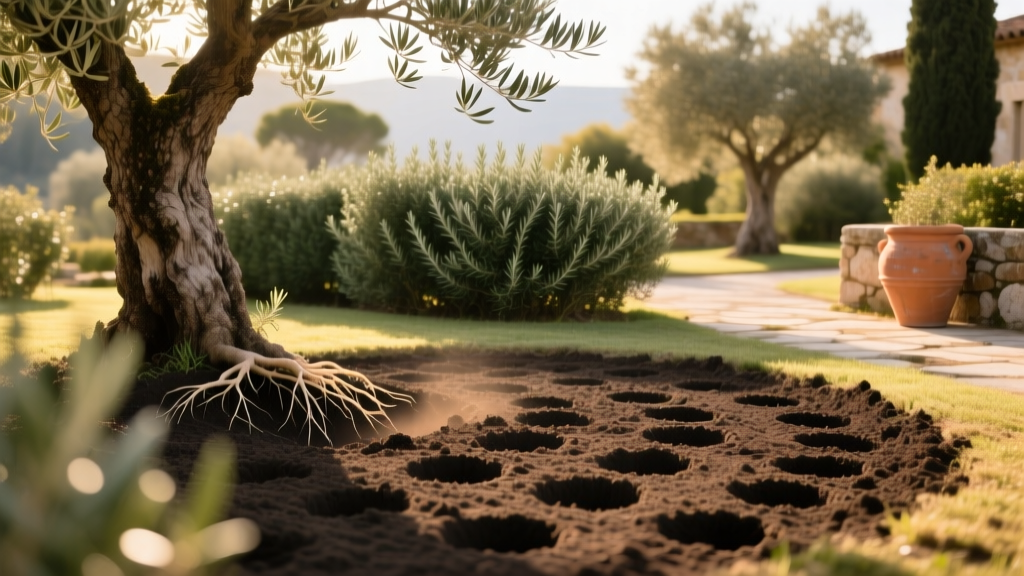
2026 Core Aeration Guide For Olive Trees & Rosemary Hedges
Emily WatsonPublished
The Mediterranean Landscape Challenge in 2026
As we navigate the landscaping trends of 2026, the shift toward drought-tolerant, sustainable outdoor living spaces has made Mediterranean designs more popular than ever. Homeowners are increasingly drawn to the elegant, low-water aesthetic of olive trees (Olea europaea) paired with dense, fragrant rosemary hedging (now botanically classified as Salvia rosmarinus). However, a hidden threat frequently undermines these beautiful, water-wise yards: severe soil compaction. Whether caused by leftover construction debris, heavy foot traffic in newly installed outdoor patios, or the natural settling of clay-heavy soils, compaction creates an anaerobic environment that is fundamentally hostile to Mediterranean flora.
In a traditional Mediterranean environment, olives and rosemary thrive in rocky, sandy, and highly porous soils where water drains rapidly and oxygen freely circulates around the root zone. When these plants are installed in compacted suburban soils, the results can be devastating. To maintain a thriving Mediterranean landscape in 2026, integrating a strategic core aeration plan for both your surrounding drought-tolerant lawns and the critical drip lines of your trees and hedges is absolutely essential.
Why Olives and Rosemary Demand Well-Aerated Soil
Mediterranean plants are evolutionarily adapted to survive prolonged droughts, but they are highly susceptible to root rot when trapped in dense, poorly draining earth. Olive trees are particularly vulnerable to Phytophthora and Verticillium wilts, fungal pathogens that flourish in waterlogged, compacted soils. Similarly, rosemary hedges, which are often used to create privacy screens or define garden rooms, will quickly develop powdery mildew and root asphyxiation if the soil pore space is crushed.
According to the Arbor Day Foundation, soil compaction is a primary contributor to tree decline, as it physically restricts root growth and cuts off the oxygen supply necessary for cellular respiration. When the soil bulk density exceeds 1.4 g/cm³, the fine feeder roots of olive trees and rosemary shrubs simply cannot penetrate the earth to access deep moisture reserves. By relieving this compaction through targeted aeration, you restore the soil structure, allowing water to infiltrate deeply rather than pooling at the surface and rotting the root crowns.
Core Aeration for Drought-Tolerant Lawns and Groundcovers
Many modern Mediterranean landscapes incorporate drought-tolerant groundcovers and warm-season grasses—such as UC Verde Buffalograss or Kurapia—around the olive trees and rosemary hedges to provide a soft, walkable surface for outdoor living. These lawn areas require traditional core aeration to remain healthy and functional. According to the Clemson University Home & Garden Information Center, core aeration involves the mechanical removal of small soil plugs, which alleviates compaction, reduces thatch buildup, and improves water and nutrient infiltration.
When aerating the turf surrounding your Mediterranean plantings in 2026, it is crucial to use a heavy-duty, walk-behind core aerator (such as the latest Billy Goat PLUGR models) that pulls plugs at least 3 to 4 inches deep. Leave the extracted soil cores on the lawn to break down naturally; they contain beneficial microorganisms that will help break down thatch and introduce topsoil biology to the surface. However, you must maintain a strict buffer zone. Keep the mechanical plug aerator at least 3 feet away from the base of your olive trees and the immediate root crowns of your rosemary hedges to prevent mechanical damage to their shallow surface roots.
Protecting the Drip Line: Specialized Aeration for Trees and Hedges
While core plug aeration is perfect for the surrounding lawn, the areas directly beneath the olive tree canopy and inside the rosemary hedge require a more delicate touch. The most critical zone for a tree's water and nutrient uptake is the drip line—the outer edge of the canopy where the majority of the feeder roots are located. In heavily compacted Mediterranean garden beds, standard core aerators are too aggressive and can sever vital roots.
For these sensitive zones, landscaping professionals in 2026 rely on specialized techniques like radial trenching and air-spade aeration. An air-spade uses compressed air to safely excavate compacted soil without tearing or cutting the delicate root bark. Once the compacted soil is fractured and loosened around the olive tree's drip line and the base of the rosemary hedge, it is backfilled with a highly porous, Mediterranean-friendly soil amendment. This creates permanent vertical channels for oxygen and water to reach the deep root systems, mimicking the rocky crevices of their native coastal habitats.
2026 Equipment and Soil Amendment Comparison
Choosing the right aeration method and amendment is critical for maintaining the low-fertility, high-drainage requirements of Mediterranean plants. Below is a comparison of the top techniques and materials used in 2026.
| Aeration Method / Amendment | Best Application Zone | 2026 Estimated Cost | Mediterranean Suitability |
|---|---|---|---|
| Core Plug Aeration | Surrounding turf & Kurapia lawns | $90 - $130 per 1,000 sq ft | Excellent for lawn drainage |
| Air-Spade Excavation | Olive tree drip lines & root flares | $150 - $250 per hour | Safe for delicate tree roots |
| Radial Trenching | Inside rosemary hedge planting beds | $15 - $25 per linear foot | Creates deep water channels |
| Biochar Topdressing | Post-aeration lawn & bed application | $40 - $60 per cubic foot | Retains moisture without waterlogging |
| Expanded Shale | Backfill for tree & hedge aeration holes | $30 - $45 per cubic foot | Permanent porosity, mimics native soil |
Timing Your Aeration for Mediterranean Climates
Timing is everything when managing drought-tolerant landscapes. Unlike cool-season fescue lawns that are aerated in early fall, the lawns and groundcovers surrounding Mediterranean plantings are typically warm-season species. Therefore, core aeration should be scheduled for late spring or early summer (May through June in most temperate zones), when the groundcover is actively growing and can quickly recover from the mechanical stress.
For the olive trees and rosemary hedges, air-spade aeration and radial trenching should be performed in early spring, just before the major flush of new growth. Avoid any aggressive aeration during the peak heat of late summer, as the combination of root disturbance and high transpiration rates can cause severe drought stress, even in Mediterranean-adapted species. Furthermore, ensure the soil has a moderate moisture content before aerating; if the clay is bone dry, it will shatter and create micro-fissures rather than pulling clean cores, and if it is soaking wet, the aerator tines will smear the clay, worsening the compaction.
Post-Aeration Topdressing and Smart Irrigation Integration
Once the cores are pulled from the lawn and the tree drip lines are aerated, the holes must be filled with appropriate materials. Do not use standard topsoil or peat moss, as these retain too much moisture and will invite root rot in your olives and rosemary. Instead, topdress the aerated lawn and backfill the tree trenches with a mix of expanded shale, coarse silica sand, and horticultural biochar. Biochar has emerged as a premier amendment in 2026 because its highly porous structure provides a permanent habitat for beneficial mycorrhizal fungi while improving drainage and holding just enough moisture to sustain plants during dry spells.
Finally, core aeration fundamentally changes how water moves through your soil profile. Following the aeration process, you must recalibrate your smart irrigation controllers. Because water will now infiltrate deeply rather than running off the compacted surface, you should reduce your watering frequency but increase the duration of each cycle. This deep, infrequent watering strategy encourages the olive trees and rosemary hedges to push their roots deeper into the newly aerated soil channels, resulting in a more resilient, self-sustaining Mediterranean landscape that honors the water conservation mandates of 2026.
Conclusion
A Mediterranean landscape featuring majestic olive trees and lush rosemary hedging is a masterclass in sustainable, elegant design. However, the beauty of these drought-tolerant plants relies entirely on the health of the soil beneath them. By implementing a comprehensive core aeration strategy for your surrounding lawns and utilizing specialized, root-safe aeration techniques for the trees and hedges themselves, you can eliminate compaction, prevent fatal root diseases, and ensure your outdoor oasis thrives for decades to come.

