Gardening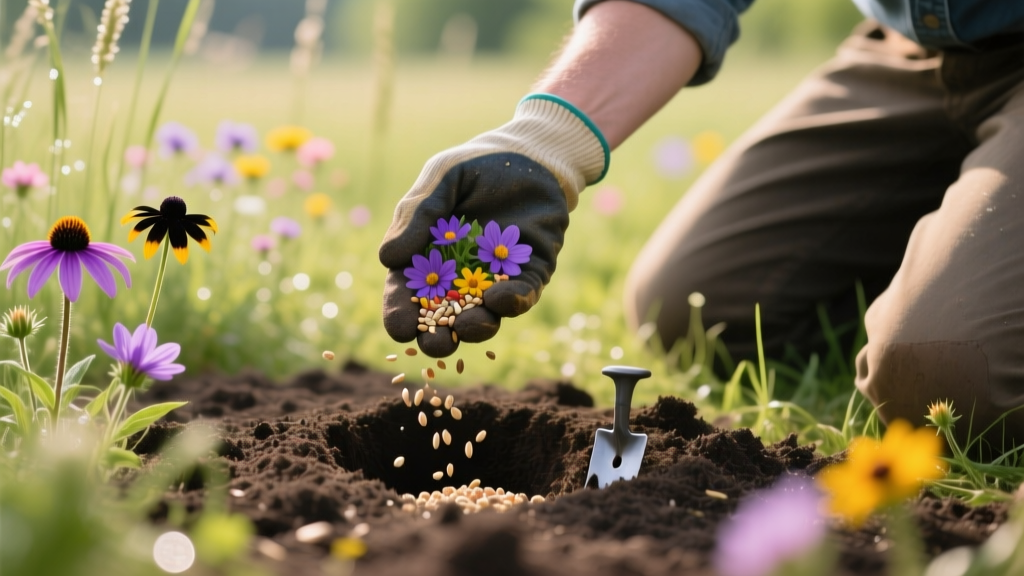
2026 Native Wildflower Meadow Prep: Core Aeration Guide
James MillerPublished
The 2026 Shift: From Turf to Native Wildflower Meadows
As we navigate the landscaping and ecological trends of 2026, the transition from high-maintenance, water-thirsty turfgrass to resilient native wildflower meadows has become a cornerstone of sustainable gardening. Homeowners and land managers alike are recognizing the immense benefits of deep-rooted native perennials, which support local pollinators, sequester carbon, and drastically reduce irrigation needs. However, the success of a native wildflower meadow established from a seed mix hinges entirely on one critical factor: soil preparation. Most lawns slated for meadow conversion suffer from years of compaction due to foot traffic, heavy mowing equipment, and shallow turf root systems. Simply broadcasting wildflower seeds over a compacted lawn is a recipe for failure.
This is where the concept of core aeration, traditionally reserved for turfgrass maintenance, becomes a revolutionary tool for meadow establishment. By adapting core aeration techniques, gardeners can create the perfect micro-environment for native seed germination without triggering a nightmare of dormant weed seeds.
Why Core Aeration is the Secret to Meadow Success
When converting a lawn to a meadow, the instinctive approach for many gardeners is to rototill the existing sod. While tilling does break up the soil, it also brings thousands of dormant weed seeds to the surface, guaranteeing that your new meadow will be immediately outcompeted by aggressive annual weeds like crabgrass and lambsquarters. Furthermore, tilling destroys the existing soil structure and the beneficial mycorrhizal fungal networks that native wildflowers rely on for nutrient uptake.
Core aeration provides the ultimate compromise. By pulling physical plugs (cores) of soil from the ground, you achieve three vital goals for meadow preparation:
- Relieving Compaction: The physical removal of soil cores allows oxygen, water, and nutrients to penetrate deep into the subsoil, encouraging the deep taproots of native prairie plants.
- Creating Seed Micro-Depressions: The empty holes left behind act as perfect, protected cradles for tiny wildflower seeds, shielding them from wind and foraging birds.
- Preserving the Weed Seed Bank: Because the soil layers are not inverted, dormant weed seeds remain buried deep underground where they cannot germinate.
Core aeration provides the ultimate compromise: it fractures compacted soil layers and improves water infiltration without triggering the massive weed seed germination associated with deep rototilling.
Core Aeration vs. Traditional Tilling: A 2026 Comparison
Understanding how core aeration stacks up against other site preparation methods is crucial for planning your 2026 planting schedule. The following table outlines the primary differences between the most common soil preparation techniques for meadow establishment.
| Preparation Method | Weed Seed Disruption | Soil Structure Impact | Ideal For |
|---|---|---|---|
| Core Aeration | Minimal | Relieves compaction, preserves layers | Converting existing lawns to meadows |
| Rototilling | Severe (brings up dormant seeds) | Destroys structure, causes erosion | Heavily degraded, non-turf sites |
| Solarization | Moderate | Neutral | Small beds with severe weed pressure |
| Smother Cropping | Low | Adds organic matter | Large agricultural plots |
For the average homeowner converting a suburban lawn, core aeration combined with a drag mat is widely considered the most ecologically sound and labor-efficient method available this year.
Step-by-Step: Preparing Your Soil with Core Aeration
To successfully establish a native wildflower meadow from seed using the core aeration method, follow this detailed protocol. Timing is everything; for most temperate climate zones, late fall (after the first hard frost) is the ideal time to prep and sow, allowing seeds to undergo natural cold stratification over the winter.
Step 1: Scalping the Existing Turf
Before the aerator can touch the soil, the existing grass must be cut as short as possible. Lower your mower deck to its absolute minimum setting—ideally around 1 to 1.5 inches. This 'scalping' process removes the thick thatch layer and exposes the soil surface. Bag all the clippings and remove them from the site to prevent them from smothering your future wildflower seedlings. If the thatch layer is thicker than half an inch, consider using a power dethatcher prior to mowing.
Step 2: Executing the Core Aeration
Rent a heavy-duty, gas-powered core aerator for the weekend. Ensure the machine is equipped with hollow tines capable of pulling 3-inch to 4-inch deep plugs. Run the aerator over the entire lawn area in at least two different directions (e.g., North-South, then East-West) to ensure maximum soil penetration and hole density. You want the ground to look like it has been heavily dimpled, with aeration holes spaced no more than 2 to 3 inches apart. Leave the extracted soil cores on the surface; do not rake them away.
Step 3: Topdressing and Dragging
Once the aeration is complete, spread a thin layer (about 1/4 inch) of high-quality, weed-free compost over the entire area. Next, use a heavy chain-link drag mat, a piece of chain-link fencing, or a specialized lawn drag to pull across the site. This crucial step breaks apart the extracted soil cores, mixes them with the compost, and sweeps this loose, friable soil mixture directly into the aeration holes and across the surface. You are essentially creating a shallow, loose seedbed on top of a deeply fractured subsoil.
Step 4: Sowing the Native Seed Mix
Native wildflower seeds are often incredibly fine, making even distribution difficult. Mix your seed blend with a bulk carrier such as damp sand, vermiculite, or fine sawdust at a ratio of 1 part seed to 4 parts carrier. Broadcast the mixture evenly over the dragged, aerated soil. After sowing, use a lightweight lawn roller or simply walk over the area in snowshoes to press the seeds firmly into the loose soil and the remaining aeration holes. Do not bury the seeds; most native wildflowers require light to germinate and should be left on or just barely below the surface.
Selecting the Right Native Seed Mix for 2026
The market for native seeds has matured significantly by 2026, with a strong emphasis on local ecotypes—seeds harvested from plants growing in your specific regional climate and soil type. When purchasing a seed mix, avoid generic 'wildflower' blends from big-box stores, which often contain invasive annuals or non-native species. Instead, source your seeds from specialized native nurseries that guarantee 100% pure, neonicotinoid-free seed.
According to the Xerces Society, a robust pollinator meadow should contain a diverse mix of at least 15 to 20 different native species, ensuring continuous bloom from early spring through late fall. A high-quality mix will include a balance of deep-rooted prairie grasses (like Little Bluestem or Side-oats Grama) and diverse forbs (like Purple Coneflower, Milkweed, and Black-eyed Susan). The grasses are essential; they provide structural support for the wildflowers, prevent lodging (falling over), and offer critical overwintering habitat for native bees and butterflies.
Post-Sowing Care and Stratification
If you are sowing in the late fall, nature will take over the stratification process. The winter freeze-thaw cycles will naturally break the dormancy of the seeds, working them deeper into the aeration holes and soil crevices. According to the University of Minnesota Extension, fall sowing mimics the natural seed drop of wild plants and gives native perennials a crucial head start on root development before the heat of summer arrives.
If you must sow in the spring, you will need to artificially cold-stratify your seeds by mixing them with damp sand and storing them in a refrigerator at 35°F to 40°F for 30 to 60 days prior to planting. Spring-sown meadows will require diligent, light watering to keep the top inch of soil moist until the seedlings are established.
Long-Term Meadow Maintenance
Patience is the most important tool in your gardening shed when establishing a meadow. The old adage for native perennials holds true: 'First year they sleep, second year they creep, third year they leap.' During the first growing season, your meadow will likely look like a patch of weeds. Your primary maintenance task in year one is mowing. Set your mower to a height of 6 to 8 inches and mow the site whenever the vegetation exceeds 12 inches. This prevents aggressive annual weeds from shading out and outcompeting the slow-growing native seedlings, while the mower deck safely passes over the low-growing native rosettes.
By the third year, your core-aerated soil will be teeming with deep-rooted native plants that require zero fertilization, minimal watering, and only a single annual mowing in the early spring. By utilizing core aeration as your foundational soil preparation technique, you bypass the worst of the weed pressure and give your native wildflower meadow the structural foundation it needs to thrive for decades to come.
