Lawn Care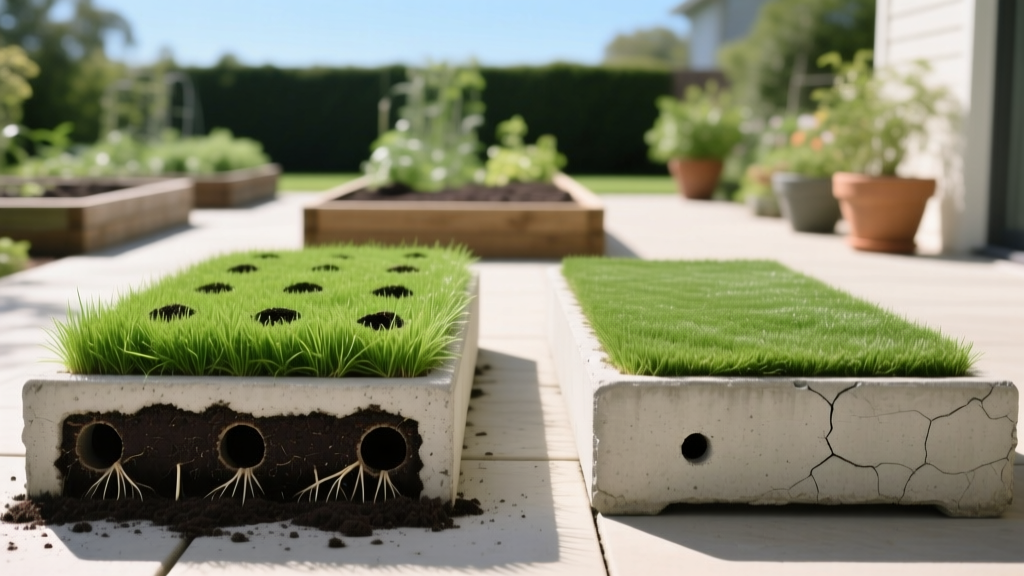
Core Vs Liquid Aeration For Container Lawns: 2026 Guide
Emily WatsonPublished
The Rise of Container Lawns in 2026
As urban outdoor spaces shrink and patio gardening evolves, container lawns have become a massive trend in 2026. Whether you are growing dwarf tall fescue in large half-barrels, maintaining modular zoysia planters on a balcony, or managing ornamental grasses in oversized ceramic pots, the fundamental rules of turf health still apply. However, the confined environment of a pot creates unique challenges. Unlike sprawling traditional lawns, container grasses have a limited soil volume, making them highly susceptible to rapid compaction, root binding, and the dreaded "perched water table" effect. To combat this, gardeners must choose between two primary methods: core aeration and liquid aeration. But which method is actually effective for the unique micro-environment of a pot?
Understanding Soil Compaction in Pots and Planters
Before comparing solutions, it is vital to understand why container lawns compact. Most potting mixes rely on organic matter like peat moss, coir, or composted bark. Over a single growing season, these organic components break down and shrink. As the physical structure collapses, the soil particles pack tightly together. According to the Penn State Extension, soil compaction severely restricts the movement of oxygen, water, and nutrients to the root zone. In a container, this is magnified. Without the natural tilling action of earthworms and deep freeze-thaw cycles found in open ground, potted grass suffocates quickly. Furthermore, heavy overhead watering compresses the top layer of soil, creating a hydrophobic crust that causes water to run down the sides of the pot rather than penetrating the root ball.
Core Aeration for Containers: The Mechanical Approach
Core aeration involves physically removing small plugs of soil from the container to create voids for air, water, and nutrients. For traditional lawns, this is done with heavy gas-powered or manual plug aerators. For container lawns, the process requires specialized, smaller tools.
Tools for Container Core Aeration
- Hand Dibbers and Bulb Planters: A stainless steel hand dibber or a narrow bulb planter is the most common tool for potted grass. You manually push it into the soil, extract a core, and discard or crumble it.
- Mini Manual Corers: In 2026, several brands offer scaled-down, foot-less manual core aerators designed specifically for raised beds and large planters.
- Chopsticks or Metal Skewers: For very small ornamental grass pots, simply driving a thick metal skewer into the soil can provide micro-aeration without disturbing the limited root mass.
Pros and Cons of Core Aeration in Pots
The primary advantage of core aeration is that it physically removes compacted material, allowing you to top-dress the holes with calcined clay, pumice, or fresh potting mix to permanently improve drainage. However, the Clemson University Home & Garden Information Center warns that physical aeration severs roots. In a sprawling lawn, this pruning stimulates growth. In a small container, severing a significant percentage of the restricted root mass can send the grass into severe shock, leading to browning and die-back.
Liquid Aeration for Pots: The Surfactant Approach
Liquid aeration has surged in popularity for container gardening due to its non-invasive nature. Instead of physically removing soil, liquid aerators use chemical and biological surfactants to break the surface tension of water and disperse compacted soil particles at a microscopic level.
How Liquid Aerators Work in Containers
Modern 2026 liquid aeration formulations typically combine Ammonium Lauryl Sulfate (ALS) with humic acids, fulvic acids, and yucca extract (saponins). When applied to a compacted container lawn via a watering can or hose-end sprayer, the surfactants coat the soil particles, causing them to repel one another slightly. This creates microscopic fissures that allow oxygen and water to penetrate deep into the pot's root zone. Furthermore, the humic acids stimulate microbial activity, which naturally rebuilds the soil structure over time.
Pros and Cons of Liquid Aeration in Pots
The biggest advantage of liquid aeration for container lawns is zero root disturbance. You can apply it during the heat of summer or during active growth phases without risking transplant shock or root severing. It also ensures 100% coverage, reaching the tight edges of the pot where a hand dibber cannot fit. The downside is that liquid aeration does not physically remove thatch or allow for deep top-dressing. If your container soil has completely degraded into mud, liquid surfactants alone will not rebuild the physical structure; a soil amendment will still be required.
2026 Head-to-Head Comparison Table
To help you decide which method suits your specific patio planters and raised beds, here is a comprehensive comparison based on current 2026 horticultural standards.
| Feature | Core Aeration (Manual/Dibber) | Liquid Aeration (Surfactants) |
|---|---|---|
| Root Disturbance | High (Severs roots in confined space) | None (Chemical/Biological action only) |
| Thatch Removal | Yes (Physical extraction) | No (Accelerates decomposition only) |
| Top-Dressing Opportunity | Excellent (Holes accept pumice/sand) | Poor (No physical voids created) |
| Application Effort | High (Labor-intensive for large pots) | Low (Mix in watering can and pour) |
| Cost (2026 Average) | $15 - $30 (One-time tool purchase) | $25 - $40 (Per 32oz bottle, covers many pots) |
| Best Time to Apply | Early Spring or Early Fall | Anytime during the active growing season |
| Effectiveness in Peat/Coir | Moderate (Holes can collapse if too wet) | High (Surfactants prevent hydrophobic crusts) |
Step-by-Step Container Aeration Guide for 2026
For the healthiest container lawns, many expert horticulturists now recommend a hybrid approach, utilizing both methods at different times of the year. Here is the optimal 2026 maintenance schedule for potted grasses.
Step 1: Early Spring Core Aeration and Top-Dressing
As your container grass breaks dormancy, use a hand dibber to pull 2-inch deep cores, spacing them about 3 inches apart across the surface of the pot. Because container soil degrades, use this opportunity to top-dress the lawn. Sweep a thin layer of calcined clay (like Turface) or fine pumice into the aeration holes. This permanently improves the drainage and structural integrity of the potting mix without replacing the entire container.
Step 2: Summer Liquid Aeration Maintenance
During the peak heat of summer, container lawns are watered frequently, which leads to rapid surface compaction and salt buildup from fertilizers. Every 4 to 6 weeks, mix a liquid aerator containing yucca extract and humic acid into your watering can. Apply it evenly over the potted grass. The surfactants will break the surface tension, ensuring that your irrigation water reaches the very bottom of the pot rather than channeling down the sides. Research highlighted by the University of Minnesota Extension confirms that consistent moisture penetration is critical for preventing localized dry spots in confined soil volumes.
Step 3: Integrate Smart Moisture Monitoring
A major advancement in 2026 container gardening is the use of wireless smart soil sensors. Devices like the latest Ecowit or Xiaomi Bluetooth soil probes can be inserted directly into the center of your large lawn planters. By monitoring the volumetric water content at the bottom of the pot, you can definitively tell if your aeration efforts are working. If the sensor shows that water is finally reaching the deep root zone after a liquid aeration application, you know the hydrophobic crust has been successfully broken.
Expert Verdict: Which Should You Choose?
When it comes to container lawns, the confined space changes the rules of traditional lawn care. Core aeration is best reserved for early spring or fall when the grass is actively growing and can recover from root pruning. It is an essential mechanical intervention if your potting mix has physically degraded and requires the introduction of inorganic drainage amendments like pumice or perlite via top-dressing.
However, for routine maintenance, combating hydrophobic soil, and ensuring deep water penetration during the stressful summer months, liquid aeration is the undisputed champion for container and pot gardening. It provides the oxygenation and moisture-management benefits of aeration without the severe risk of damaging the limited, fragile root mass of a potted lawn. By combining a spring mechanical core aeration with a summer liquid surfactant regimen, your patio planters and modular grass beds will remain lush, deeply rooted, and perfectly drained throughout the entire 2026 growing season.