Lawn Care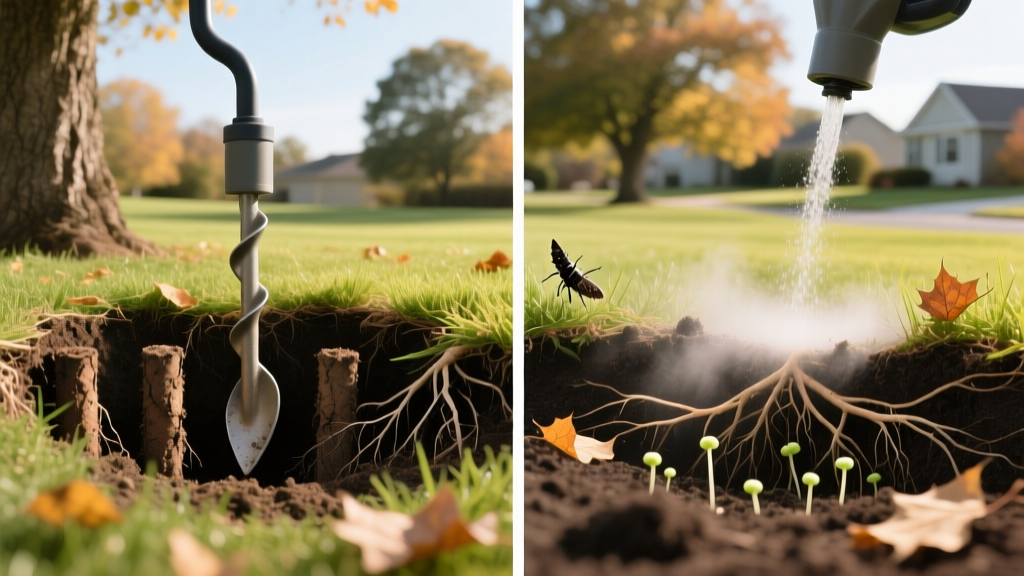
2026 Core vs Liquid Aeration for Webworm Tree Lawns
Anna KowalskiPublished
The Turf-Tree Interface: Why Webworm Control Dictates Your Aeration Strategy
As a specialist in tree webworm control, I frequently consult with homeowners who are battling a dual-front war: unsightly fall webworm (*Hyphantria cunea*) nests in their canopy and a thinning, compacted lawn below. When managing landscapes dominated by webworm-prone species like pecan, hickory, sweetgum, and persimmon, your lawn care practices cannot exist in a vacuum. The health of your turf is inextricably linked to the stress levels of the trees shading it. In 2026, the debate between traditional core aeration and modern liquid aeration has reached a tipping point, especially for lawns situated in the 'drip line' of trees recovering from severe defoliation. Choosing the wrong aeration method at the wrong time can sever vital feeder roots, pushing an already stressed tree into decline while failing to revive your turf. This comprehensive guide breaks down the effectiveness of core versus liquid aeration specifically through the lens of tree webworm management and root-zone preservation.
The Hidden Link Between Fall Webworms and Soil Compaction
To understand why aeration choice matters, we must first look at the biology of a webworm outbreak. According to Penn State Extension, fall webworms typically build their silken nests and defoliate branches in late summer and early autumn. While this rarely kills a healthy tree outright, it forces the tree to deplete its stored carbohydrate reserves to push out emergency late-season growth.
During this critical recovery phase, the tree relies heavily on its shallow feeder roots—roots that share the exact same soil profile as your lawn. If the soil beneath the tree canopy is heavily compacted from summer foot traffic, mowing equipment, and heavy rainfall, water and oxygen cannot reach these stressed roots. The tree starves, and the lawn above it suffocates. Aeration is mandatory to relieve this soil bulk density, but the method you choose in 2026 will determine whether you aid the tree's recovery or cause irreversible mechanical damage.
Core Aeration: The Mechanical Approach and Its Risks
Core aeration involves using a heavy, gas-powered or electric aerator to physically extract 2-to-3-inch plugs of soil and thatch from the ground. For decades, this has been the gold standard for breaking up severe clay compaction and improving gas exchange in the soil profile.
The Pros of Core Aeration
- Immediate Physical Relief: The extraction of cores instantly creates macropores, allowing oxygen, water, and granular fertilizers to reach the root zone.
- Thatch Management: The soil microbes brought to the surface in the cores help break down thick thatch layers that often harbor turf diseases.
- Proven Track Record: As noted by the University of Minnesota Extension, mechanical core aeration remains the most effective method for severely compacted, heavy clay soils.
The Cons for Webworm-Stressed Landscapes
From a tree care perspective, core aeration carries significant risks. The solid or hollow tines of an aerator can easily sever the delicate, hair-like feeder roots of a tree that is already reeling from a late-season webworm defoliation. Furthermore, the sheer weight of a commercial core aerator (often exceeding 250 pounds) can cause micro-compaction on the edges of the holes, and driving heavy machinery over the sensitive root flare of a stressed hickory or pecan tree can damage the root bark, inviting secondary fungal pathogens like *Armillaria* root rot.
Liquid Aeration: The 2026 Root-Safe Breakthrough
Liquid aeration has evolved dramatically over the last few years. In 2026, advanced liquid aeration formulations rely on a combination of high-grade surfactants (like Ammonium Lauryl Sulfate), yucca-derived saponins, and humic/fulvic acids. Instead of physically removing soil, these bio-chemical agents break the surface tension of water molecules, allowing moisture to penetrate deeply into the soil matrix. This process causes the clay particles to flocculate (clump together), naturally creating microscopic pore spaces without a single piece of metal ever piercing the ground.
The Pros of Liquid Aeration
- Zero Root Damage: Because it is applied via a standard hose-end or backpack sprayer, there is absolutely no mechanical injury to the shallow feeder roots of webworm-stressed trees.
- Complete Canopy Coverage: Liquid aerators can be sprayed right up to the trunk and over exposed surface roots without risking bark damage from heavy machinery.
- Nutrient Synergy: Modern 2026 blends often include amino acids and sea kelp extracts that act as bio-stimulants, directly aiding the tree's root system in storing winter carbohydrates after a webworm attack.
The Cons of Liquid Aeration
- Slower Visual Results: Unlike core aeration, you won't see physical plugs on the lawn. The soil structure improvement happens at a microscopic level over 2 to 4 weeks.
- Moisture Dependent: Liquid aerators require thorough watering immediately after application to carry the surfactants deep into the soil profile. If you are under drought restrictions, efficacy drops significantly.
2026 Head-to-Head Comparison Chart
Below is a direct comparison of core versus liquid aeration, specifically evaluated for lawns situated under webworm-prone tree canopies in the 2026 growing season.
| Feature | Core Aeration (Mechanical) | Liquid Aeration (Bio-Surfactant) |
|---|---|---|
| Root Safety for Stressed Trees | Low (High risk of severing feeder roots) | High (Zero mechanical contact) |
| Compaction Relief Speed | Immediate | Gradual (14-30 days) |
| 2026 Average Cost (per 5,000 sq ft) | $75 - $120 (Professional Service) | $35 - $60 (DIY / Pro Application) |
| Thatch Reduction | Excellent (Brings microbes to surface) | Poor (Does not physically disrupt thatch) |
| Compatibility with Btk/Spinosad | Poor (Can disrupt soil-applied biologicals) | Excellent (Can be tank-mixed safely) |
Timing Aeration Around Webworm Treatments
The intersection of lawn aeration and tree webworm control requires meticulous timing. If you are treating your trees for active webworm nests using biological insecticides like Btk (*Bacillus thuringiensis var. kurstaki*) or Spinosad, you must consider how lawn aeration affects the local ecosystem.
Spinosad is highly toxic to beneficial soil-dwelling insects and earthworms when wet. If you core aerate immediately after a heavy Spinosad application for webworms, you risk pulling treated thatch and soil into the root zone, potentially harming the earthworm population that naturally aerates your soil. Conversely, liquid aeration in 2026 utilizes non-toxic, biodegradable saponins that will not interfere with your biological pest control regimen. If you must aerate in late August or September during peak webworm season, liquid aeration is the undisputed safest choice to preserve the biological balance of your landscape.
The 2026 Step-by-Step Protocol for Webworm-Prone Lawns
To maintain a pristine lawn while protecting the root systems of webworm-vulnerable trees, follow this specialized protocol:
- Early Spring (Pre-Webworm Season): Perform Core Aeration on the open lawn areas that are far from the tree drip lines. This addresses severe winter compaction and prepares the turf for the growing season without threatening the trees, which are not yet in their active webworm-vulnerable stage.
- Late Summer (Pre-Outbreak): Apply a preventative Liquid Aeration treatment mixed with humic acid across the entire tree root zone (the drip line). This ensures deep water penetration during the hottest, driest months, keeping the tree vigorous and more resilient to impending webworm defoliation.
- Early Fall (Active Webworm Season): If the soil remains compacted and you are actively spraying Btk for webworm control, rely exclusively on Liquid Aeration. Avoid heavy machinery near the root flare. Follow up with deep, slow irrigation to carry the surfactants into the clay.
- Late Fall (Post-Defoliation Recovery): Apply a winterizer fertilizer high in potassium to aid the tree's root recovery. Liquid aeration can be used as a carrier for liquid humates, ensuring the nutrients bypass the thatch and reach the starving feeder roots directly.
Conclusion
Managing a lawn beneath webworm-prone trees requires a delicate balance of turfgrass science and arboriculture. While traditional core aeration remains a powerful tool for open, heavily compacted clay lawns, its mechanical brutality makes it a liability for the shallow, stressed root systems of trees recovering from *Hyphantria cunea* outbreaks. As we move through 2026, the efficacy of advanced bio-surfactant liquid aerators makes them the superior, root-safe choice for the critical turf-tree interface. By aligning your aeration strategy with your webworm control timeline, you can foster a landscape where both your canopy and your turf thrive in unison.