Lawn Care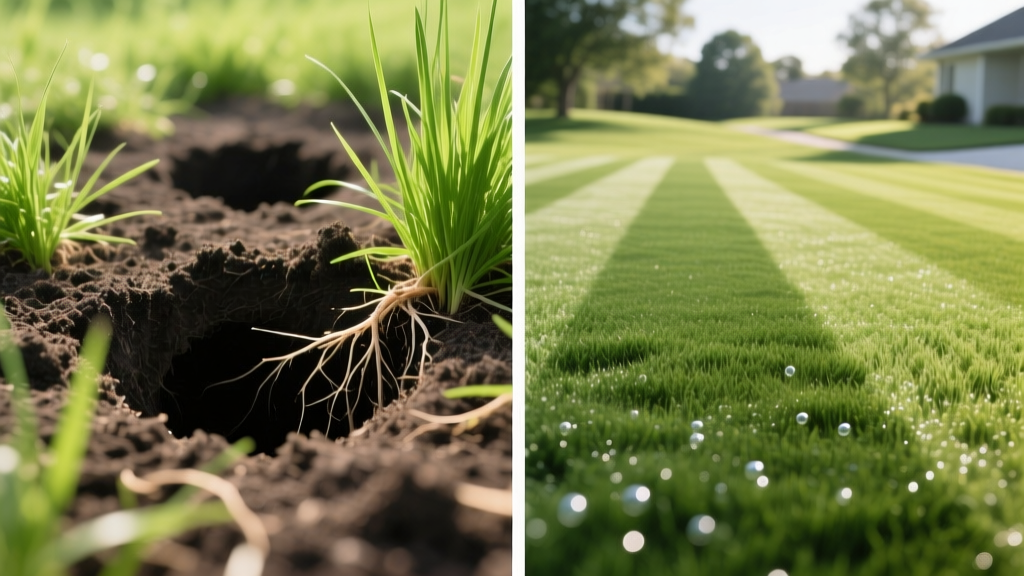
Core vs Liquid Aeration 2026: Turf Compaction & Mowing Patterns
Robert HayesPublished
The Intersection of Mowing Patterns and Soil Compaction
Achieving pristine, stadium-like mowing patterns—such as classic stripes, checkerboards, and diamonds—is the ultimate goal for many lawn care enthusiasts in 2026. However, the secret to a perfect stripe is not just the mower you use or the striping kit attached to its deck; it is the underlying health and cellular turgor pressure of the grass blade. When grass is bent by a roller, it must reflect light differently than the upright grass beside it. If the turf is weak, shallow-rooted, or stressed, the blades will snap or fail to hold the bend, resulting in dull, washed-out patterns.
The primary culprit behind weak, shallow-rooted turf is soil compaction. Ironically, the very equipment we use to create beautiful mowing patterns contributes heavily to this problem. Modern zero-turn mowers can weigh upwards of 800 pounds, and when you add the weight of a steel or poly striping roller, the ground pressure exerted on the top three inches of soil is immense. Over a season of weekly mowing, this repetitive weight crushes soil pores, choking off oxygen and water to the root zone. To restore the deep roots necessary for crisp mowing patterns, aeration is mandatory. But in 2026, the debate between traditional core aeration and modern liquid aeration is hotter than ever. Which method is best for your specific mowing routine?
Core Aeration vs. Liquid Aeration: The 2026 Effectiveness Breakdown
Before deciding which method will best support your mowing techniques, it is crucial to understand how each technology interacts with compacted soil and your turf's surface.
Core Aeration: The Heavy-Duty Compaction Crusher
Core aeration is a mechanical process that uses hollow tines to physically extract plugs of soil, thatch, and grass from the lawn. According to the University of Minnesota Extension, core aeration remains the gold standard for alleviating severe physical compaction, particularly in heavy clay soils. By removing 2-to-3-inch plugs, core aeration creates immediate, macro-level voids in the soil. These holes allow deep water infiltration, oxygen exchange, and provide a perfect seedbed for overseeding.
However, from a mowing perspective, core aeration is highly disruptive. The extracted soil cores are left on the surface and must be broken down. If you attempt to mow and stripe your lawn immediately after core aeration, your mower wheels will crush the wet clay plugs, smearing them across the turf. This creates a muddy, uneven surface that completely ruins light reflection and makes crisp striping impossible for up to two weeks. Furthermore, the physical impact of the aerator tines can temporarily disrupt the visual uniformity of your meticulously maintained mowing patterns.
Liquid Aeration: The Surfactant Solution
Liquid aeration has seen massive technological advancements by 2026, utilizing advanced bio-stimulants, humic acids, and powerful surfactants like Ammonium Lauryl Sulfate (ALS). Instead of physically removing soil, liquid aeration works on a microscopic level. The surfactants reduce the surface tension of water, allowing it to penetrate deeply into the soil profile, while the chemical compounds help fracture compacted soil particles and create micro-channels for root growth.
For lawn striping enthusiasts, liquid aeration offers a massive advantage: zero surface disruption. Because there are no soil plugs to deal with, you can apply liquid aeration in the morning and resume your intricate mowing patterns in the afternoon. Research from NC State Turfgrass Extension highlights that while liquid surfactants vastly improve water infiltration and reduce localized dry spots, they cannot fully replace the physical void creation of mechanical core aeration in severely compacted, heavily trafficked turf. Therefore, liquid aeration is best viewed as a maintenance tool or a solution for mild compaction.
Data Comparison: Core vs. Liquid Aeration
To help you decide which method aligns with your mowing schedule and lawn conditions, review the 2026 comparison data below:
| Feature | Core Aeration | Liquid Aeration |
|---|---|---|
| Mechanism | Physical plug removal | Surfactant soil fracturing |
| Compaction Relief | High (Deep physical voids) | Moderate (Chemical/Micro-channels) |
| Surface Disruption | High (Plugs, uneven turf) | None (Liquid application) |
| Impact on Mowing | Delay mowing/striping 1-2 weeks | Mow and stripe immediately |
| Best for Striping | Long-term turf recovery | Immediate pattern maintenance |
| 2026 Avg Cost (5,000 sq ft) | $150 - $250 (Professional) | $40 - $80 (DIY or Pro) |
| Ideal Timing | Fall or early Spring | Anytime during growing season |
How Your Mowing Routine Dictates Your Aeration Choice
Your specific mowing techniques and the equipment you use should directly influence whether you choose core or liquid aeration.
Mower Weight and Tire Pressure
If you are using a heavy commercial-grade zero-turn mower or a vintage gas tractor to achieve wide mowing swaths, you are applying immense ground pressure. Over time, this creates deep, localized compaction ruts along your repeated mowing paths. If you notice your mower tires sinking slightly or water pooling in your mowing tracks, liquid aeration will not be enough. You need the aggressive, physical soil fracture provided by mechanical core aeration to lift and relieve those deep ruts.
The Hidden Culprit: Striping Rollers
Many homeowners use heavy steel or water-filled poly rollers to bend the grass for checkerboard patterns. While beautiful, dragging 50 to 100 pounds of extra weight across the lawn every week accelerates surface compaction. If you are a dedicated striping enthusiast, you should incorporate liquid aeration into your monthly summer maintenance routine. The surfactants will continuously relieve the micro-compaction caused by the roller without forcing you to abandon your weekly mowing schedule.
Alternating Mowing Patterns
One of the most effective mowing techniques to prevent compaction is alternating your mowing direction. If you mow horizontally one week, mow vertically the next, and diagonally the week after. This prevents the grass from developing a 'grain' and ensures that mower wheels are not repeatedly packing down the exact same strips of soil. If you strictly alternate patterns and maintain proper tire pressure, you can often stave off severe compaction, making liquid aeration a highly effective, less disruptive choice for your lawn.
The 2026 Aeration and Mowing Recovery Protocol
To maximize the effectiveness of your chosen aeration method while protecting your mowing patterns, follow this step-by-step protocol:
- Step 1: The Prep Cut. Two days before aeration, mow your lawn slightly lower than your standard height (never scalp the turf). For core aeration, a shorter cut allows the tines to penetrate deeper into the soil without being blocked by tall grass. For liquid aeration, a shorter cut ensures the surfactant solution reaches the soil surface rather than being caught on the grass blades.
- Step 2: Moisture Management. Core aeration requires moist soil to pull clean plugs. Water the lawn deeply 24 hours prior. Liquid aeration also benefits from pre-watering, as it helps carry the surfactants down into the root zone immediately upon application.
- Step 3: Application and Recovery. If core aerating, leave the plugs on the lawn to break down naturally. Do not mow over them while they are wet. Wait 10 to 14 days, then use a heavy drag mat or the back of a garden rake to break up the dried cores before resuming your striping routine. If using liquid aeration, water the product in immediately according to the 2026 label rates, and you can safely resume your mowing patterns the very next day.
- Step 4: Post-Aeration Fertilization. Both methods open the soil to nutrients. Apply a high-quality, slow-release nitrogen fertilizer immediately after aeration to fuel the deep root growth required to sustain heavy bending from your striping roller.
Conclusion
Ultimately, the choice between core and liquid aeration in 2026 comes down to the severity of your soil compaction and your tolerance for surface disruption. If your heavy mowing equipment has severely compacted the soil and choked your turf's roots, core aeration is the necessary reset button to restore the deep foundation required for vibrant, light-reflecting stripes. However, if you practice smart mowing techniques—like alternating patterns and managing mower weight—liquid aeration provides an excellent, zero-disruption maintenance solution that keeps your soil breathing and your mowing patterns crisp all season long.