
Landscaping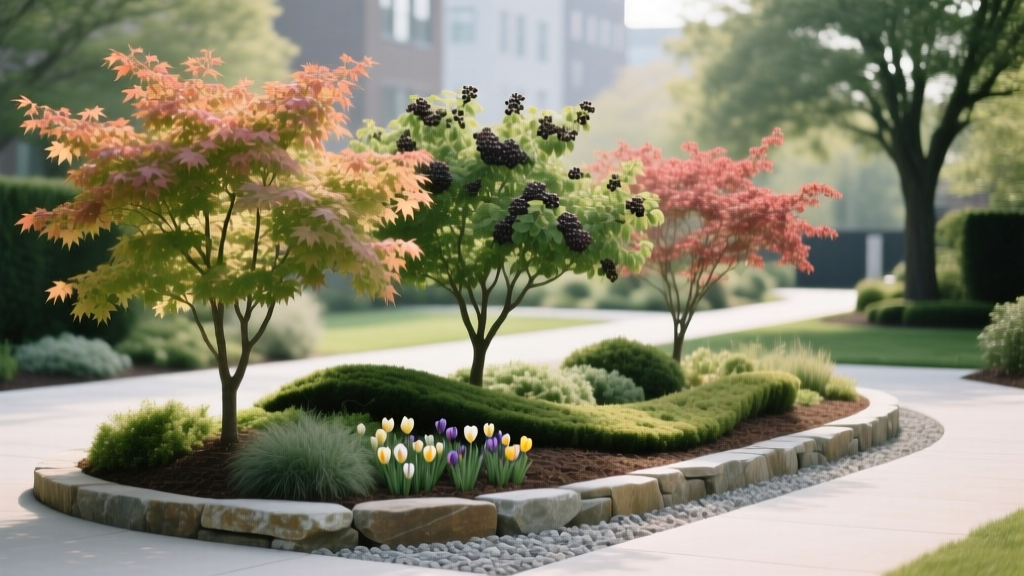
Top Trees for Corner Lots With Curved Beds in 2026
David ParkPublished
Mastering Corner Lot Landscapes with Curved Bed Borders
Corner lots are the crown jewels of neighborhood landscaping, offering double the frontage and unparalleled opportunities for curb appeal. However, they also present unique design challenges, particularly regarding traffic sightlines and the harsh microclimates created by intersecting roads. In 2026, the prevailing landscape architecture trend for these spaces is the use of sweeping, curved bed borders. Curves naturally soften the rigid, right-angle geometry of street intersections, guiding the eye smoothly along the property line and creating a more organic, welcoming aesthetic.
But designing a curved bed is only half the battle. Selecting and planting the right trees to complement these flowing lines—while strictly adhering to municipal visibility codes and accounting for 2026 climate shifts—is where many homeowners stumble. This comprehensive guide explores the best tree selection and planting strategies specifically tailored for corner lots with curved bed borders.
Understanding the Intersection Sight Triangle
Before selecting any nursery stock, you must understand the 'sight triangle' or 'visibility triangle.' Municipal codes universally restrict planting tall shrubs or low-canopy trees within a specific distance of the intersection corner to ensure drivers and pedestrians have clear sightlines. In most jurisdictions in 2026, this triangle is measured 25 to 30 feet back from the property corner along both street frontages.
Within this restricted zone, you cannot plant trees with low-hanging branches or dense foliage below 8 feet. Therefore, your curved bed design must account for this void. Trees planted inside the sight triangle must be either high-canopy shade trees with completely bare, visible trunks, or you must reserve this space for low-growing groundcovers and ornamental grasses, pushing your primary tree specimens further back along the curve.
Designing Curved Borders for Tree Placement
Curved beds on a corner lot should not be random, wavy lines. They should follow a deliberate, sweeping arc that mirrors the radius of the street corner or creates a gentle S-curve that leads the eye toward the front door. When placing trees along this curve, avoid planting them in a straight line or at rigid, equal intervals, which defeats the purpose of the organic border.
Instead, use the 'arc and cluster' method. Place your primary anchor trees at the apex of the curves, and use smaller, understory trees to follow the sweeping lines. In 2026, landscape designers heavily favor asymmetrical triangulation within the curved beds, placing a large canopy tree toward the back of the bed, a mid-sized ornamental tree slightly forward, and layered shrubbery at the edge to create depth without blocking the street view.
Top Tree Species for Curved Corner Beds (2026 Guide)
Selecting trees that thrive in the exposed conditions of a corner lot while maintaining a form that complements curved borders is essential. Corner lots endure higher wind loads, increased exhaust pollution, and more intense sun exposure from two streets. Here are the top-performing species for 2026:
1. Eastern Redbud (Cercis canadensis)
With its stunning early-spring magenta blooms and elegant, slightly twisting branch structure, the Eastern Redbud is a perfect mid-curve focal point. It grows to a manageable height and its open canopy allows for clear sightlines when properly limbed up. The 'Appalachian Red' cultivar is highly recommended in 2026 for its superior disease resistance.
2. Ginkgo Biloba ('Autumn Gold')
For the outer curve anchor, where a taller tree is needed behind the sight triangle, the male 'Autumn Gold' Ginkgo is unmatched. It features a striking upright, sweeping form that mimics the flow of a curved bed. It is incredibly tolerant of urban pollution, compacted soils, and the harsh heat radiating from adjacent asphalt.
3. Crape Myrtle (Lagerstroemia)
Modern, disease-resistant cultivars like 'Natchez' or 'Tuscarora' are ideal for inner curve layering. Their multi-stemmed trunks provide beautiful architectural interest year-round, and their high summer blooms add vibrant color to the sweeping borders. They thrive in the full-blast sun typical of corner lots.
4. Japanese Maple (Acer palmatum)
Best reserved for the background of the curved bed, safely away from the immediate intersection sightlines. Their weeping or gracefully layered branches soften the hardscaping and provide brilliant autumn color. They require protection from the harsh afternoon sun, making them ideal for the shaded side of a corner lot's curved border.
Tree Comparison Chart for Corner Lot Curves
| Tree Species | Mature Height | Canopy Spread | Sightline Safe? | Best Curve Placement |
|---|---|---|---|---|
| Eastern Redbud | 20-30 ft | 25-35 ft | Yes (if pruned) | Mid-curve focal point |
| Ginkgo 'Autumn Gold' | 40-50 ft | 25-30 ft | Yes (high canopy) | Outer curve anchor |
| Crape Myrtle | 15-25 ft | 10-15 ft | Yes (multi-stem) | Inner curve layering |
| Japanese Maple | 15-25 ft | 15-20 ft | No (low canopy) | Background bed only |
Planting Techniques for Curved Borders
Corner lots are notorious for poor soil quality. During initial home construction, heavy machinery severely compacts the soil, and builders often bury construction debris in the corner yard. Proper planting technique is non-negotiable to ensure your trees survive the harsh corner microclimate.
Step 1: Soil Assessment and Amendment
Before digging, perform a percolation test. If water pools in the test hole for more than four hours, the soil is heavily compacted. According to the University of Minnesota Extension, it is critical to loosen the soil in a wide area around the planting zone, not just the hole itself. For curved beds, this means tilling or aerating the entire interior of the curve to allow roots to spread laterally along the bed's flow.
Step 2: Digging the Correct Hole
The Clemson University Home & Garden Information Center emphasizes that tree holes should be two to three times wider than the root ball, but no deeper. The root flare—the point where the trunk expands at the base—must sit slightly above the surrounding grade. On a sloped corner lot, this means building up the backside of the hole to keep the tree perfectly vertical and prevent water from pooling against the trunk.
Step 3: Backfilling and Mulching the Curve
Use the native soil for backfilling, breaking up large clods as you go. Avoid adding heavy compost directly into the hole, which can create a 'bathtub effect' and drown the roots. Once planted, apply a 2-to-3-inch layer of organic hardwood mulch along the entire curved bed. Crucially, keep the mulch at least 3 inches away from the tree trunk to prevent rot and rodent damage. To maintain the crisp edge of your curved bed against the lawn, install flexible aluminum landscape edging, which bends perfectly to follow your sweeping arcs without kinking.
2026 Sourcing and Cost Expectations
When sourcing trees for a prominent corner lot, size and form matter immensely. In 2026, homeowners are moving away from small, whippy container stock and investing in larger, balled-and-burlapped (B&B) specimens that provide immediate architectural impact. Expect to pay between $350 and $750 per tree for a 2.5-inch to 3-inch caliper B&B specimen, depending on the species and local nursery availability. While the upfront cost is higher, planting larger stock reduces the vulnerability of young trees to the high winds and accidental damage common on busy street corners.
When selecting your trees at the nursery, look for a strong central leader (for shade trees) or well-spaced, non-rubbing lateral branches (for ornamentals). Because your trees will be viewed from multiple angles due to the corner lot, inspect the tree from all sides to ensure it has a balanced, attractive canopy that complements the sweeping curves of your landscape design.
Maintaining Sightlines as Trees Mature
The Arbor Day Foundation notes that proper early pruning is essential for long-term tree health and safety. As your corner lot trees mature, you must actively manage the canopy. Plan to 'limb up' or elevate the canopy of all trees within 30 feet of the intersection to a minimum clearance of 8 feet above the sidewalk and 14 feet above the street. By combining thoughtful species selection, precise curved bed placement, and proactive canopy management, your corner lot will remain a stunning, safe, and highly visible neighborhood landmark for decades to come.

