
Landscaping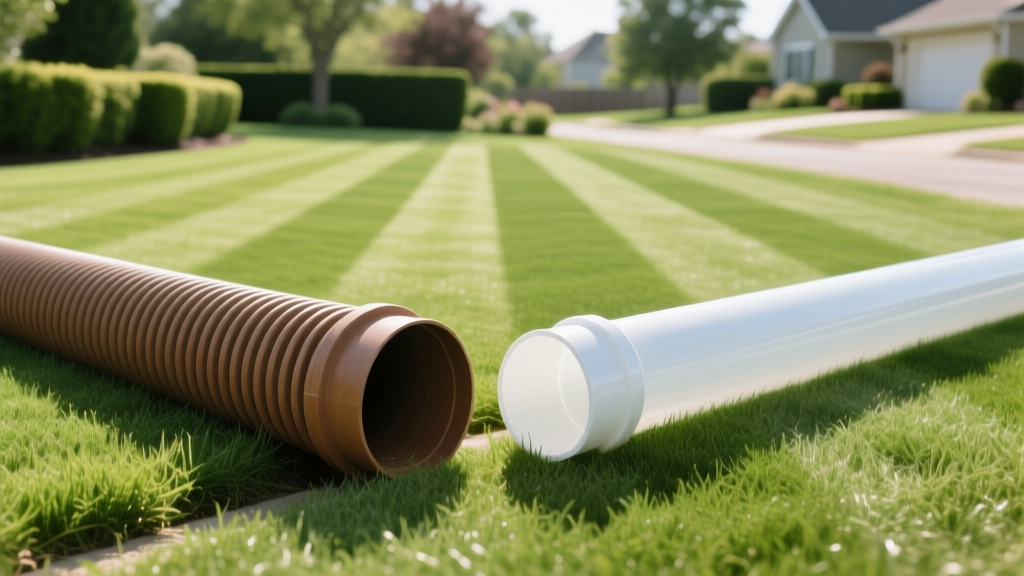
Corrugated vs PVC Drainage Pipe: Protect Lawn Stripes 2026
Robert HayesPublished
The Hidden Enemy of Perfect Lawn Striping: Poor Drainage
As we move through the 2026 landscaping season, the pursuit of the perfect lawn stripe has evolved from a niche hobby into a mainstream standard for curb appeal. Homeowners and professionals alike are investing in advanced zero-turn mowers and premium striping kits to achieve immaculate checkerboards, diamonds, and wave patterns. However, the most critical element of a flawless striping canvas is often buried underground: your drainage system. You cannot achieve crisp, high-contrast lines if your yard suffers from poor drainage, soil saturation, or hidden water pooling.
When soil becomes oversaturated, it loses its shear strength. Driving a heavy commercial or residential zero-turn mower over wet ground causes the tires to sink and slip. This wheel slip destroys the precise traction required to pull a striping kit evenly, resulting in torn grass, muddy ruts, and distorted geometric patterns. Furthermore, standing water alters the light-reflection properties of the turf, making stripes look muddy and inconsistent. To protect your aesthetic investment, choosing the right subsurface drainage pipe—specifically between flexible corrugated HDPE and rigid PVC—is essential for maintaining a flat, stable, and dry canvas.
The Science of the Stripe: Moisture and Turfgrass Bending
To understand why drainage pipe selection matters, we must look at the biology of the stripe. According to turfgrass researchers at the University of Minnesota Turfgrass Science program, the visual contrast in lawn striping is created by bending the grass blades in opposite directions, which changes how light reflects off the silica-rich epidermal cells. For a striping kit roller to bend the grass cleanly without uprooting it, the root zone must be firm and the grass blades must be dry or only slightly damp.
If your subsurface drainage is inadequate, the root zone remains spongy. When the roller passes over spongy soil, it pushes the entire grass plant into the mud rather than bending the stem at the node. This results in a weak, temporary stripe that fades within hours. By installing a high-capacity drainage network, you ensure rapid water evacuation, allowing the soil profile to firm up quickly after spring rains so you can resume mowing and striping without damaging the turf structure.
Corrugated HDPE Pipe: Flexibility for Complex Aesthetic Layouts
Corrugated High-Density Polyethylene (HDPE) pipe has long been a staple in residential landscaping. Its primary advantage lies in its flexibility. In 2026, modern corrugated pipes feature advanced dual-wall designs—smooth on the inside to improve flow, and corrugated on the outside for structural integrity. This flexibility makes it an excellent choice for routing drainage around the curved borders of garden beds, hardscaping features, and intricate lawn islands that often serve as the focal points of a patterned lawn.
However, corrugated pipe has distinct drawbacks when placed directly beneath primary striping zones. Even with dual-wall construction, the structural load limits of corrugated pipe can be tested by the 1,000+ pound weight of modern zero-turn mowers equipped with heavy steel striping kits. If the pipe is not properly bedded in washed gravel, the soil above it can settle over time, creating a subtle 'dip' in the lawn. When a mower deck passes over this dip, it scalps the grass, leaving a dark, uneven patch that ruins the visual continuity of your stripes.
Rigid PVC Pipe: The Unyielding Foundation for Flat Lawns
Rigid PVC pipe, particularly Schedule 40 or SDR 35, is the gold standard for main drainage lines running beneath expansive, flat lawns where large-scale checkerboard and straight-line patterns are mowed. PVC features a completely smooth interior, offering a lower Manning's roughness coefficient than corrugated pipe. This means water flows through PVC significantly faster, evacuating heavy rainfall from the root zone in a fraction of the time.
From an aesthetic preservation standpoint, PVC's rigidity is its greatest asset. When properly glued and bedded, PVC will not deform under the dynamic weight and turning forces of a zero-turn mower. This guarantees that the soil surface above the trench remains perfectly level year after year. A perfectly level surface ensures that your mower deck maintains a consistent cutting height, which is the foundational requirement for uniform stripe width and depth. Industry leaders like NDS (National Drainage Systems) consistently recommend rigid PVC for high-traffic turf areas where surface leveling is critical to the landscape's visual design.
2026 Drainage Pipe Comparison Chart: Corrugated vs. PVC
When planning your 2026 landscape drainage overhaul, use the following comparison chart to determine which pipe material best suits your specific lawn striping and aesthetic goals.
| Feature | Corrugated HDPE (Dual-Wall) | Rigid PVC (SDR 35 / Sch 40) |
|---|---|---|
| Water Flow Efficiency | Moderate (minor friction from corrugations) | High (smooth interior for rapid evacuation) |
| Mower Load Tolerance | High (requires strict gravel bedding) | Extremely High (resists crushing and settling) |
| Installation Disruption | Low (bends around curves, fewer joints) | High (requires trenching and fittings for turns) |
| 2026 Avg Cost (per ft) | $1.85 - $2.40 | $2.90 - $3.65 |
| Best Aesthetic Use Case | Curved garden beds, perimeter French drains | Main lawn expanses, central striping zones |
| Lifespan in Turf | 15 - 25 Years | 50+ Years |
Catch Basins, Emitters, and Pattern Interruptions
A major challenge in landscape drainage is integrating catch basins and pop-up emitters without interrupting the visual flow of your lawn patterns. A large plastic grate sitting in the middle of a pristine diamond pattern acts as a visual roadblock, drawing the eye away from the turf's geometry.
In 2026, the best practice for aesthetic drainage integration is to use flush-mount turf grates or hidden slot drains along the perimeters of the lawn. If a catch basin must be placed in the center of the lawn to capture a low-spot puddle, align it precisely with the dark stripes of your pattern. The dark stripes naturally absorb more light and create visual shadows, which can help camouflage the dark plastic of a drainage grate. Additionally, route your PVC main lines directly under the dark stripes whenever possible; if the trench ever requires future maintenance, you only have to repair one stripe rather than disrupting the entire alternating pattern.
Trenching and Sod Replacement: Preserving the Canvas
Installing drainage requires trenching, which is the ultimate threat to an established striping canvas. To minimize aesthetic damage, timing and technique are everything. The ideal time to trench for drainage is during the turf's peak growing season—late spring for warm-season grasses like TifTuf Bermuda, and early fall for cool-season grasses like Midnight Kentucky Bluegrass.
Use a motorized lawn edger to cut a perfectly straight line along your planned trench route. This ensures the sod seams will be clean and geometric, rather than jagged. Carefully roll back the sod in long, continuous strips. After laying your PVC or corrugated pipe and backfilling with gravel and topsoil, roll the sod back into place and tamp it down firmly. Water the trench line heavily to eliminate air pockets. Because the cut was made with a sharp edger, the seam will heal and knit together within two to three weeks, leaving the surface completely seamless and ready for the next mowing and striping session.
Conclusion: Protecting Your 2026 Landscape Investment
Achieving professional-grade lawn stripes is about much more than the mower you drive or the kit you attach to the back. It requires a holistic approach to landscape management, where subsurface drainage plays a pivotal role in maintaining a firm, level, and dry turf canopy. While corrugated HDPE offers valuable flexibility for navigating complex garden borders, rigid PVC remains the undisputed champion for preserving the flat, unyielding surfaces required for large-scale geometric striping patterns. By selecting the right pipe for the right zone, you ensure that your lawn's aesthetic canvas remains flawless, resilient, and ready to reflect the sun in perfect, alternating lines all season long.

