
Landscaping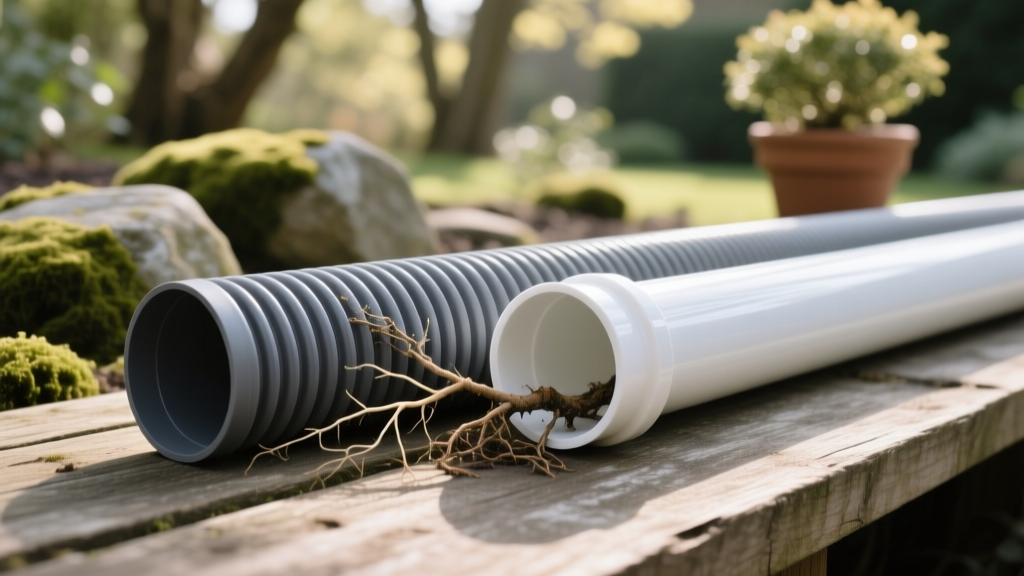
2026 Corrugated vs PVC Drainage Pipe & Root Pruning Guide
David ParkPublished
The Intersection of Landscape Drainage and Pruning Timing
In 2026, sustainable landscaping is heavily focused on preserving mature tree canopies while adapting to increasingly erratic precipitation events. Upgrading your yard's drainage infrastructure is often a necessity to prevent soil erosion, foundation damage, and waterlogged garden beds. However, trenching through an established landscape presents a massive challenge: navigating the complex, hidden network of tree and shrub roots. This is where the subtopic of corrugated vs PVC landscape drainage pipe comparison directly intersects with the critical arboricultural science of pruning methods and timing.
Choosing between flexible corrugated pipe and rigid PVC is no longer just a question of water flow rates or material costs; it is fundamentally a decision about how much root disturbance your landscape can tolerate. When you must sever roots to lay a drainage line, the timing of that excavation and the methods used to prune both the roots and the corresponding canopy dictate whether your mature trees will thrive or decline. This comprehensive 2026 guide explores how to align your drainage pipe selection with proper pruning calendars and techniques to ensure a healthy, dry, and structurally sound landscape.
Understanding the Pruning Calendar for Drainage Excavation
Timing your drainage project is just as critical as choosing the right materials. According to the University of Minnesota Extension, the optimal time for major structural pruning and root disturbance is during the dormant season, typically late winter to very early spring before bud break. During this window, trees have stored their carbohydrate reserves in their root systems, and the lack of active transpiration means the tree experiences significantly less hydraulic stress when roots are severed.
If you schedule your French drain or catch basin installation for the peak of summer, severing major structural roots can lead to immediate canopy dieback, increased susceptibility to wood-boring insects, and catastrophic failure during high winds. Therefore, the first rule of integrating drainage with landscaping is to schedule your trenching to coincide with your dormant pruning window. This allows you to perform simultaneous canopy reduction to balance the loss of the root mass, a concept we will explore in the pruning methods section below.
Corrugated Drainage Pipe: The Flexible, Root-Friendly Option
Corrugated high-density polyethylene (HDPE) pipe has become a staple in modern landscape drainage due to its flexibility and ease of installation. In 2026, advanced corrugated pipes feature dual-wall construction—smooth on the inside for optimal water flow, and corrugated on the outside for crush resistance. When it comes to preserving root systems, corrugated pipe offers a distinct advantage: it can be routed around obstacles.
Because it bends and flexes, you can often navigate a corrugated drain line around large, critical structural roots without needing to sever them. Instead of digging a perfectly straight, deep trench, you can gently undulate the pipe's path, maintaining the required 1% slope while dodging the thickest parts of the root plate. Furthermore, modern corrugated pipes come pre-wrapped in advanced biodegradable geotextile socks that prevent soil infiltration while allowing water to enter the perforations, reducing the need for extensive gravel envelopes that require wider, more destructive trenches.
PVC Drainage Pipe: The Rigid, High-Flow Standard
Schedule 40 PVC remains the gold standard for high-volume drainage, heavy-load areas (like under driveways), and long, straight runs. PVC is incredibly durable, resistant to root intrusion (especially when solvent-welded), and offers a smooth interior that prevents sediment buildup. However, its rigidity is its downfall when working in established, heavily planted landscapes.
PVC requires a straight, continuous trench. If a major tree root crosses your planned drainage path, you have only two choices: reroute the entire system at a 45-degree angle using multiple fittings (which increases the risk of clogs and requires a wider excavation footprint), or sever the root cleanly. Because PVC trenches must be perfectly graded and straight, the excavation process often acts like a plow through the soil, indiscriminately cutting through fine feeder roots and structural anchors alike. Choosing PVC means you must be prepared to execute strict, professional-grade root pruning methods to mitigate the damage.
2026 Comparison Chart: Corrugated vs. PVC for Root-Safe Landscaping
| Feature | Corrugated HDPE (Flexible) | Schedule 40 PVC (Rigid) |
|---|---|---|
| Trench Style | Curved, undulating, narrower footprint | Strictly straight, wider footprint for fittings |
| Root Impact | Low (can route around large structural roots) | High (requires severing roots in the direct path) |
| Pruning Need | Minimal root pruning; canopy balancing rarely needed | Severe root pruning; canopy reduction highly recommended |
| 2026 Avg Cost (10ft) | $12 - $18 (with geotextile sock) | $15 - $25 (plus solvent cement and fittings) |
| Best Use Case | Garden beds, mature tree zones, curved landscapes | Driveway crossings, main trunk lines, heavy clay soils |
Essential Pruning Methods When Trenching is Unavoidable
When you must use rigid PVC, or when a French drain inevitably crosses a tree's critical root zone (CRZ), proper root pruning methods are non-negotiable. The Morton Arboretum emphasizes that tearing or crushing roots during excavation invites rot and pathogenic fungi. To protect your landscape, follow these strict pruning protocols during your drainage installation:
Step 1: Clean Root Severing
Never let a backhoe or excavator rip through roots. Hand-dig the trench to expose the roots cleanly. For roots smaller than 2 inches in diameter, use sharp bypass hand pruners or loppers to make a clean, perpendicular cut. For larger roots, use a sterilized reciprocating saw or a sharp pruning saw. A clean cut allows the tree to compartmentalize the wound (following the CODIT model) and generate new, fibrous feeder roots from the cut callus. Jagged, torn roots will simply die back to the next major branch junction, creating a massive entry point for decay.
Step 2: The 25% Rule and Critical Root Zone (CRZ)
As a general rule in 2026 arboriculture, you should never sever more than 25% of a tree's root system in a single season. Furthermore, avoid cutting any structural roots within the first 3 to 5 feet of the trunk (depending on the species and trunk diameter), as this compromises the tree's structural stability and could lead to it toppling in a storm. If your PVC line must pass through this inner zone, you must tunnel under the roots using pneumatic air excavation rather than trenching through them.
Step 3: Wound Care and Backfilling
Current arboricultural standards advise against using pruning sealants or tar on cut roots. These products trap moisture and bacteria against the wound, accelerating decay. Instead, allow the clean cut to be exposed to the air for a brief period to dry, and then backfill the trench promptly with a well-draining soil mix or the gravel envelope required for your drainage pipe. Ensure the soil is not compacted heavily over the remaining roots, as they still require oxygen exchange.
Canopy Balancing: Compensating for Root Loss
Root pruning is only half of the equation. When you sever a significant portion of a tree's root system to install a rigid PVC drainage line, you have instantly reduced its ability to uptake water and nutrients. If the canopy remains fully intact, the tree will experience severe drought stress, even if you are watering it, because the remaining roots cannot support the transpiration demand of thousands of leaves.
The Arbor Day Foundation notes that balancing the canopy through strategic pruning is essential after major root disturbance. During the same dormant window that you are installing your drainage, you must perform a crown reduction or crown thinning. Remove approximately 15% to 20% of the live canopy, focusing on dead, diseased, or crossing branches first, followed by selective reduction of the longest lateral limbs. This reduces the tree's overall water demand, allowing the compromised root system to recover and regenerate without pushing the tree into a fatal state of hydraulic failure. Remember, never 'top' the tree; always make reduction cuts back to a lateral branch that is at least one-third the diameter of the branch being removed.
2026 Material Innovations and Best Practices
The drainage industry in 2026 has introduced several innovations that make integrating hardscaping with plant health easier than ever. For corrugated pipes, look for products featuring 'smart-flow' interior coatings that reduce friction, allowing you to use slightly smaller diameter pipes (e.g., 3-inch instead of 4-inch) in tight garden beds, thereby narrowing your trench and saving more fine feeder roots. For PVC, the widespread adoption of push-fit, gasket-sealed fittings for landscape drainage eliminates the need for toxic solvent cements in the garden bed, protecting the delicate soil microbiome and mycorrhizal fungi networks that are essential for root regeneration after pruning.
Conclusion
The debate between corrugated and PVC landscape drainage pipe is ultimately decided by the maturity of your landscape and your willingness to adhere to strict pruning timing and methods. If you are working in an open, newly graded yard, rigid PVC offers unmatched longevity and flow. However, if you are retrofitting drainage into an established 2026 landscape filled with mature trees and shrubs, flexible corrugated pipe is vastly superior for root preservation. When trenching is unavoidable, aligning your excavation with the dormant pruning season, executing clean root cuts, and balancing the canopy will ensure your landscape remains both beautifully dry and vibrantly alive for decades to come.

