
Landscaping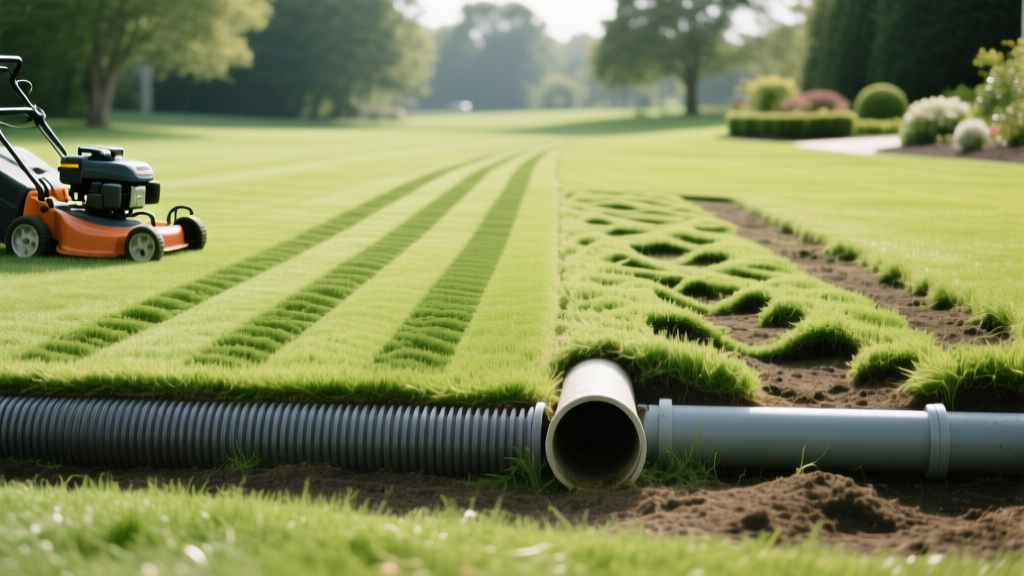
Corrugated vs PVC Drain Pipe for Mowing Patterns 2026
Emily WatsonPublished
The Hidden Foundation of Perfect Mowing Patterns
In 2026, the art of lawn mowing has evolved far beyond simple maintenance; it is a cornerstone of high-end landscape design. Homeowners and professional turf managers alike are obsessed with achieving pristine, golf-course-quality mowing patterns, from classic alternating stripes to complex checkerboards and diamonds. However, the secret to a flawless lawn pattern does not start with the mower deck or the striping kit—it starts deep underground. Subsurface drainage is the unsung hero of turf aesthetics, and the debate between corrugated HDPE pipe and rigid PVC Schedule 40 pipe is more critical than ever for those looking to maintain a level, pattern-ready surface.
When executing intricate mowing techniques, your equipment exerts immense dynamic pressure on the soil. The new generation of 2026 commercial and residential electric zero-turn mowers, while environmentally friendly and exceptionally quiet, carry dense lithium-ion battery banks that significantly increase the point-load weight on front caster wheels. If your subsurface drainage infrastructure cannot handle this load, you risk soil subsidence, trenching, and waterlogged turf—all of which will instantly ruin your mowing patterns. In this comprehensive guide, we compare corrugated vs. PVC landscape drainage pipe specifically through the lens of heavy mower traffic, turf health, and advanced striping techniques.
The Physics of Lawn Patterns: Why Soil Moisture and Stability Matter
To understand why drainage pipe choice affects your mowing patterns, you must understand the physics of lawn striping. A stripe is created by bending the grass blade in a specific direction, which changes how light reflects off the leaf surface. Grass bent away from you appears lighter, while grass bent toward you appears darker. For a grass blade to bend cleanly without snapping or tearing, the turf must be healthy, deeply rooted, and adequately hydrated without being waterlogged.
According to Penn State Extension, poorly drained soils lead to shallow root systems and chronic turf stress. If a drainage pipe fails or becomes crushed under mower traffic, water pools in the subsurface. This creates a spongy, uneven surface. When you drive a heavy zero-turn mower over a spongy zone, the tires sink slightly, altering the cutting height and causing the mower deck to scalp the high spots while leaving the low spots uncut. Furthermore, wet, stressed grass blades tend to clump and tear rather than bend smoothly, resulting in muddy, fractured patterns that lack the crisp, reflective contrast required for a professional finish.
Corrugated HDPE Pipe: Flexibility vs. Crush Risk
Corrugated high-density polyethylene (HDPE) pipe is a staple in modern landscaping. Recognizable by its black, ribbed exterior, it is highly flexible, lightweight, and generally more affordable than rigid alternatives. For long, sweeping French drains that move water away from the perimeter of a property or through low-traffic garden beds, corrugated pipe is an excellent, cost-effective choice.
However, when routing drainage beneath the primary mowing zones—specifically the 'headlands' or turning areas where complex mowing patterns require frequent 180-degree pivots—corrugated pipe presents a significant structural vulnerability. The corrugated design provides great ring stiffness for static earth loads, but it is highly susceptible to dynamic shear forces and point loads. If buried too shallow (less than 18 inches) or backfilled improperly with heavy, uncompacted clay, the repeated pivoting of a heavy 2026 zero-turn mower can cause the pipe to deform or collapse over time.
Once a corrugated pipe collapses, the soil above it settles, creating a linear depression or 'trench' in the lawn. When mowing a checkerboard pattern, crossing these subtle trenches causes the mower deck to dip, disrupting the overlap of your stripes and leaving visible, wavy imperfections in the turf canvas. Additionally, University of Minnesota Extension notes that soil compaction over compromised drainage zones severely restricts oxygen to the roots, leading to localized dead patches that break the visual continuity of your mowing patterns.
PVC Schedule 40: Rigid Reliability for Heavy Mowers
PVC (Polyvinyl Chloride) Schedule 40 pipe is the rigid, white plumbing pipe often used in pressurized systems, but it is equally valuable in high-traffic subsurface landscape drainage. Unlike corrugated HDPE, PVC Schedule 40 offers exceptional crush resistance and structural rigidity. According to the Plastic Pipe Institute, PVC pipe maintains its structural integrity under heavy, sustained loads, making it highly resistant to the dynamic point-loads generated by heavy landscaping equipment.
For turf managers dedicated to advanced mowing patterns, PVC is the superior choice for any drainage line that runs parallel to or directly beneath mowing paths and turning zones. When a zero-turn mower executes a pivot turn at the end of a stripe, the front caster wheels can exert hundreds of pounds of pressure per square inch on the soil. PVC pipe absorbs and distributes this load without deforming, ensuring the soil surface above remains perfectly level year after year.
While PVC is more expensive per linear foot and requires more labor to install (due to the need for gluing fittings and cutting rigid lengths), the investment pays off in the longevity of your landscape's surface. A perfectly level surface ensures that your mower deck maintains a consistent cutting height, allowing your striping kit to bend the grass uniformly and produce razor-sharp, high-contrast patterns.
Data Table: 2026 Drainage Pipe Comparison for Landscaping & Mowing
| Feature | Corrugated HDPE Pipe | PVC Schedule 40 Pipe |
|---|---|---|
| Material Rigidity | Flexible (Semi-Rigid) | Highly Rigid |
| Crush Resistance | Moderate (Vulnerable to point loads) | Excellent (Handles heavy dynamic loads) |
| 2026 Avg. Cost (4-inch) | $1.25 - $1.75 per linear foot | $3.50 - $4.50 per linear foot |
| Installation Effort | Low (Bends around curves easily) | High (Requires fittings and solvent weld) |
| Best Landscape Use | Garden beds, perimeter French drains | High-traffic lawns, mowing headlands |
| Mower Traffic Tolerance | Low to Moderate (Risk of subsidence) | High (Maintains level surface for stripes) |
Advanced Mowing Techniques Over Drainage Zones
Even with the best PVC drainage infrastructure, how you maneuver your mower over subsurface lines dictates the long-term health of your turf and the quality of your patterns. In 2026, with the increased weight of electric commercial mowers, mastering the 'Y-turn' or 'teardrop turn' is essential when working over drainage trenches.
The Y-Turn vs. The Zero-Turn Pivot
When mowing a striped pattern, the traditional method is to reach the end of the run, stop, and pivot 180 degrees on the spot to align with the next stripe. While zero-turn mowers are designed for this, executing a zero-radius pivot directly over a subsurface drainage line (even PVC) concentrates extreme shear stress on the turf roots and the soil envelope. Over time, this tears the grass canopy and can slowly compromise the backfill material above the pipe.
Instead, utilize the Y-turn technique. As you approach the end of your stripe, gradually slow down and swing the mower in a wide, teardrop-shaped loop before entering the next stripe. This distributes the mower's weight over a much larger surface area, eliminating the destructive point-load pivot. This technique not only protects your subsurface drainage investment but also prevents the 'burned' or torn grass circles at the end of your patterns that disrupt the visual flow of a checkerboard or diamond design.
Overlapping and Deck Pitch
When mowing over known drainage zones, ensure your mower deck is perfectly leveled. A slight pitch is often recommended for striping, but an aggressive pitch over a drainage trench can cause scalping. Overlap your passes by at least 2 to 3 inches more than usual when crossing a drainage headland to account for any minor micro-variations in soil settling, ensuring no uncut strips of grass ruin your pattern's symmetry.
Installation Best Practices for Pattern-Ready Lawns
To guarantee that your drainage system supports the rigorous demands of advanced mowing patterns, proper installation is non-negotiable. Whether you choose corrugated or PVC, the trench preparation dictates the success of the system.
- Trench Depth: For areas subjected to heavy zero-turn mower traffic, drainage pipes must be buried at a minimum depth of 18 to 24 inches. This provides a sufficient soil buffer to disperse the dynamic loads from the mower tires before they reach the pipe.
- The Gravel Envelope: Never backfill directly over a drainage pipe with native clay or topsoil. Surround the pipe with a 6-inch envelope of washed, angular gravel (typically 3/4-inch crushed stone). Angular gravel locks together, creating a rigid, load-bearing bridge over the pipe that prevents soil subsidence and keeps your mowing surface perfectly flat.
- Geotextile Fabric: Wrap the gravel envelope in a non-woven geotextile landscape fabric. This prevents fine soil particles from migrating into the gravel and clogging the drainage system, while still allowing water to percolate down into the pipe.
- Topsoil Compaction: When replacing the topsoil and sod over the trench, lightly compact the soil in 2-inch lifts. Failing to compact the backfill will result in a trench that settles over the first few months, creating a visible dip that will distort your mowing stripes and collect puddles.
Conclusion
As landscaping trends in 2026 continue to emphasize immaculate, golf-course-style lawn patterns, the infrastructure beneath the soil must be treated with the same precision as the turf above it. While corrugated HDPE pipe remains a budget-friendly option for low-traffic perimeter drainage, PVC Schedule 40 is the undisputed champion for high-traffic mowing zones and turning headlands. By investing in rigid PVC, utilizing proper gravel backfill techniques, and mastering low-impact mowing turns, you ensure a perfectly level, well-drained canvas. This foundational stability is the ultimate secret to achieving crisp, unbroken, and breathtaking mowing patterns season after season.

