
Landscaping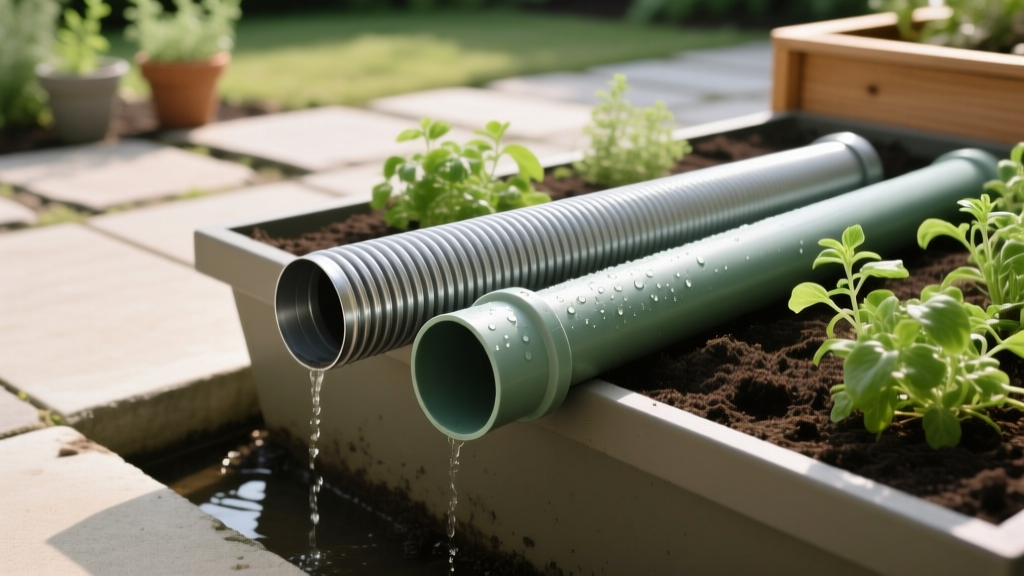
2026 Planter Box Drainage: Corrugated vs PVC Pipe Guide
Mike RodriguezPublished
The Evolution of Container Gardening in 2026
Container gardening has transcended the humble terracotta pot on a sunny porch. In 2026, modern landscape architecture heavily features oversized modular corten steel planters, built-in masonry courtyard boxes, and massive composite half-barrels that serve as privacy screens and focal points. While these 'mega-containers' elevate outdoor living spaces, they introduce a significant hydrological challenge: where does all the water go? When you are managing 150-gallon planter boxes on a paved patio or a wooden deck, standard saucers are entirely inadequate. You must plumb the container's drain holes directly into a sub-surface landscape drainage system.
This brings us to a critical infrastructure decision for container gardeners and landscape designers alike. When tying your oversized pots and raised planter beds into the main yard drainage, which pipe should you use? The debate between flexible corrugated HDPE pipe and rigid PVC pipe is a cornerstone of landscape drainage, but the rules change dramatically when the water source is container runoff. In this comprehensive 2026 guide, we break down the corrugated vs PVC landscape drainage pipe comparison specifically through the lens of container and pot gardening.
The Unique Hydrology of Container Gardens
To understand why pipe selection matters, we must look at what actually washes out of a container garden. Unlike a traditional French drain that pulls in relatively clean groundwater or surface runoff from a lawn, a planter box drain deals with a unique effluent. Every time you irrigate your patio containers or experience a heavy rainstorm, the water percolating through the potting mix carries 'fines'—microscopic particles of peat moss, coco coir dust, degraded compost, and perlite.
According to soil hydrology experts at the University of Minnesota Extension's Yard and Garden resources, container media breaks down over time, releasing these fine particulates into the drainage layer. Furthermore, container plants are often heavily fertilized, meaning the runoff is rich in salts and organic sludge. If your sub-surface pipe cannot handle this specific type of debris, your drainage system will fail, leading to waterlogged planters, root rot, and flooded hardscaping.
Corrugated Pipe: The Flexible but Flawed Option
Black corrugated HDPE (High-Density Polyethylene) pipe has been a staple in landscape drainage for decades. It is lightweight, inexpensive, and can bend around the curved edges of a circular patio or a winding garden bed without the need for elbow fittings.
The Pros for Container Setups
- Flexibility: If your container garden is arranged in a curved, organic layout across a courtyard, corrugated pipe can easily snake between the planters to collect runoff from multiple catch basins.
- Cost-Effective: As of early 2026, 4-inch corrugated pipe averages around $1.95 per foot, making it an attractive option for large-scale commercial planter installations on a tight budget.
- Perforation Options: If your planter boxes are built directly over soil (rather than on a solid concrete pad), you can use perforated corrugated pipe to allow surrounding groundwater to enter the system alongside the container runoff.
The Cons: The 'Fines' Trap
The fatal flaw of corrugated pipe in container applications is its interior texture. The ridges that give the pipe its structural flexibility also act as a trap for potting mix fines. The organic sludge and coir dust washing out of your planters will catch in the ridges, creating a dam. Over a single growing season, this trapped organic matter becomes a breeding ground for algae and biofilm, eventually calcifying into a solid blockage. Once a corrugated pipe clogs with container sludge, it is nearly impossible to snake or clean out; it usually must be dug up and replaced.
PVC Pipe: The Rigid Standard for Planter Plumbing
Schedule 40 and SDR 35 PVC (Polyvinyl Chloride) pipes are the gold standard for residential and commercial plumbing, and they are increasingly the preferred choice for high-end container garden drainage in 2026.
The Pros for Container Setups
- Smooth Interior: PVC features a completely smooth inner wall. When potting mix fines, liquid fertilizers, and organic sludge wash out of your mega-containers, they slide right through the pipe without catching. This self-cleaning action is vital for the longevity of the system.
- Root Intrusion Resistance: Container plants, especially aggressive species like bamboo or large ornamental grasses, have roots that actively seek out moisture. If a root escapes the planter drain hole, it will easily penetrate the seams of corrugated pipe. PVC, when properly glued with solvent cement, creates a monolithic, root-proof barrier.
- High-Pressure Flushing: If a blockage does occur, a plumber can use a high-pressure hydro-jet to clear a PVC line without risking a pipe rupture, something you cannot do with corrugated HDPE.
The Cons: Rigidity and Cost
PVC is rigid. Navigating the tight corners of a modular raised bed or weaving between a cluster of large ceramic pots requires precise measurements, cutting, and the use of 45-degree and 90-degree sweep fittings. Additionally, material costs have risen; in 2026, 4-inch Schedule 40 PVC averages $3.85 per foot, nearly double the cost of corrugated alternatives. However, the EPA's Green Infrastructure portal frequently highlights the long-term cost savings of durable, low-maintenance water management systems over cheap, easily degraded alternatives.
2026 Comparison Chart: Corrugated vs. PVC for Planters
| Feature | Corrugated HDPE (4-inch) | Schedule 40 PVC (4-inch) |
|---|---|---|
| Interior Texture | Ribbed (Traps potting fines) | Smooth (Flushes sludge easily) |
| Clog Risk (Container Runoff) | High | Very Low |
| Flexibility | High (Bends around curved patios) | Low (Requires fittings for turns) |
| 2026 Avg. Cost per Foot | $1.95 | $3.85 |
| Root Intrusion Risk | High (Roots penetrate seams) | Low (Solvent-welded joints) |
| Cleanout Compatibility | Poor (Snags augers) | Excellent (Hydro-jet safe) |
| Best Container Application | Temporary setups, permeable gravel beds | Permanent courtyard planters, patio boxes |
Step-by-Step: Plumbing a Courtyard Container System with PVC
If you are installing permanent architectural planters on a hardscape in 2026, PVC is the undisputed champion. Here is how to properly integrate your container garden into a PVC drainage line.
Step 1: Install Recessed Catch Basins
Do not simply run a pipe directly into the bottom hole of a 200-gallon corten steel planter. Instead, install a 6-inch or 9-inch square catch basin in the hardscape directly beneath the planter's weep holes. Fill the basin with 2-inch river rock to filter out large mulch chunks and leaves before the water enters the pipe system.
Step 2: Establish the Proper Slope
PVC requires a precise slope to ensure the heavy, sludge-laden water from your containers maintains enough velocity to self-clean the pipe. Aim for a minimum slope of 1/8 inch per foot (1% grade). Use a laser level to ensure your trench or patio base is graded correctly before laying the pipe.
Step 3: Use Sweep Fittings, Not Sharp Elbows
When routing the pipe around the corners of your modular planter boxes, use long-sweep 90-degree fittings rather than sharp vent elbows. Sharp corners slow down the water flow, allowing coco coir dust and perlite to settle and accumulate.
Step 4: Integrate Cleanouts
Install a PVC cleanout wye fitting at the end of every planter run and at every major change in direction. In 2026, many landscapers are hiding these cleanouts inside decorative planter sleeves or behind removable access panels in the masonry, ensuring the system remains serviceable without ruining the aesthetic of the garden.
Step 5: The Fernco Transition
If your large container is subject to frost heave or slight settling, do not hard-plumb the container directly to the rigid PVC. Use a flexible rubber coupler (commonly known as a Fernco fitting) to bridge the gap between the planter's drain outlet and the buried PVC line. This prevents the rigid pipe from cracking if the heavy, soil-filled planter shifts slightly over the winter.
Maintenance and 2026 Smart-Tech Innovations
Even with a smooth PVC system, container gardens require seasonal maintenance. At the end of the autumn season, flush the planter drain lines with a garden hose to push out any accumulated fertilizer salts and degraded peat moss before the winter freeze.
The most exciting development in 2026 is the integration of smart-home technology into landscape hydrology. Landscapers are now installing Wi-Fi-enabled moisture sensors and micro-flow meters inside the catch basins of large planter boxes. These devices connect to your smartphone, alerting you if a planter drain is backing up or if a container is retaining too much water, allowing you to address a clog before it causes root rot or overflows onto your expensive patio pavers.
For further reading on managing soil health and water runoff in specialized garden setups, the Ohio State University Extension (OSUE) offers extensive, up-to-date fact sheets on soil percolation and drainage management that apply beautifully to large-scale container horticulture.
Final Verdict: Which Pipe Wins for Containers?
When comparing corrugated vs PVC landscape drainage pipe for container and pot gardening, the verdict is clear. While corrugated pipe wins on upfront cost and flexibility, it is fundamentally incompatible with the organic sludge and potting fines that wash out of container gardens. For any permanent planter box, courtyard pot, or patio container setup, Schedule 40 PVC is the only logical choice. Its smooth interior guarantees that your container runoff is whisked away efficiently, protecting both your prized plants and your hardscape investment for decades to come.

