
Landscaping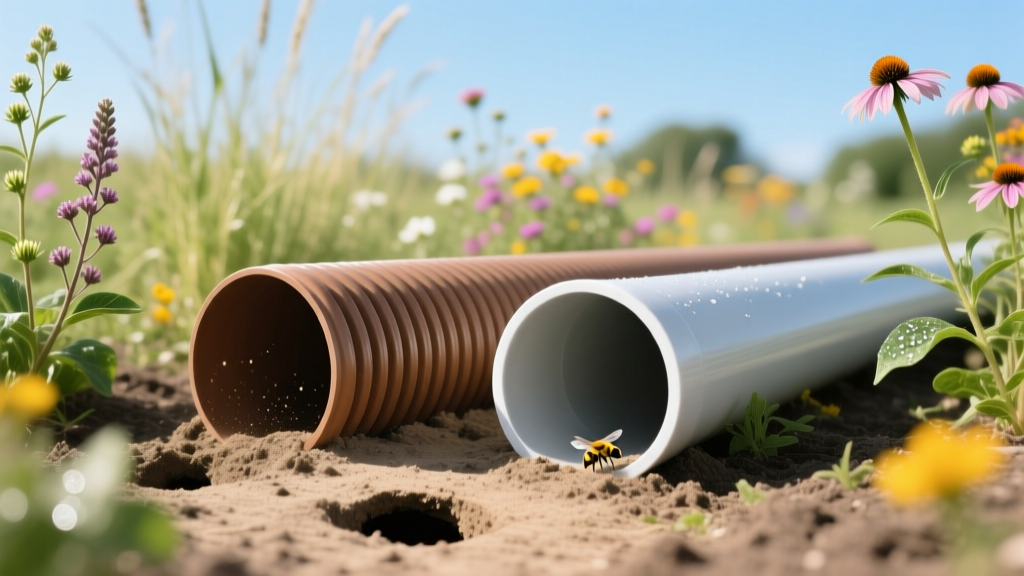
Corrugated vs PVC Drainage Pipe for Pollinator Gardens 2026
Sarah ChenPublished
The Intersection of Hardscape Drainage and Softscape Ecology
As we navigate the evolving landscape design trends of 2026, sustainable gardening has moved far beyond simply planting native flowers. True ecological landscaping requires a holistic approach that considers the unseen infrastructure beneath the soil. When designing a pollinator-friendly garden, homeowners and landscape architects often focus heavily on softscape elements like Asclepias (milkweed), Echinacea (coneflower), and Symphyotrichum (asters). However, the success of these vital pollinator host plants is intrinsically linked to subsurface hydrology. Poor drainage can lead to waterlogged soil, root rot, and the destruction of critical overwintering habitats. This brings us to a crucial hardscaping decision: choosing between corrugated HDPE and rigid PVC landscape drainage pipes. In 2026, with increasingly erratic spring rainfall patterns, selecting the right drainage pipe is essential for protecting both your native plant investments and the delicate pollinator ecosystems they support.
Why Drainage Dictates Pollinator Success
Most native prairie and meadow plants despise wet feet. While species like Swamp Milkweed (Asclepias incarnata) tolerate moisture, the vast majority of pollinator-favorites require well-draining soil to thrive. Furthermore, the impact of poor drainage extends far beyond plant health. According to the Xerces Society for Invertebrate Conservation, approximately 70 percent of native bee species in North America are ground-nesting. Species such as sweat bees (Halictidae) and mining bees (Andrena) dig shallow tunnels in bare or sparsely vegetated soil to lay their eggs. When landscape drainage is inadequate, waterlogged soil collapses these nesting tunnels, drowning larvae and decimating local pollinator populations. Conversely, improperly installed drainage pipes can cause soil subsidence or require invasive trenching that severs the deep taproots of established native shrubs. Understanding the mechanical and ecological differences between corrugated and PVC pipes is the first step in safeguarding your garden's biodiversity.
Corrugated HDPE Pipe: The Flexible but Fragile Option
Corrugated High-Density Polyethylene (HDPE) pipe, often recognized by its black, ribbed exterior and flexible nature, has been a staple in residential landscaping for decades. Its primary advantage in a pollinator garden is its flexibility. When retrofitting drainage into an existing native garden bed, corrugated pipe can be snaked around the deep, sensitive taproots of established plants like Butterfly Weed (Asclepias tuberosa) or Wild Indigo (Baptisia tinctoria) without requiring harsh, angular trenching.
Pros for Pollinator Gardens
- Flexibility: Easily curves around existing root zones, minimizing trauma to established pollinator host plants.
- Lightweight and Easy to Install: Requires less heavy machinery to install, reducing soil compaction in sensitive habitat zones.
- Cost-Effective: Leaves more budget in your 2026 landscaping plan for high-quality native plugs and wildflower seeds.
Cons and Ecological Risks
The ribbed interior of standard corrugated pipe slows water flow, allowing silt and organic matter to accumulate. More importantly, the slotted perforations used in French drain applications are highly susceptible to root intrusion. Aggressive native plants, particularly those with rhizomatous root systems like certain goldenrods, will seek out the moisture inside the pipe and infiltrate the slots, eventually causing clogs and localized flooding. Additionally, corrugated pipe has a lower crush strength. If heavy soil shifts or if a gardener uses a heavy roller on a nearby lawn, the pipe can collapse, creating sinkholes that are disastrous for ground-nesting bee habitats.
Rigid PVC Pipe: The Durable but Inflexible Option
Rigid PVC (Polyvinyl Chloride), typically Schedule 40 or SDR 35, is the heavy-duty alternative for landscape drainage. It features a smooth interior that promotes rapid water evacuation and is highly resistant to crushing. In 2026, many eco-conscious landscape architects are leaning toward PVC for permanent subsurface infrastructure, despite its higher upfront cost and installation challenges.
Pros for Pollinator Gardens
- Superior Flow and Durability: The smooth interior prevents silt buildup, ensuring that heavy spring rains are quickly diverted away from sensitive native beds.
- Root Intrusion Resistance: When glued with proper PVC fittings, the system is virtually impenetrable to aggressive native plant roots, preventing future clogs and the need for disruptive maintenance.
- Crush Resistance: Will not collapse under soil weight, ensuring the ground above remains stable and safe for ground-nesting pollinators.
Cons and Ecological Risks
The major drawback of PVC is its rigidity. Trenching for PVC requires straight lines and sharp 90-degree elbows. If you are installing drainage near a mature pollinator garden, digging straight, deep trenches will inevitably sever the lateral roots of native trees and shrubs that provide essential nectar and shelter. Furthermore, installing PVC often requires heavier digging equipment or extensive manual labor, which can lead to severe soil compaction. Compacted soil is virtually impossible for ground-nesting bees to excavate, effectively sterilizing the habitat above the pipe.
2026 Head-to-Head Comparison Chart
To help you make an informed decision for your pollinator-friendly landscape, here is a direct comparison of corrugated HDPE and rigid PVC drainage pipes based on 2026 industry standards and pricing.
| Feature | Corrugated HDPE Pipe | Rigid PVC Pipe (Schedule 40) |
|---|---|---|
| 2026 Material Cost (per linear ft) | $1.50 - $2.50 | $3.50 - $5.50 |
| Interior Surface | Ribbed (slower flow, traps silt) | Smooth (fast flow, self-cleaning) |
| Root Intrusion Risk | High (roots penetrate slotted joints) | Very Low (sealed joints block roots) |
| Flexibility | High (snakes around taproots) | None (requires straight trenching) |
| Crush Strength | Moderate (prone to collapsing) | High (maintains structural integrity) |
| Impact on Soil Compaction | Low (can be hand-dug easily) | High (often requires wider, deeper trenches) |
| Lifespan in Native Beds | 10 - 15 Years | 50+ Years |
Eco-Conscious Trenching and Installation Best Practices
Choosing the right pipe is only half the battle; how you install it determines the survival of your local pollinator population. The Environmental Protection Agency (EPA) emphasizes that habitat preservation during landscape construction is critical for maintaining local biodiversity. If you must trench through or near a pollinator garden in 2026, follow these eco-conscious best practices:
1. Time Your Trenching Correctly
Never trench through a pollinator garden during the spring emergence or summer foraging seasons. The optimal time for subsurface drainage installation is late fall or early winter, after the first hard frost. During this window, native plants are fully dormant, and ground-nesting bees are sealed deep within their overwintering cells, making them less susceptible to surface vibrations and soil disruption.
2. Minimize Soil Compaction
Ground-nesting bees require friable, uncompacted soil to dig their nesting galleries. When excavating your drainage trench, avoid using heavy, gas-powered mini-excavators with high-PSI tracks. Instead, opt for hand-digging or use low-ground-pressure equipment. Furthermore, never pile the excavated soil directly onto adjacent garden beds, as the weight will compress the soil structure and suffocate existing root zones.
3. The Root Barrier Sleeve Method
If you opt for the more affordable corrugated pipe to navigate around sensitive root zones, you must protect it from root intrusion. In 2026, landscape professionals recommend wrapping slotted corrugated pipe in a commercial-grade, copper-infused root barrier fabric before surrounding it with washed #57 gravel. This allows water to enter the pipe while chemically deterring the aggressive rhizomes of native meadow plants from penetrating the drainage system.
Managing Runoff and Bioswale Integration
Where your drainage pipe daylighting (the exit point) is just as important as the pipe itself. Pollinators are highly sensitive to water quality, and runoff from traditional lawns often contains synthetic fertilizers and pesticides that are lethal to bees and butterflies. Rather than simply day-lighting your PVC or corrugated pipe into a storm drain or onto a neighboring property, integrate the outflow into a pollinator-friendly bioswale or rain garden. According to the USDA Forest Service, directing managed runoff into bioswales planted with deep-rooted native species like Joe-Pye Weed (Eutrochium purpureum) and Blue Flag Iris (Iris versicolor) naturally filters out pollutants while providing a secondary, moisture-rich habitat for specialized pollinator species. Ensure that the outflow area features a gradual slope lined with river rock to prevent erosion, which could otherwise wash away the topsoil required by ground-nesting insects.
Conclusion
Designing a pollinator-friendly garden in 2026 requires looking beneath the surface. While corrugated HDPE pipe offers a flexible, budget-friendly solution for retrofitting drainage around established native taproots, its vulnerability to root intrusion and crushing makes it a risky long-term investment for aggressive meadow plantings. Rigid PVC, though more expensive and demanding to install, provides a permanent, root-proof, and structurally sound drainage solution that protects the soil stability required by ground-nesting bees. By carefully selecting your drainage materials, timing your installation to respect pollinator life cycles, and directing runoff into native bioswales, you can create a resilient, thriving landscape that supports both beautiful flora and essential pollinator fauna for decades to come.

