
Landscaping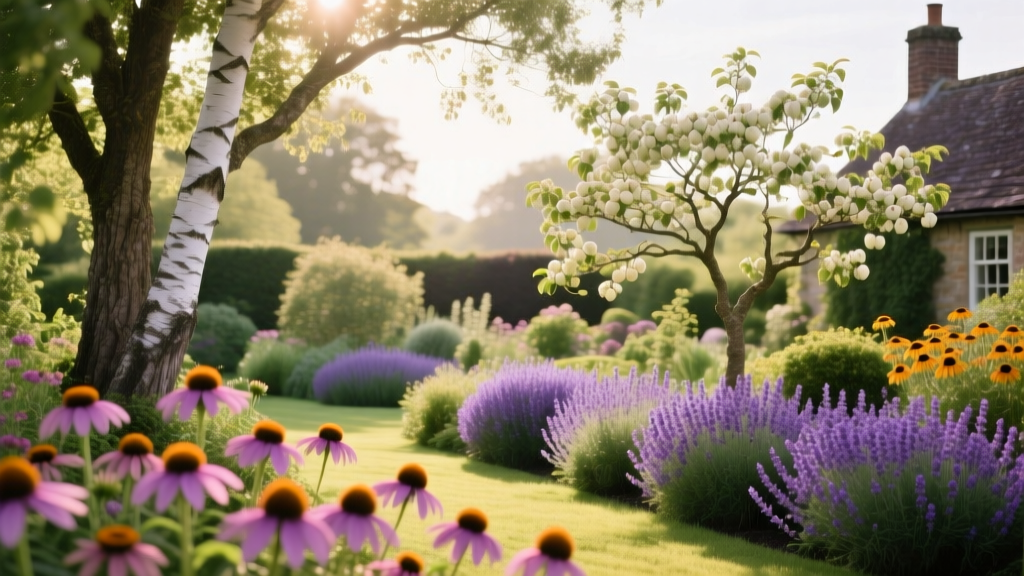
2026 Tree Selection for Lavender and Coneflower Borders
Mike RodriguezPublished
The Backbone of the Cottage Garden: Why Tree Selection Matters
Cottage gardens are celebrated for their romantic, overflowing borders, but without a strong structural backbone, they can look chaotic by late summer. In 2026, landscape designers are increasingly focusing on sustainable, drought-resilient cottage designs that pair the classic, pollinator-friendly combination of English lavender (Lavandula angustifolia) and purple coneflower (Echinacea purpurea) with carefully selected ornamental trees. While lavender and coneflowers provide the vibrant, textured lower canopy, the right tree selection provides vertical interest, dappled shade, and essential winter structure.
However, pairing trees with these specific herbaceous perennials requires strategic planning. Lavender demands full sun, exceptional drainage, and low-nitrogen soil, while coneflowers thrive in similar well-draining conditions but can tolerate slightly richer earth. Selecting trees that share these environmental preferences—and possess root systems that will not aggressively outcompete your border plants—is the secret to a thriving, unified landscape. According to the NC State Extension, lavender is highly susceptible to root rot in poorly drained soils, meaning any tree you select must also thrive in or tolerate dry, well-aerated earth once established.
Top Tree Picks for Lavender and Coneflower Borders in 2026
When visiting your local nursery in 2026, look for specimens that offer multi-season interest, open canopies for light penetration, and non-invasive root systems. Expect to pay between $140 and $280 for a healthy 15-gallon specimen from a specialized nursery this year.
1. Eastern Redbud (Cercis canadensis)
The Eastern Redbud, particularly the 'Merlot' or 'Rising Sun' cultivars, is a stellar anchor for a cottage garden. Blooming in early spring with vibrant magenta or soft pink flowers, it provides a stunning visual prelude to the summer explosion of lavender and coneflowers. Redbuds feature a relatively open, vase-shaped canopy that allows dappled sunlight to reach the border plants below. They thrive in USDA zones 4-9 and, once established, exhibit excellent drought tolerance that matches the watering needs of your herbaceous borders.
2. Serviceberry (Amelanchier x grandiflora)
'Autumn Brilliance' Serviceberry is a multi-stemmed small tree that offers four-season interest: delicate white spring flowers, edible summer berries, fiery autumn foliage, and striking silvery bark in winter. Serviceberries prefer well-drained soil and do not cast dense, heavy shade, making them ideal companions for sun-loving Echinacea. The University of Minnesota Extension notes that coneflowers require at least six hours of direct sunlight to produce sturdy stems and abundant blooms; the airy canopy of the Serviceberry ensures this light requirement is met.
3. Crape Myrtle (Lagerstroemia indica)
For gardeners in warmer climates (USDA zones 7-10), Crape Myrtles like 'Natchez' (white) or 'Tuscarora' (coral-pink) are unmatched for late-summer color. Because they bloom concurrently with coneflowers and lavender, they create a cohesive, multi-tiered color palette. Crape myrtles are exceptionally heat and drought-tolerant, aligning perfectly with the water-conservation landscaping trends dominating 2026. Their peeling bark also provides excellent winter texture when the perennials die back.
4. Japanese Tree Lilac (Syringa reticulata)
Unlike the common shrub lilac, the Japanese Tree Lilac grows to a manageable 20-25 feet and features large, creamy-white flower panicles in early summer. It is highly resistant to powdery mildew and tolerates the slightly alkaline soils (pH 6.5 to 7.5) that lavender absolutely requires to thrive.
Site Preparation and Soil Matching
The greatest challenge in this specific cottage garden design is balancing soil fertility. Trees generally benefit from rich, organic soil to establish quickly, whereas lavender will suffer from excessive nitrogen and moisture retention. The solution lies in localized soil preparation.
- Test Your Soil pH: Aim for a neutral pH of 6.8 to 7.2. This is the sweet spot where lavender, coneflowers, and most ornamental trees can coexist.
- Improve Drainage Globally: If you have heavy clay soil, amend the entire planting area with expanded shale, pea gravel, and coarse sand. Avoid heavy peat moss or excessive compost, which retains too much water for lavender.
- Localized Tree Amendment: When planting the tree, use a well-draining topsoil mix with a modest amount of organic compost strictly within the tree's root ball zone. Keep the surrounding border soil leaner and grittier for the lavender.
Step-by-Step Planting Guide for Cottage Garden Trees
Proper planting technique is vital to ensure your tree establishes without creating a soggy basin that will rot nearby lavender roots. The Arbor Day Foundation emphasizes the importance of identifying the root flare before planting.
- Timing: Plant in early spring or early fall. In 2026, with shifting climate zones, fall planting is often preferred as it allows the tree to establish roots in warm soil while facing less heat stress.
- Digging the Hole: Dig a saucer-shaped hole that is two to three times as wide as the root ball, but no deeper. The root flare (where the trunk widens at the base) must sit 1 to 2 inches above the surrounding grade to ensure water drains away from the trunk.
- Positioning: Place the tree so that its lowest branches will eventually be pruned up to 6-8 feet, creating a clear understory for your coneflower and lavender borders to receive unobstructed southern and western sun.
- Backfilling: Backfill with the native soil you removed, mixing in no more than 10% compost. Tamp down gently to remove large air pockets.
- Mulching Strategy: Apply a 2-inch layer of inorganic mulch (like pea gravel or crushed granite) around the base of the tree and extending into the lavender border. Gravel suppresses weeds, reflects light and heat up into the lavender canopy, and prevents the moisture-retention issues associated with wood bark mulch.
Spacing, Canopy Management, and Light Transmission
To prevent the tree from shading out your sun-loving perennials, you must manage the canopy and plan your spacing meticulously. Below is a guide to spacing and light management for the recommended trees.
| Tree Species | Mature Canopy Width | Light Transmission | Root Competition | Ideal Border Distance |
|---|---|---|---|---|
| Eastern Redbud | 15-25 feet | High (Dappled) | Moderate | 8-10 feet from trunk |
| Serviceberry | 15-20 feet | High (Open) | Low to Moderate | 6-8 feet from trunk |
| Crape Myrtle | 10-20 feet | Very High | Low | 5-8 feet from trunk |
| Japanese Tree Lilac | 15-25 feet | Moderate | Moderate | 8-12 feet from trunk |
Pruning for Light: In late winter, practice 'crown thinning' on your selected trees. Remove crossing branches and interior suckers to increase light penetration. By maintaining an open canopy, you ensure the coneflowers receive the minimum 6 hours of direct sunlight required to prevent them from becoming leggy and flopping over.
Underplanting Techniques: Protecting the Roots
When planting your lavender and coneflowers around a newly installed tree, you must protect the tree's delicate feeder roots, which typically reside in the top 12 inches of soil.
- Plug Planting: Instead of digging massive trenches for your perennials, use a narrow trowel or bulb planter to insert individual lavender and coneflower plugs. This minimizes root disturbance to the tree.
- Zoning the Borders: Plant the more drought-tolerant lavender closer to the tree's drip line where root competition for water is highest. Plant the coneflowers slightly further out or in areas where they can receive supplementary drip irrigation during their first summer.
- Avoid Soil Mounding: Never pile soil against the tree trunk to create a raised bed for the perennials. This will girdle the tree and invite fatal fungal pathogens.
Long-Term Maintenance and the Fertilization Balancing Act
The most common mistake in mixed cottage gardens is over-fertilizing. Trees might benefit from an annual dose of balanced fertilizer, but excess nitrogen will cause lavender to produce weak, sappy growth that is highly susceptible to aphids and fungal diseases, while completely ruining its essential oil fragrance.
The 2026 Fertilization Strategy: Abandon broadcast granular fertilizers. Instead, use deep-root liquid injection for the trees in early spring. This delivers nutrients directly to the tree's deeper root zones, bypassing the shallow-feeding lavender and coneflowers. For the perennials, a single spring top-dressing of a low-nitrogen, high-potassium organic feed (like liquid kelp or comfrey tea) will support robust coneflower blooming and woody lavender stems without causing excessive vegetative growth.
By carefully selecting the right structural trees and employing targeted planting and maintenance techniques, your cottage garden will achieve a perfect, sustainable balance. The trees will provide a resilient, beautiful canopy that protects and frames the lavender and coneflower borders, creating a dynamic landscape that thrives in the evolving climate of 2026 and beyond.

