Gardening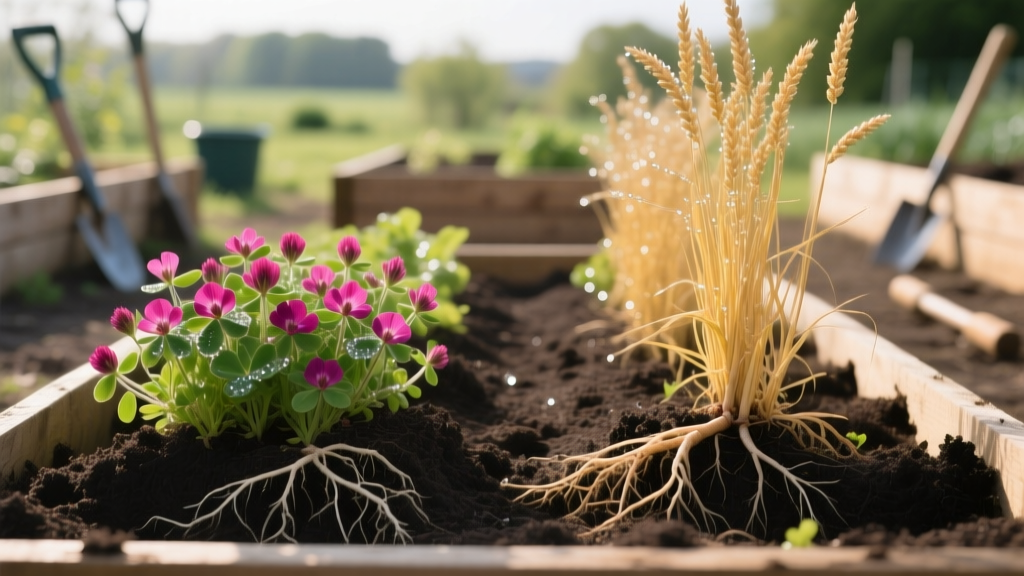
Crimson Clover vs Winter Rye: 2026 Cover Crop Seeding
Emily WatsonPublished
The Shift to Biological Aeration in 2026
As home gardeners and small-scale market growers plan their soil health strategies for the 2026 season, the focus has shifted dramatically toward biological aeration. While mechanical aeration—using core aerators, broadforks, and tillers—remains a staple for breaking up compacted soil layers, relying solely on steel and gas-powered equipment is no longer the gold standard. Today, the most resilient garden soils are engineered using the living root systems of cover crops. When it comes to selecting the right cover crop to naturally aerate your soil, improve drainage, and prepare seedbeds for spring planting, two giants dominate the conversation: Crimson Clover and Winter Rye (Cereal Rye). Understanding how these two distinct species interact with your soil profile is critical for maximizing your garden's yield and long-term ecological balance.
According to the Sustainable Agriculture Research and Education (SARE) program, integrating cover crops into annual rotations is one of the most effective ways to increase soil organic matter, which directly correlates to improved soil porosity and natural aeration. But crimson clover and winter rye achieve these goals through entirely different biological mechanisms. Let us break down the science, seeding techniques, and aeration benefits of each to help you make the best choice for your specific garden conditions this year.
Crimson Clover: The Legume Aerator
Root Structure and Aeration Benefits
Crimson clover (Trifolium incarnatum) is a cool-season annual legume renowned for its striking red blooms and rapid spring growth. From an aeration perspective, crimson clover develops a strong, branching taproot that can penetrate deeply into the soil profile. While it may not bust through heavy hardpan clay as aggressively as a forage radish, its taproot creates stable vertical macropores. When the clover is terminated and the roots decompose, these channels remain, allowing oxygen, water, and beneficial soil microbes to travel deeper into the subsoil. This biological aeration is particularly beneficial for sandy loams and loamy soils that suffer from surface crusting and shallow compaction.
Nitrogen Fixation and Soil Biology
Beyond physical aeration, crimson clover acts as a biological fertilizer. Through a symbiotic relationship with Rhizobium bacteria, it pulls nitrogen from the atmosphere and fixes it into root nodules. In 2026, with synthetic fertilizer prices remaining volatile and environmentally scrutinized, a well-established stand of crimson clover can fix between 70 to 150 pounds of nitrogen per acre, naturally feeding your subsequent heavy-feeding crops like tomatoes, corn, and brassicas. Furthermore, the decomposition of its nitrogen-rich biomass stimulates intense microbial activity, which produces glomalin—a soil glue that binds particles together into stable aggregates, further enhancing long-term soil aeration and structure.
Seeding Rates and Timing
For home gardens, the recommended seeding rate for crimson clover is approximately 0.5 pounds per 1,000 square feet. Seed must be inoculated with the correct Rhizobium strain (usually Type R or a specific clover inoculant) prior to planting if you have not grown legumes in that bed recently. Crimson clover seed is relatively large and should be planted shallowly, at a depth of 1/4 to 1/2 inch. The ideal seeding window is late summer to early fall, about 4 to 6 weeks before your first expected frost, allowing the plant to establish a strong root system before winter dormancy.
Winter Rye: The Grass Workhorse
Fibrous Roots and Soil Structure
Winter rye (Secale cereale) is a cool-season grass that is practically unmatched in its ability to scavenge nutrients and physically restructure heavy soils. Unlike the taproot of crimson clover, winter rye develops a massive, incredibly dense fibrous root system. A single rye plant can produce hundreds of miles of microscopic root hairs. This dense root mat acts like a living net, holding soil particles in place, preventing erosion, and physically fracturing compacted clay layers. As these fibrous roots die back in the spring, they leave behind a vast network of micropores that drastically improve soil aeration, water retention, and gas exchange. If your garden suffers from heavy, poorly drained clay soil, winter rye is the ultimate biological aerator.
Weed Suppression and Allelopathy
Winter rye also offers a unique chemical advantage: allelopathy. The roots and decomposing residue of cereal rye release natural biochemicals that inhibit the germination of small-seeded weeds. This makes it an exceptional choice for preparing beds where you plan to plant transplants (like peppers and eggplants) in the spring. However, this same allelopathic effect means you must wait at least two to three weeks after terminating the rye before direct-seeding small crops like carrots or lettuce, as the residual chemicals can stunt their germination.
Seeding Rates and Timing
Winter rye requires a much heavier seeding rate than clover due to the size of the grain and the desired density of the stand. For a 1,000-square-foot garden bed, plan to broadcast 2 to 3 pounds of winter rye seed. One of the greatest advantages of winter rye is its extreme cold tolerance and late planting window. It can be seeded well into late fall, even after the first frost, as it will germinate in temperatures as low as 34°F. Seed should be planted slightly deeper than clover, ideally at a depth of 1 to 1.5 inches, to ensure good moisture contact.
Head-to-Head Comparison Chart
To help you decide which cover crop best suits your soil aeration and garden prep needs in 2026, review the comparison table below:
| Feature | Crimson Clover | Winter Rye (Cereal Rye) |
|---|---|---|
| Root Type | Branching Taproot | Dense Fibrous Root Mass |
| Aeration Mechanism | Creates deep vertical macropores | Fractures clay, creates vast micropore networks |
| Primary Soil Benefit | Nitrogen fixation, microbial stimulation | Erosion control, clay busting, weed suppression |
| Seeding Rate (per 1,000 sq ft) | 0.5 lbs | 2.0 - 3.0 lbs |
| Planting Depth | 1/4 to 1/2 inch | 1 to 1.5 inches |
| 2026 Avg. Seed Cost | $4.50 - $5.50 / lb | $1.50 - $2.00 / lb |
| Winter Hardiness | Moderate (may winterkill in Zone 5 and below) | Extreme (survives deep freezes in Zone 3+) |
Seeding Techniques for Optimal Soil Contact
Whether you choose clover, rye, or a mixture of both, the success of your biological aeration strategy hinges entirely on seed-to-soil contact. Broadcasting seed over dry, crusted soil will result in poor germination and wasted money.
Core Aeration Before Seeding
If you are establishing a cover crop in a heavily trafficked garden path or a severely compacted bed, begin with mechanical core aeration. Running a manual or gas-powered core aerator over the area pulls plugs of soil to the surface, opening physical channels. Immediately broadcast your cover crop seed over the aerated area. The seeds will naturally fall into the aeration holes and the divots left by the plugs, ensuring perfect depth and moisture retention. This combination of mechanical and biological aeration is a highly recommended practice by the USDA Natural Resources Conservation Service (NRCS) for degraded soils.
Slit Seeding and Drag Mats
For larger garden plots, a slit-seeder (or slice seeder) cuts a narrow trench, drops the seed directly into the furrow, and closes it behind the wheel. This is the most reliable method for planting winter rye at the correct 1-inch depth. If you are broadcasting by hand or with a drop spreader, follow up by raking the seed lightly into the topsoil. For crimson clover, a simple leaf rake or a drag mat (a piece of chain-link fence pulled behind a tractor or ATV) is sufficient to cover the seed to the required 1/4 inch depth without burying it too deeply.
Termination and Spring Garden Prep
The aeration benefits of cover crops are fully realized only when the biomass is properly terminated and incorporated or left as a surface mulch. In 2026, no-till and reduced-till gardening methods continue to gain popularity to preserve the soil structure and fungal networks built by the cover crops.
For crimson clover, termination is relatively easy. It can be mowed with a standard lawn mower or string trimmer at the early bloom stage. Because its stems are hollow and succulent, they break down rapidly, releasing their fixed nitrogen to the soil food web within a few weeks. You can plant transplants directly into the decomposing clover mulch.
Winter rye, however, requires more aggressive termination due to its tough, fibrous stalks. It must be terminated at the 'boot stage' (just before the seed head emerges) to prevent it from reseeding and becoming a weed itself. Gardeners often use a roller-crimper or repeatedly mow it down. A highly effective, chemical-free method popular in 2026 is occultation: mowing the rye as low as possible, watering the stubble, and covering the bed with a heavy black silage tarp for 3 to 4 weeks. The lack of light and increased heat beneath the tarp kills the rye and encourages earthworms to pull the surface residue down into their burrows, completing the biological aeration cycle.
Conclusion: Mixing for Maximum Benefit
You do not necessarily have to choose just one. Many expert gardeners utilize a companion seeding strategy, mixing crimson clover and winter rye in the same bed. The rye acts as a structural nurse crop, providing a physical trellis for the clover to climb, while the clover fixes nitrogen to feed the rye. This combination provides the deep macropore aeration of the taproot alongside the clay-busting micropore network of the fibrous roots. By understanding the unique mechanical and biological properties of these cover crops, you can transform compacted, lifeless dirt into a deeply aerated, biologically active soil ecosystem ready for a highly productive 2026 spring harvest. For more in-depth strategies on managing cover crop residues, consult the comprehensive guides provided in Managing Cover Crops Profitably.
