Gardening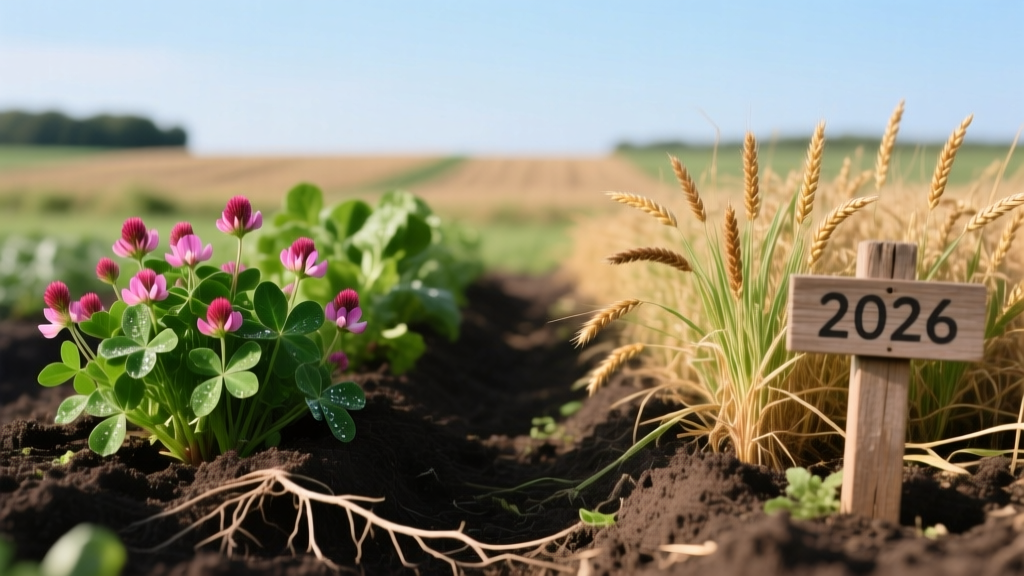
Cover Crop Fertilizer Guide 2026: Crimson Clover vs Rye
Mike RodriguezPublished
The 2026 Fertilizer Landscape: Why Green Manure Matters
As we navigate the 2026 gardening season, the rising costs and environmental concerns surrounding synthetic fertilizers have pushed home gardeners and small-scale growers toward sustainable, biological alternatives. Instead of relying solely on bagged granular feeds, modern soil management emphasizes 'green manure'—the practice of growing specific cover crops and terminating them to feed the soil. When evaluating your fertilizer types and schedules for the upcoming spring and summer planting seasons, two biological heavyweights consistently dominate the conversation: crimson clover and winter rye. While both are exceptional cover crops, they function as entirely different types of biological fertilizers. Understanding their distinct nutrient profiles, carbon-to-nitrogen (C:N) ratios, and termination schedules is critical for maximizing your garden's yield in 2026.
Crimson Clover (Trifolium incarnatum): The Nitrogen Fixer
Crimson clover is a cool-season annual legume renowned for its vibrant red blooms and its remarkable ability to pull nitrogen directly from the atmosphere. Through a symbiotic relationship with Rhizobium bacteria housed in its root nodules, crimson clover converts atmospheric nitrogen into a plant-available form, effectively manufacturing its own fertilizer and leaving a surplus in the soil for subsequent crops.
Biological Fertilizer Profile
When incorporated into the soil, crimson clover acts as a fast-release organic fertilizer. It typically boasts a low Carbon-to-Nitrogen (C:N) ratio of around 15:1 to 20:1. Because the soil microbes require less carbon to break down the plant tissue, the nitrogen is mineralized and made available to your vegetable crops rapidly. According to the Sustainable Agriculture Research and Education (SARE) program, a healthy stand of crimson clover can fix between 70 to 150 pounds of nitrogen per acre, which translates to roughly 1.5 to 3 pounds of nitrogen per 1,000 square feet in a home garden setting. This makes it an ideal biological fertilizer precursor for heavy-feeding summer crops like tomatoes, peppers, and sweet corn.
Planting Schedule & Rates
- Timing: Sow in late summer to early fall, about 4 to 6 weeks before your first expected frost date.
- Seeding Rate: Broadcast at 0.5 ounces per 100 square feet.
- Inoculation: Crucial for the fertilizer schedule. Always coat seeds with a Type C Rhizobium inoculant before planting if clover has not been grown in that specific bed within the last three years.
Winter Rye (Secale cereale): The Nutrient Scavenger
Winter rye (often referred to as cereal rye) is a hardy, cool-season grass that operates on the opposite end of the fertilizer spectrum. Rather than fixing new nitrogen, winter rye is a master scavenger. Its aggressive, deep-reaching root system captures leftover nitrogen and other soluble nutrients from the soil profile that would otherwise leach away during heavy winter rains and spring snowmelts.
Biological Fertilizer Profile
Winter rye is primarily utilized as a soil-building amendment rather than a direct nitrogen fertilizer. It produces massive amounts of biomass, both above and below ground. When terminated, this biomass adds immense organic matter to the soil, improving water retention, aeration, and cation exchange capacity (CEC). However, winter rye has a high C:N ratio, often exceeding 35:1 or even 40:1 as it matures. If tilled into the soil too close to spring planting, soil microbes will consume available soil nitrogen to break down the carbon-rich rye stalks, leading to a temporary 'nitrogen tie-up' that can stunt your spring seedlings.
Planting Schedule & Rates
- Timing: Sow in mid-to-late fall. It can germinate in temperatures as low as 34°F, making it the latest-sown cover crop option for northern climate zones.
- Seeding Rate: Broadcast at 2 to 3 ounces per 100 square feet.
- Soil Prep: Rake lightly to ensure seed-to-soil contact; rye is forgiving but requires moisture for germination.
Head-to-Head Cover Crop Comparison Chart
To help you integrate these biological fertilizers into your 2026 garden planner, refer to the comparison table below:
| Feature | Crimson Clover | Winter Rye |
|---|---|---|
| Primary Fertilizer Function | Nitrogen Fixation (Adds new N) | Nutrient Scavenging (Recycles N) |
| Biomass Production | Moderate | Very High |
| C:N Ratio at Termination | 15:1 to 20:1 (Low) | 35:1 to 45:1 (High) |
| Nutrient Release Speed | Fast (1-3 weeks) | Slow (4-8 weeks) |
| Winter Hardiness | Moderate (Survives down to 10°F) | Extreme (Survives down to -30°F) |
| Weed Suppression | Moderate (Shades out early weeds) | High (Allelopathic properties) |
| Ideal Predecessor For | Heavy feeders (Tomatoes, Brassicas) | Root crops, lighter feeders |
The Fertilizer Release Schedule: Termination & C:N Ratios
The most common mistake gardeners make with biological fertilizers is improper termination timing. The schedule for terminating your cover crop dictates whether it acts as a fertilizer or a nutrient sink. The Rodale Institute emphasizes that matching the termination schedule to the C:N ratio is the cornerstone of organic no-till and reduced-till gardening.
Managing Crimson Clover for Rapid Nutrient Release
Because of its low C:N ratio, crimson clover is forgiving. You can terminate it relatively close to your spring planting date. The ideal schedule is to cut or crimp the clover at the early bloom stage (usually mid-to-late April, depending on your zone) and incorporate it into the top two inches of soil, or leave it as a surface mulch. Within 14 to 21 days, the soil food web will break down the tender legume tissues, releasing a flush of nitrogen just in time for your May transplanting schedule. If you are practicing no-till, simply crimp the clover using a roller-crimper or a weed whacker with a specialized blade, lay a layer of compost on top, and plant your transplants directly through the dying clover mat.
Managing Winter Rye to Prevent Nitrogen Tie-Up
Winter rye requires a much stricter fertilizer release schedule. If you till mature, heading-out rye into the soil in late April, the microbes will steal nitrogen from the soil to decompose the woody stalks, leaving your spring crops starved and yellow. To prevent this, you must terminate winter rye early—ideally when it is in the vegetative stage or just beginning to boot (before the seed head emerges). At this younger stage, the C:N ratio is lower and more manageable. Alternatively, if the rye has already headed out, you must terminate it and wait a full 3 to 4 weeks before planting. To offset the high carbon load, many 2026 soil health protocols recommend adding a nitrogen-rich amendment, such as blood meal or composted poultry manure, at the time of rye termination to feed the microbes and prevent them from scavenging the soil's native nitrogen.
The Ultimate 2026 Strategy: Mixing Clover and Rye
Why choose just one? The most robust biological fertilizer schedule involves planting a mixture of crimson clover and winter rye. By combining a legume with a grass, you create a synergistic underground ecosystem. The rye acts as a trellis for the clover, keeping it upright and maximizing its photosynthetic potential. Meanwhile, the clover fixes nitrogen that the rye can utilize if it exhausts the soil's natural reserves. When terminated together in the spring, the mixture provides the perfect balance of carbon and nitrogen. The clover accelerates the decomposition of the rye, mitigating the nitrogen tie-up effect, while the rye provides the long-lasting organic mulch needed to suppress summer weeds and retain soil moisture. According to the USDA Natural Resources Conservation Service (NRCS), multi-species cover crop mixes consistently outperform monocultures in overall soil health metrics and biomass resilience against unpredictable weather patterns.
Mixing Ratio & Schedule: Broadcast 1 ounce of crimson clover and 1.5 ounces of winter rye per 100 square feet in early fall. Terminate the mix when the clover is in full bloom and the rye is just beginning to head out, typically 3 weeks before your intended spring planting date.
Final Thoughts on Biological Fertilizer Schedules
Transitioning to cover crops as your primary fertilizer type requires a shift in mindset from 'feeding the plant' to 'feeding the soil.' In 2026, the smartest gardeners are those who view their winter garden beds not as dormant spaces, but as active biological fertilizer factories. By selecting the right cover crop—crimson clover for nitrogen-demanding beds, winter rye for soil-building and nutrient retention, or a mix of both for balanced fertility—you can drastically reduce your reliance on external inputs, lower your gardening costs, and cultivate a deeply resilient, living soil ecosystem.
