Gardening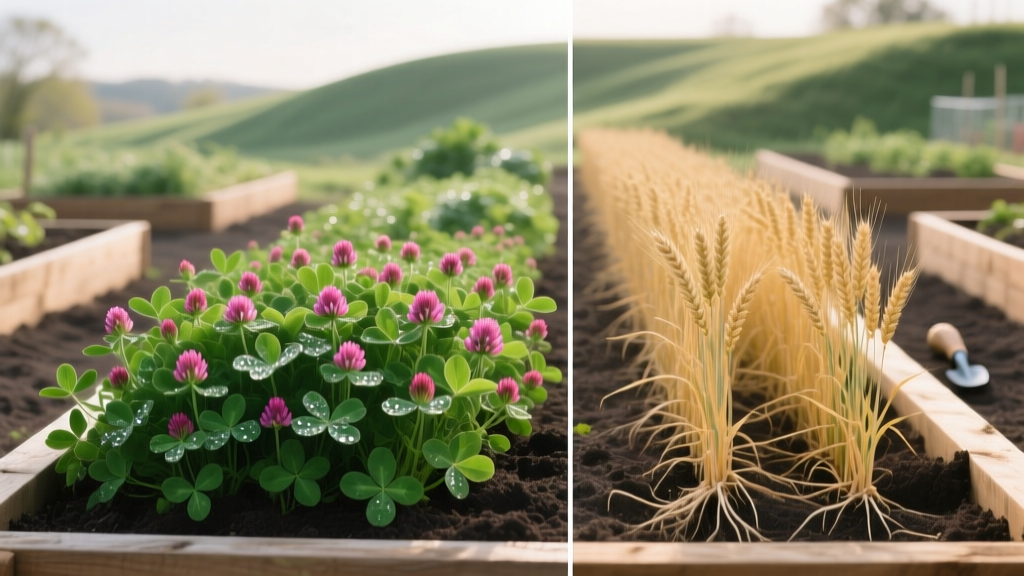
Crimson Clover vs Winter Rye: 2026 Cover Crop Guide
Robert HayesPublished
The Foundation of Foodscaping: Why Cover Crops Matter in 2026
As the movement toward edible landscaping and front-yard foodscaping continues to redefine suburban and urban yards in 2026, the focus has shifted from merely planting vegetables to cultivating the living soil beneath them. Foodscaping is not just about integrating blueberry bushes into foundation plantings or training pole beans up ornamental trellises; it is about creating a resilient, closed-loop ecosystem. The most critical tool in the modern foodscape designer's arsenal is the cover crop. Cover crops protect bare soil from winter erosion, suppress early spring weeds, and act as green manures that are eventually turned back into the earth to feed your edible plants.
When preparing beds for heavy-feeding summer crops like tomatoes, peppers, and squash, two cover crops consistently rise to the top of the list: Crimson Clover (Trifolium incarnatum) and Winter Rye (Secale cereale). Both offer tremendous benefits, but they function in fundamentally different ways. Choosing between them—or deciding to use them in a polyculture mix—depends on your specific soil needs, your local climate zone, and the aesthetic goals of your edible landscape.
Crimson Clover: The Nitrogen-Fixing Showstopper
Crimson clover is a cool-season annual legume that has become a staple in regenerative home gardens. Its primary superpower is its ability to partner with rhizobia bacteria to pull nitrogen directly from the atmosphere and fix it into the soil. According to the USDA Plants Database, crimson clover can fix between 70 and 150 pounds of nitrogen per acre, making it an exceptional, free fertilizer for your subsequent vegetable crops.
Aesthetic and Ecological Benefits
From a foodscaping perspective, crimson clover is unmatched in visual appeal. In late spring, it produces striking, elongated crimson flower heads that provide a dramatic pop of color in front-yard edible landscapes. These blooms are also a magnet for early-season pollinators, including native bumblebees and beneficial predatory insects that will later help protect your brassicas and fruit trees from pests. If your edible landscape is highly visible to the neighborhood, crimson clover serves as a beautiful, functional groundcover that signals intentional ecological stewardship.
Planting and Growth Habits
Crimson clover thrives when sown in late summer to early fall, roughly 6 to 8 weeks before your first expected frost. It requires a seed rate of about 0.5 to 1 pound per 1,000 square feet. Because it is a legume, it is crucial to use an inoculant (specifically Rhizobium leguminosarum biovar trifolii) if you have never grown clover or peas in that bed before. The seed should be broadcast and lightly raked into the top quarter-inch of soil. It establishes a modest taproot and a fibrous root system that holds soil in place without being overly difficult to terminate in the spring.
Winter Rye: The Biomass and Erosion Champion
Winter rye, often referred to as cereal rye, is a cool-season grass that is the undisputed champion of biomass production and weed suppression. While it does not fix nitrogen, its sheer volume of organic matter and extensive root system make it invaluable for rebuilding degraded soils in newly established foodscapes.
Soil Structure and Allelopathy
Winter rye develops a massive, deep, and fibrous root system that can penetrate compacted clay soils, effectively acting as a biological broadfork. When terminated and left to decompose, these roots create intricate channels that improve water infiltration and aeration for deep-rooted crops like tomatoes and carrots. Furthermore, winter rye exhibits allelopathy—a natural chemical inhibition that suppresses the germination of small-seeded weeds. The Sustainable Agriculture Research and Education (SARE) program highlights cereal rye as one of the most effective cover crops for outcompeting winter annual weeds, reducing the need for manual weeding in your spring garden beds.
Planting and Growth Habits
Winter rye is incredibly cold-hardy and can be planted much later in the fall than crimson clover, often germinating in soil temperatures as low as 34°F (1°C). This makes it the perfect rescue cover crop if you harvest your summer vegetables late and miss the window for planting legumes. The seeding rate is higher, typically 2 to 3 pounds per 1,000 square feet. By late fall, it forms a dense, lush green carpet that protects the soil from heavy winter rains and snowmelt.
Head-to-Head Comparison Chart
To help you decide which cover crop best suits your 2026 edible landscape design, review the side-by-side comparison below:
| Feature | Crimson Clover (Legume) | Winter Rye (Grass) |
|---|---|---|
| Primary Soil Benefit | Nitrogen fixation (adds nutrients) | Biomass production (adds organic matter) |
| Spring Aesthetic | Vibrant red flowers; highly ornamental | Lush, tall green grass; meadow-like |
| Fall Planting Window | Early to Mid-Fall (needs time to establish) | Late Fall (germinates in very cold soil) |
| Seed Rate (per 1k sq ft) | 0.5 - 1.0 lbs | 2.0 - 3.0 lbs |
| Termination Difficulty | Easy (pulls easily, winter-kills in Zone 5) | Moderate (requires timely mowing/crimping) |
| Weed Suppression | Moderate (shades out some weeds) | High (allelopathic properties) |
| Best Follow-Up Crop | Heavy feeders (Corn, Tomatoes, Squash) | Transplants (Peppers, Eggplant, Brassicas) |
Choosing the Right Crop for Your Edible Landscape
Scenario A: The Front Yard Showpiece
If you are converting a traditional front lawn into a visible, neighborhood-facing foodscape, aesthetics matter just as much as agronomics. Crimson clover is the superior choice here. The vivid red blooms contrast beautifully with the emerging foliage of spring artichokes, asparagus, and early fruit trees. It signals to passersby that your yard is a managed, thriving ecosystem rather than an overgrown weed patch.
Scenario B: Rebuilding Compacted Urban Soil
If you are breaking ground on a new raised bed or an in-ground plot that suffers from heavy clay and compaction, winter rye is your best ally. Its aggressive root system will fracture hardpan layers over the winter. However, because of its allelopathic properties, you must wait at least three weeks after terminating winter rye before planting small seeds like carrots or lettuce, as the residual compounds can inhibit their germination. Transplants, however, will thrive in the newly loosened, moisture-retentive soil.
Scenario C: The 2026 Polyculture Approach
Advanced foodscapers in 2026 are increasingly moving away from monoculture cover cropping and embracing polycultures. Mixing crimson clover and winter rye at a reduced rate (e.g., 0.5 lbs clover and 1 lb rye per 1,000 sq ft) provides the best of both worlds. The rye acts as a physical nurse crop, protecting the clover from harsh winter winds, while the clover provides the nitrogen the rye needs to grow tall. Together, they create a diverse root exudate profile that feeds a wider spectrum of soil microbiology.
Actionable Planting and Termination Guide
Step 1: Site Preparation
Remove spent summer crops and lightly rake the soil surface. You do not need to till; in fact, no-till foodscaping preserves the fungal networks essential for perennial edibles and long-term soil health. Broadcast your seeds evenly by hand or with a handheld spreader.
Step 2: Ensuring Seed-to-Soil Contact
Cover crop seeds are small and can easily be eaten by birds or washed away if left on the surface. Rake them in lightly or, for larger beds, use a lawn roller to press them into the soil. Water gently if the fall forecast is dry.
Step 3: Spring Termination
Termination is where many home gardeners struggle, particularly with winter rye. According to university extension guidelines detailed on the Penn State Extension network, cereal rye must be terminated before it produces mature seed heads, or you will inadvertently plant a weed problem for your summer garden. For home foodscapes, the easiest method is to use a string trimmer (weed whacker) to cut the rye down to the soil level when it is in the 'boot stage' (just before the seed head emerges). Leave the cut residue on the surface as a thick, weed-suppressing mulch for your summer tomatoes and peppers. Crimson clover, being much more tender, can simply be pulled by hand or mowed down, where it will rapidly decompose and release its stored nitrogen.
Final Thoughts on Soil Stewardship
Integrating cover crops into your edible landscape is a long-term investment in the vitality of your foodscaping design. Whether you choose the nitrogen-rich, pollinator-friendly crimson clover or the soil-fracturing, weed-smothering winter rye, you are actively participating in the regeneration of your local ecosystem. By keeping your soil covered and fed throughout the off-season, your 2026 harvests will be more abundant, more nutritious, and far more resilient to the shifting climate patterns of the modern gardening era.
