
Landscaping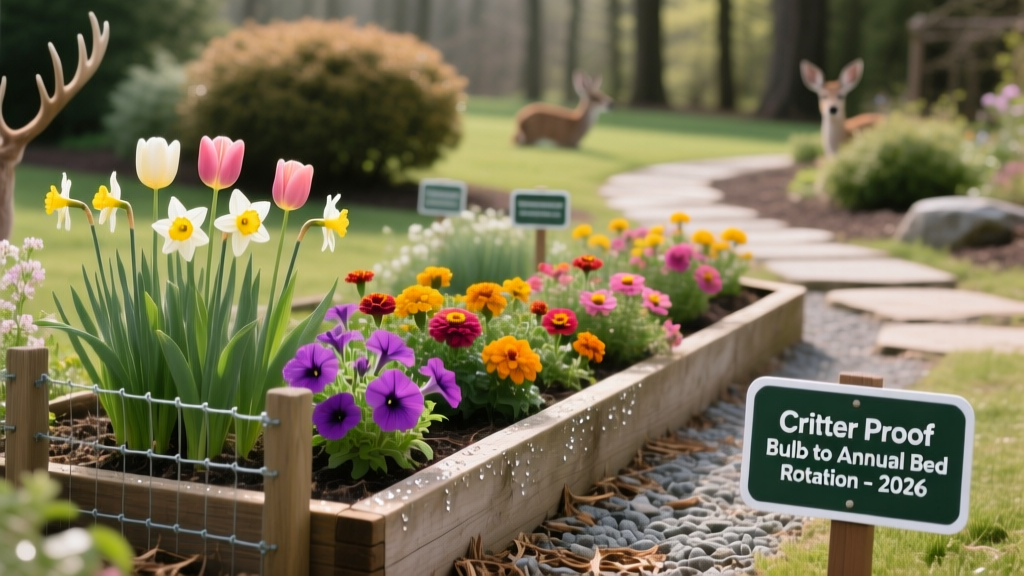
Wildlife-Safe Bed Rotation: Spring Bulbs to Summer Annuals 2026
David ParkPublished
The 2026 Challenge: Seasonal Rotation Meets Wildlife Pressure
As the 2026 gardening season unfolds, landscaping enthusiasts face a familiar but frustrating hurdle: the transition from spring-flowering bulbs to vibrant summer annuals. This seasonal rotation is essential for maintaining continuous curb appeal, but it also coincides with peak foraging activity for local wildlife. Deer are actively browsing tender new growth, rabbits are nesting in dense garden beds, and subterranean pests like voles are tunneling through soft, freshly worked soil to feast on dormant bulb bases.
Successfully rotating your flower beds requires more than just swapping plants; it demands a strategic approach to wildlife and yard animal management. By selecting naturally resistant plant varieties, employing targeted physical barriers, and utilizing the latest 2026 eco-friendly deterrents, you can protect your landscape investment while maintaining a thriving, colorful garden from early spring through the late summer heat.
Phase 1: Establishing a Critter-Proof Spring Bulb Foundation
The first step in a wildlife-resistant seasonal rotation begins long before summer arrives. When planning your spring bulb displays, you must account for the dietary preferences of local herbivores. According to the Rutgers University Deer Resistance Database, plants are rated by their likelihood of being damaged by browsing deer. Tulips and crocuses are notoriously rated as 'Frequently Severely Damaged'—essentially acting as candy for deer and squirrels.
To ensure your spring display survives long enough to transition into summer, focus on planting bulbs that contain natural chemical deterrents:
- Daffodils (Narcissus): Contain lycorine, an alkaloid that is highly toxic and unpalatable to deer, rabbits, and voles. Varieties like 'King Alfred' and 'Tete-a-Tete' provide brilliant yellows and whites that brighten the early spring landscape.
- Ornamental Alliums: The strong sulfur compounds that give onions and garlic their distinct odors also repel most mammals. Giant alliums like 'Globemaster' offer striking architectural purple spheres that bridge the gap between late spring and early summer.
- Fritillaria: Crown Imperials (Fritillaria imperialis) emit a skunky odor that deters burrowing rodents and browsing deer alike, making them an excellent choice for the back of the border.
Phase 2: Managing Subterranean Pests During the Transition
As spring wanes and bulb foliage begins to yellow, the real threat to your garden's underground infrastructure emerges. Voles, often mistaken for mice, are notorious for utilizing the loose soil of flower beds to create extensive tunnel networks. Unlike moles, which primarily eat insects, voles are herbivores that will chew the basal plates right off your expensive daffodils and alliums while they are dormant.
The Penn State Extension Vole Management Guide emphasizes that habitat modification and physical exclusion are the most reliable long-term solutions for vole damage. Before you begin interplanting your summer annuals, take these preventative steps:
- Gravel Mulching: When preparing pockets for summer annuals, mix crushed gravel (such as VoleBloc or Permatill) into the backfill soil around your dormant bulbs. Voles despise tunneling through sharp, coarse materials.
- Hardware Cloth Barriers: If you are installing larger summer transplants or shrubs at the edge of the bulb bed, line the planting hole with 1/4-inch galvanized hardware cloth to prevent voles from accessing the adjacent bulb zone.
- Clear the Debris: While it is tempting to leave thick layers of spring mulch to retain moisture, excessive organic matter provides cover for voles and rabbits. Rake back heavy mulch layers before introducing summer annuals to expose the soil surface to predators like hawks and owls.
Phase 3: The Art of Interplanting Summer Annuals
The physical act of rotating beds—interplanting summer annuals among fading spring bulb foliage—is a delicate surgical procedure in the garden. You must avoid slicing into the dormant bulbs sitting just inches below the surface. Furthermore, the disturbance of soil often attracts raccoons, skunks, and squirrels, who will dig up the freshly loosened earth in search of grubs or cached nuts.
To minimize soil disturbance and wildlife attraction during the 2026 planting season, utilize a narrow dibber or a specialized bulb planting auger attached to a cordless drill. This allows you to punch precise, narrow holes for your summer annual plugs without turning over large swaths of soil. Water the new transplants immediately with a liquid kelp or fish emulsion fertilizer; avoid using bone meal or blood meal, as the scent of animal byproducts will draw neighborhood dogs, coyotes, and raccoons directly to your flower beds.
Phase 4: Selecting Wildlife-Resistant Summer Annuals
Once the bulbs have gone dormant and their foliage has been safely removed or hidden, it is time to fill the bed with summer color. Just as with spring bulbs, your choice of summer annuals will dictate how much attention your garden receives from local wildlife. Deer and rabbits rely heavily on their sense of smell and the texture of leaves when deciding what to eat. Plants with fuzzy foliage, strong essential oils, or milky sap are generally bypassed.
According to wildlife habitat guidelines from the National Wildlife Federation, creating a diverse, multi-layered garden with native and adaptive plants can help balance the ecosystem, but when it comes to high-traffic curb appeal beds, you need tough, resilient annuals.
Top Wildlife-Resistant Summer Annuals for 2026
- Marigolds (Tagetes): The pungent scent of marigold foliage masks the smell of more vulnerable plants and deters rabbits and deer. French marigolds also secrete compounds from their roots that suppress harmful soil nematodes.
- Lantana: With its rough, sandpaper-like leaves and strong aroma, lantana is highly unpalatable to deer. It thrives in the peak heat of summer and provides excellent nectar for pollinators without attracting mammalian pests.
- Cleome (Spider Flower): Cleome features thorny stems and a musky scent that browsing animals avoid. It adds dramatic height and architectural interest to the back of the summer border.
- Angelonia (Summer Snapdragon): Tolerant of extreme heat and humidity, Angelonia is rarely bothered by deer or rabbits, making it a reliable workhorse for mid-summer color.
Comparison Chart: Seasonal Wildlife Resistance
| Season | Plant Category | Highly Resistant (Plant These) | Highly Vulnerable (Avoid These) |
|---|---|---|---|
| Spring | Bulbs | Daffodils, Alliums, Fritillaria, Snowdrops | Tulips, Crocus, Lilies, Hyacinths |
| Summer | Annuals | Marigolds, Lantana, Cleome, Angelonia, Zinnias | Petunias, Impatiens, Pansies, Coleus |
| Year-Round | Soil Additives | Crushed Gravel, Sharp Sand, Plant-based Compost | Bone Meal, Blood Meal, Fish Scraps |
2026 Wildlife Deterrent Technologies and Products
Even with the most resistant plant palette, extreme hunger or drought conditions can drive wildlife to sample plants they would normally avoid. In 2026, the market offers highly effective, non-lethal deterrents designed specifically for delicate flower beds.
Motion-Activated Sprinklers
The Orbit Yard Enforcer Motion-Activated Sprinkler remains a top-tier choice for protecting summer annual beds. The latest models feature enhanced infrared night-vision sensors and adjustable arc sprays, allowing you to target the exact pathway deer use to enter your garden without soaking your patio. The sudden burst of water and the mechanical 'click' of the valve startle animals, creating a psychological barrier that conditions them to avoid your yard entirely.
Botanical and Blood-Based Repellents
For areas where sprinklers are impractical, botanical repellents are essential. Plantskydd Animal Repellent utilizes a plant-based formulation that mimics the scent of predator activity, triggering a fear response in deer and rabbits before they even take a bite. Unlike older, foul-smelling putrescent egg solids that can make your outdoor living spaces unpleasant for humans, modern 2026 formulations of botanical repellents break down cleanly and are safe to use around pollinator-friendly summer annuals like zinnias and lantana.
Apply repellents to the foliage of your newly planted summer annuals on a dry day, and reapply every 30 days or after heavy rainfall. The key to success is rotating the active ingredients (e.g., switching between capsaicin-based and thyme-oil-based sprays) so that local wildlife does not become habituated to a single scent.
Conclusion: A Harmonious, Colorful Landscape
Transitioning your flower beds from spring bulbs to summer annuals is a rewarding horticultural ritual that ensures your landscape remains vibrant across multiple seasons. By viewing this rotation through the lens of wildlife management, you can outsmart the deer, rabbits, and voles that threaten your hard work. Start with toxic and pungent spring bulbs, protect the soil architecture from subterranean tunneling, and interplant tough, aromatic summer annuals that naturally repel browsers. Combined with modern, humane deterrent technologies, your 2026 flower beds will not only survive the changing seasons—they will thrive in spite of the local food chain.

