Gardening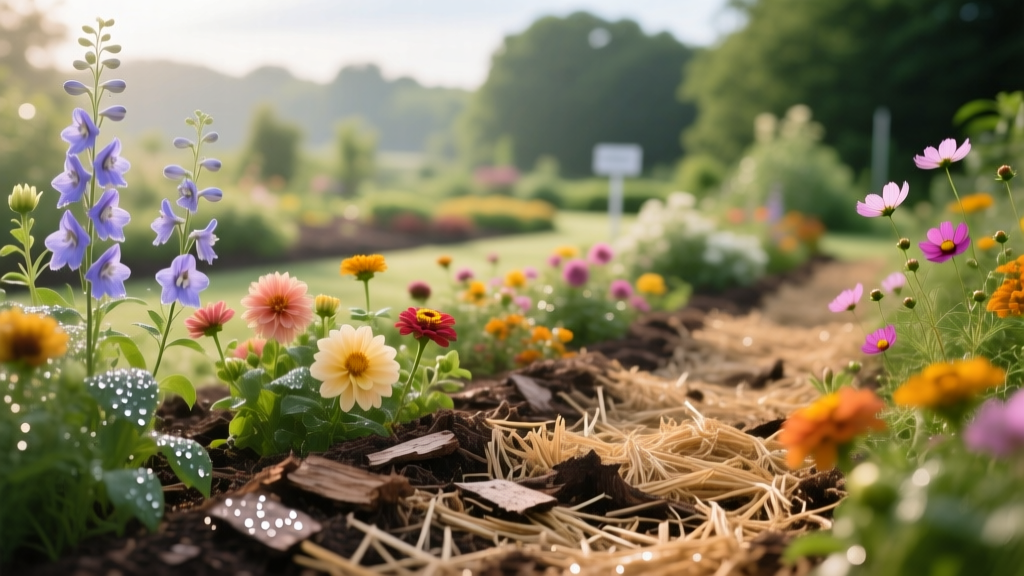
2026 Cut Flower Garden Layout & Mulching Strategy
Emily WatsonPublished
Designing the Cut Flower Layout for Mulch Efficiency
As we navigate the 2026 growing season, the demand for locally grown, high-quality cut flowers continues to surge. Whether you are a commercial micro-florist or a dedicated home gardener, achieving a continuous bloom harvest requires more than just succession planting; it demands a strategic garden layout paired with the right mulching methods. A well-designed cut flower garden layout maximizes space, simplifies irrigation, and creates the perfect foundation for organic mulches to regulate soil temperature and retain moisture during the increasingly unpredictable summer heatwaves of 2026.
The most efficient layout for continuous harvesting features parallel raised beds that are exactly 3 to 4 feet wide, separated by 18 to 24-inch pathways. This specific width ensures you can reach the center of the bed for harvesting and weeding without stepping on the soil, preserving the soil structure and the integrity of your mulch layer. According to sustainable agriculture guidelines outlined by NCAT ATTRA, maintaining permanent bed structures reduces soil compaction and allows for heavy, targeted mulching that would be impossible in traditional row-crop layouts.
To achieve continuous blooms, gardeners must divide their beds into succession blocks. For example, Block A might house early spring ranunculus and anemones, while Block B is reserved for mid-summer zinnias and celosia. Mulching plays a critical role in this transition. When the spring block finishes, a thick layer of compost and straw mulch allows you to pull spent crops, lightly amend the surface, and immediately transplant summer starts without losing critical soil moisture or battling a flush of late-spring weeds.
Top Mulching Materials for Cut Flowers in 2026
Choosing the right mulch material is highly dependent on your specific cut flower varieties and the time of year. In 2026, the shift toward regenerative gardening has made certain organic materials more accessible and effective than ever.
Weed-Free Straw and Pre-Composted Hay
Straw remains the gold standard for summer cut flower beds. Unlike hay, which can introduce thousands of weed seeds, straw is the stalk of grain crops and is generally weed-free. In 2026, weed-free wheat straw bales are averaging $8 to $12 depending on your region. Applying a 2 to 3-inch layer of straw around heat-loving annuals like zinnias, cosmos, and sunflowers suppresses weeds, reflects sunlight to keep the root zone cool, and slowly breaks down to feed soil microbes. It is crucial to wait until the soil has warmed to at least 65°F before applying straw in the spring, as mulching too early can trap winter cold and stunt seedling growth.
Arborist Wood Chips for Pathways
While wood chips are generally not recommended for direct application around shallow-rooted annual flowers due to nitrogen tie-up at the soil surface, they are the absolute best material for your 18-inch garden pathways. Sourcing fresh arborist chips (often free from local tree services) and laying them 3 inches thick in your pathways suppresses aggressive pathway weeds, prevents soil compaction from foot traffic during wet harvests, and eventually breaks down to feed the adjacent beds. As noted by Wisconsin Horticulture, keeping woody mulches out of the direct planting zone while utilizing them in hardscape areas is a cornerstone of modern integrated pest management.
Compost and Leaf Mold (The Dual-Purpose Mulch)
For heavy feeders like dahlias and snapdragons, a 1-inch top-dressing of premium compost or leaf mold acts as both a slow-release fertilizer and a moisture-retaining mulch. This method is particularly useful in early spring when you want to dark-colored organic matter to absorb the sun's heat and warm the soil, contrasting with the light-reflecting properties of straw used later in the year.
Mulching Methods for Continuous Succession
The method of applying mulch is just as important as the material. For continuous bloom gardens, the transition between crops is the most vulnerable time for weed pressure and moisture loss.
Occultation and Pre-Planting Tarping
Before laying down organic mulch, many successful flower farmers in 2026 utilize silage tarps or heavy landscape fabric to prepare their succession blocks. By laying a tarp over a harvested bed for 2 to 3 weeks, you stimulate weed seed germination and then kill the young weeds through light deprivation. Once the tarp is removed, the bed is virtually weed-free, allowing you to apply a thin layer of compost mulch and transplant your next wave of flowers without competition.
Transplanting Through Mulch
When planting plugs into a pre-mulched bed, use a trowel to part the straw or compost, dig your hole, and then gently pull the mulch back up around the base of the transplant. Be careful not to pile mulch directly against the tender stems of your flowers, as this can cause collar rot, especially in humid climates. Leave a 1-inch 'halo' of bare soil directly around the stem to ensure proper air circulation.
Comparison Chart: Mulch Materials for Cut Flower Beds
| Material | Best Application | Moisture Retention | Weed Suppression | 2026 Est. Cost |
|---|---|---|---|---|
| Wheat Straw | Summer Annuals (Zinnias, Cosmos) | High | Excellent | $8 - $12 / bale |
| Compost Top-Dress | Heavy Feeders (Dahlias, Roses) | Medium | Moderate | $6 - $9 / cu ft |
| Arborist Wood Chips | Garden Pathways Only | Very High | Excellent | Often Free |
| Leaf Mold | Spring Bulbs & Perennials | High | Moderate | $4 - $7 / cu ft |
| Biodegradable Paper Mat | Direct Sown Beds (Larkspur) | Medium | High (Early Season) | $15 - $20 / roll |
Variety-Specific Mulching Strategies
Different cut flowers have unique root architectures and moisture requirements that dictate your mulching strategy.
Dahlias: Dahlias are notorious for rotting in cold, wet soil. In early spring, when dahlia tubers are first planted, do not use mulch. Allow the dark, bare soil to absorb the sun and warm the tubers. Once the plants reach 12 inches tall and summer heat arrives, apply a 2-inch layer of straw to retain moisture and keep the tubers cool. According to Oregon State Extension, regulating soil temperature through strategic mulching timing is vital for tuberous crops.
Zinnias and Celosia: These heat-loving annuals thrive when their roots are kept cool and moist. Plant them through a layer of compost and immediately follow with 2 inches of straw. This combination provides the nitrogen these heavy bloomers need while ensuring the soil surface never dries out completely between drip irrigation cycles.
Snapdragons and Sweet Peas: These cool-season flowers prefer a living mulch or a very light layer of leaf mold. Heavy straw can trap too much moisture around their lower leaves, leading to powdery mildew and botrytis. Keep the mulch layer thin (1 inch) and ensure your garden layout allows for maximum airflow between plants.
Water Management Under the Mulch Layer
No mulching strategy is complete without addressing irrigation. In 2026, with water restrictions becoming more common in various climate zones, pairing your mulch with sub-surface drip irrigation is non-negotiable for a continuous harvest. Run your drip lines along the center of your 4-foot beds, and then cover the lines with your chosen mulch. This prevents water from evaporating off the soil surface before it reaches the deep root zones of your flowers. By keeping the drip lines under the mulch, you also prevent the mulch itself from absorbing the irrigation water, ensuring every drop goes directly to your cash crops.
Ultimately, a continuous bloom harvest is a marathon, not a sprint. By designing your garden layout with permanent beds and pathways, and strategically deploying straw, compost, and wood chips at the exact right moments in the season, you set the stage for a vibrant, weed-free, and highly productive cut flower garden all year long.
