
Landscaping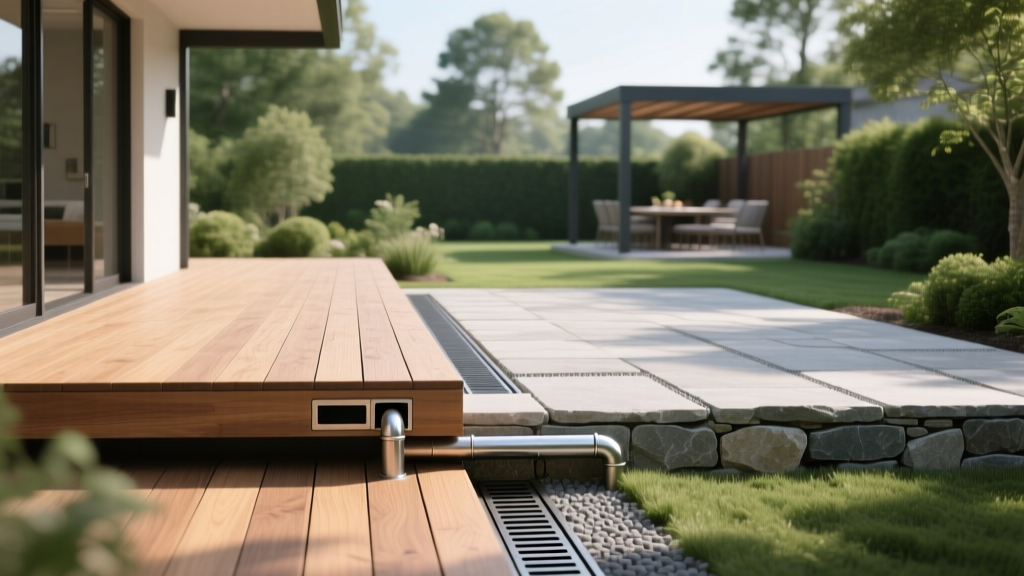
Deck Vs Patio Cost 2026: Hidden Drainage Pipe Factors
Mike RodriguezPublished
The 2026 Outdoor Entertaining Boom: Decks, Patios, and the Water Beneath
As we navigate the landscaping and hardscaping trends of 2026, the demand for premium outdoor entertaining spaces continues to surge. Homeowners are heavily investing in their backyards, creating expansive zones for dining, lounging, and hosting. When planning these projects, the most common debate centers on a classic comparison: deck vs patio cost. On the surface, this comparison usually focuses on visible materials—composite decking versus concrete pavers, or pressure-treated lumber versus stamped concrete. However, this surface-level analysis often ignores the most critical, budget-altering factor lurking beneath the soil: water management and the necessary installation of landscape drainage pipes.
Ignoring subsurface hydrology is a recipe for disaster. A beautiful paver patio can quickly become a mosquito-breeding puddle or suffer from severe frost heave if water is not properly routed away from the base. Conversely, elevated decks allow water to pass through, but their footings require specific drainage considerations to prevent structural shifting. In 2026, with extreme weather events and heavier localized downpours becoming more frequent, integrating a robust landscape drainage pipe system is no longer optional—it is a fundamental requirement for any ground-level hardscape. According to the EPA's Green Infrastructure guidelines, managing impermeable surfaces and directing stormwater runoff is essential for protecting both your property and local municipal water systems.
The Patio Paradigm: Impermeable Surfaces and Subsurface Drainage
Patios, whether constructed from poured concrete, natural flagstone, or interlocking concrete pavers, are largely impermeable or semi-permeable surfaces. When rain hits a 400-square-foot patio, that water has to go somewhere. If your yard has a gentle slope or heavy clay soil, the water will pool against your home’s foundation or erode the edges of your new outdoor living space.
To combat this, professional landscapers in 2026 mandate the installation of subsurface French drain systems utilizing specialized landscape drainage pipes. This involves trenching the perimeter of the patio, laying a bed of washed gravel, installing perforated drainage pipes, and covering the system with geotextile fabric before backfilling. This hidden infrastructure adds a significant line item to your patio budget. In 2026, excavating, trenching, and installing a professional-grade landscape drainage pipe system costs between $25 and $45 per linear foot, depending on soil composition and the depth required to maintain a proper 1% grade away from the hardscape.
Why Patios Demand Landscape Drainage Pipes
Even if you opt for permeable pavers, the aggregate base beneath them can only hold a finite amount of water before it becomes saturated. Once the sub-base reaches its capacity, the excess water must be evacuated. A network of perforated landscape drainage pipes embedded in the gravel base acts as a relief valve, capturing the excess water and channeling it to a designated discharge point, such as a dry well, a storm drain, or a lower-lying area of your property. As noted by the USGS Water Science School, unmanaged urban and suburban runoff is a primary contributor to soil erosion and localized flooding, making proper patio drainage a vital ecological and structural safeguard.
Types of Landscape Drainage Pipes for Patio Bases in 2026
Not all pipes are created equal. When budgeting for your patio's drainage infrastructure, you must choose the right landscape drainage pipe for your specific soil and load-bearing requirements.
Corrugated Slotted Pipes
Traditional black corrugated polyethylene pipes with slotted perforations are the most budget-friendly option, costing around $1.50 to $3.00 per linear foot for the material alone in 2026. They are highly flexible, making them easy to route around curved garden beds and patio perimeters. However, they are prone to crushing under heavy loads and can suffer from root intrusion over time if not properly wrapped in filter fabric.
SDR-35 PVC Pipes
For patios that will support heavy loads, such as an outdoor kitchen with a brick pizza oven or a large pergola, rigid SDR-35 PVC landscape drainage pipes are the industry standard. These pipes feature pre-drilled perforations and can withstand immense subterranean pressure without collapsing. While the material cost is higher ($4.00 to $7.00 per foot) and installation requires more labor due to the need for glued fittings and precise trenching, SDR-35 PVC offers a lifespan that easily exceeds 50 years.
Geotextile-Wrapped French Drain Systems
Products like the NDS EZ-Drain have revolutionized patio subsurface drainage. These systems feature a perforated corrugated pipe encased in a lightweight, geotextile-wrapped polystyrene aggregate. This eliminates the need to haul in and spread tons of heavy washed gravel, drastically reducing labor costs and installation time. In 2026, these premium all-in-one landscape drainage pipe systems cost about $12 to $18 per linear foot but can save homeowners hundreds of dollars in heavy machinery and manual labor fees.
The Deck Advantage: Elevated Structures and Hydrology
When comparing deck vs patio cost, elevated decks hold a distinct hydrological advantage: they are permeable by design. Rainwater and melting snow simply pass through the gaps between the deck boards and fall to the ground below. Because the deck does not create a massive impermeable barrier, you generally do not need to install extensive perimeter landscape drainage pipe systems directly beneath the structure, provided the underlying yard is properly graded.
Footing Drainage and Frost Heave Prevention
However, decks are not entirely exempt from drainage concerns. The concrete footings that support the deck's structural posts must be protected from water accumulation. In regions with freezing winter temperatures, water that pools around or beneath a deck footing can freeze, expand, and cause severe frost heave, lifting the deck out of level. To prevent this, contractors in 2026 excavate footing holes below the frost line and backfill the base with a layer of gravel. In poorly draining soils, a localized landscape drainage pipe is often routed from the base of the footing to a daylight exit point to ensure the soil directly beneath the structural load remains dry and stable.
2026 Cost Comparison: Deck vs. Patio (Including Drainage)
To truly understand the financial commitment of your outdoor entertaining space, you must look at the total installed cost, including the hidden drainage infrastructure. The table below outlines the average 2026 costs for a 400-square-foot project.
| Cost Factor (400 Sq. Ft.) | Composite Deck (Elevated) | Paver Patio (Ground-Level) |
|---|---|---|
| Base Materials (Boards/Pavers) | $6,000 - $8,800 | $4,000 - $7,200 |
| Substructure & Framing | $2,500 - $4,000 | $1,200 - $2,000 (Aggregate Base) |
| Labor & Installation | $4,500 - $7,000 | $3,500 - $5,500 |
| Landscape Drainage Pipe & Trenching | $300 - $800 (Footing protection) | $1,500 - $3,000 (Perimeter French Drain) |
| Total Estimated 2026 Cost | $13,300 - $20,600 | $10,200 - $17,700 |
While the baseline materials for a paver patio are often cheaper than premium composite decking, the mandatory inclusion of a comprehensive landscape drainage pipe system narrows the price gap significantly, especially in yards with poor natural percolation.
Soil Types, Grading, and Local Stormwater Codes
Your local soil composition will dictate the scale of your drainage pipe requirements. Sandy loam soils drain rapidly, often requiring minimal subsurface piping. Conversely, heavy clay soils act like a bowl, holding water for days. If you are building a patio on clay soil, you will need a more extensive network of landscape drainage pipes and potentially a larger dry well to accommodate the slow percolation rate. University extension programs, such as the University of Minnesota Extension, emphasize that understanding your local watershed and soil percolation rates is the first step in any hardscaping project to prevent long-term water damage to your home's foundation.
Furthermore, in 2026, many municipalities have updated their stormwater management codes. You may no longer be legally permitted to simply daylight a landscape drainage pipe onto the sidewalk or into the street. You may be required to route the pipe into an underground infiltration bed or a rain garden, which adds to the overall excavation and landscaping costs of your patio project.
Long-Term Maintenance: Pipes vs. Boards
When evaluating the lifetime cost of your outdoor entertaining space, consider the maintenance required to keep the drainage systems functioning. Decks require annual cleaning, periodic sealing (if wood), and eventual board replacement. The hydrological maintenance is minimal—mostly ensuring that the ground beneath the deck remains sloped away from the house.
Patios, however, require active maintenance of their hidden drainage infrastructure. The catch basins and landscape drainage pipes must be inspected annually and flushed with a high-pressure hose to remove silt, leaf debris, and organic buildup. If a landscape drainage pipe becomes clogged, the patio base will retain water, leading to weed growth between the pavers, efflorescence (white mineral deposits), and eventual base failure. Factoring in the time and cost of annual drainage maintenance is crucial for long-term budgeting.
Final Verdict for Your 2026 Landscape
The debate between deck vs patio cost in 2026 cannot be settled by looking at a simple square-footage material calculator. If your yard is relatively flat, features heavy clay soil, or slopes toward your home, a ground-level patio will require a massive investment in subsurface grading, gravel bases, and high-quality landscape drainage pipes to ensure it survives the seasons. In these challenging hydrological scenarios, an elevated composite deck often proves to be the more cost-effective and structurally sound choice, as it bypasses the need for extensive trenching and piping. However, if your yard features a natural, sloping grade with well-draining soil, a paver patio with a minimal perimeter drainage pipe system remains a stunning, durable, and highly cost-effective option for your outdoor entertaining needs.

