
Landscaping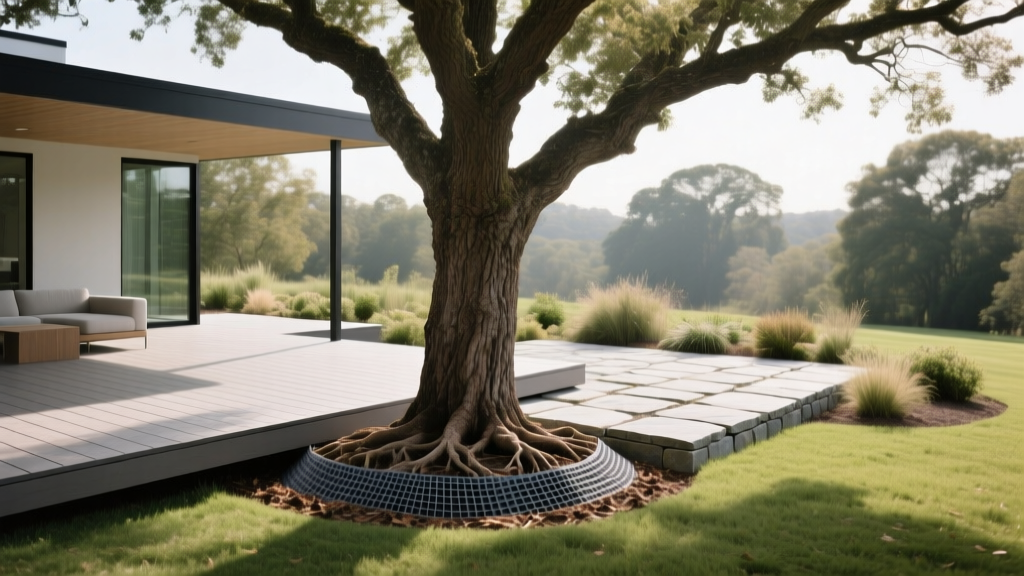
Deck vs Patio Costs 2026: Tree Roots & Shade Guide
Anna KowalskiPublished
The 2026 Outdoor Entertaining Boom: Decks vs. Patios
As we navigate the landscaping and hardscaping trends of 2026, outdoor entertaining spaces remain a top priority for homeowners looking to expand their livable square footage. When planning an outdoor kitchen, fire pit lounge, or dining area, the primary debate usually centers on whether to build a deck or pour a patio. However, from a professional tree selection and planting perspective, this decision goes far beyond simple material costs. The presence of existing trees, the health of your soil's root zones, and your future shade canopy plans drastically alter the budget, longevity, and structural integrity of your outdoor entertaining space.
Integrating arboriculture with hardscape design is essential. A patio built too close to a maturing oak will inevitably crack, while a deck framed improperly around a maple can suffocate its root system. In this comprehensive 2026 guide, we break down the true costs of decks versus patios, specifically analyzing how tree roots, shade integration, and long-term planting strategies impact your bottom line.
Base Material Costs in 2026 (Without Tree Interference)
Before factoring in the 'tree factor,' it is crucial to understand the baseline costs for outdoor entertaining surfaces in 2026. Supply chain stabilizations over the last few years have normalized some material costs, but premium composite decking and advanced stamped concrete techniques command a premium.
- Composite/PVC Decking (2026 Average): $45 to $85 per square foot installed. Premium lines like Trex Transcend Lineage or TimberTech Advanced PVC offer superior fade resistance and are highly resistant to tree sap and leaf litter stains.
- Stamped Concrete Patios: $18 to $32 per square foot installed. Modern 2026 stamping techniques mimic natural stone beautifully, but concrete remains rigid and susceptible to root heaving.
- Paver Patios (Permeable & Traditional): $25 to $45 per square foot installed. Permeable pavers are highly recommended in 2026 for properties with extensive tree canopies, as they allow vital water and oxygen to reach underlying root zones.
The 'Tree Factor': How Roots and Canopies Alter Your Budget
When you introduce trees into the landscaping equation, the cost comparison between decks and patios shifts dramatically. Trees are living, growing organisms that require specific soil volumes, oxygen, and moisture. Hardscapes inherently disrupt these requirements.
Patios and Tree Roots: The Concrete Conundrum
Concrete patios require a compacted gravel base and a solid, continuous slab. If you are pouring a patio within the 'drip line' (the outermost circumference of a tree's canopy) of an existing shade tree, you face severe risks. Tree roots naturally seek oxygen and water; when they encounter the impermeable barrier of a concrete slab, they will eventually grow upward, causing severe heaving and cracking. To mitigate this in 2026, landscapers often install commercial-grade root barriers (such as DeepRoot systems), which add $15 to $25 per linear foot to your patio budget. Furthermore, the heavy machinery used to excavate and compact soil for a patio can cause fatal soil compaction, suffocating the tree's fine feeder roots and leading to canopy dieback within a few years.
Decks and Tree Integration: Framing the Canopy
Decks are inherently more 'tree-friendly' due to their elevated nature and pier-based foundation. However, building a deck around existing trees or planting new ones nearby introduces specialized construction costs. To protect the critical root zone in 2026, contractors increasingly use helical piers instead of traditional poured concrete footings. Helical piers are screwed into the ground with minimal soil displacement, preventing root severing and soil compaction. While traditional concrete footings cost around $150 each, helical piers can cost $250 to $400 per pier. Additionally, framing a deck with a 'tree well' (leaving a gap around the trunk for growth and water penetration) requires custom joist hangers and additional structural support, adding 10% to 15% to the overall framing labor costs.
Tree Selection for Entertaining Spaces
If you are designing a new outdoor entertaining area and plan to plant trees for shade and privacy, your selection will dictate the maintenance requirements of your deck or patio. In 2026, climate-adaptive tree selection is paramount.
Best Shade Trees for Hardscapes
- Lacebark Elm (Ulmus parvifolia): An excellent, resilient shade tree with a high canopy that allows for comfortable seating underneath. Its small leaves break down quickly and do not stain composite decking.
- Red Maple (Acer rubrum): Provides stunning fall color and dense summer shade. Best planted 15 to 20 feet away from patios to prevent surface root issues.
- Crape Myrtle (Lagerstroemia): Perfect for smaller patios or deck perimeters. It offers multi-season interest, stays relatively compact, and has a non-aggressive root system that will not heave pavers.
Trees to Avoid Near Decks and Patios
- Sweetgum (Liquidambar styraciflua): The infamous 'gumballs' are a nightmare for outdoor entertaining spaces. They roll underfoot, creating a slipping hazard on decks, and stain stamped concrete.
- Silver Maple (Acer saccharinum): Notorious for aggressive, shallow surface roots that will easily crack concrete patios and lift paver bases within a decade.
- Willow Oaks & Weeping Willows: Their insatiable thirst drives roots deep into drainage lines and under patio bases, causing catastrophic subsidence.
2026 Cost Comparison: Deck vs. Patio with Tree Integration
The following table illustrates the estimated costs for a 400-square-foot outdoor entertaining space in 2026, factoring in the necessary tree protection and integration measures.
| Cost Factor (400 sq ft) | Elevated Composite Deck | Stamped Concrete Patio | Permeable Paver Patio |
|---|---|---|---|
| Base Material & Labor | $26,000 | $10,000 | $14,000 |
| Root Protection / Barriers | $0 (Elevated design) | $1,200 | $400 |
| Specialized Footings (Helical) | $2,400 | N/A | N/A |
| Tree Well Framing / Cutouts | $1,500 | N/A | N/A |
| Soil Aeration & Remediation | $300 | $800 | $200 |
| Total Estimated Cost | $30,200 | $12,000 | $14,600 |
While patios remain the more budget-friendly option upfront, the long-term cost of repairing root-heaved concrete often makes permeable pavers or elevated decks a smarter financial choice for heavily wooded lots.
Planting Guidelines and Root Protection
When planting new trees near your newly installed deck or patio, proper placement is critical. According to the Arbor Day Foundation's planting guidelines, understanding the mature size of the tree is the first step in preventing hardscape damage. A general rule of thumb in modern landscape architecture is to plant large shade trees at least 15 to 20 feet away from rigid concrete structures, and at least 10 feet away from flexible paver systems or elevated deck footings.
Furthermore, the University of Minnesota Extension emphasizes the importance of avoiding soil compaction during the hardscape construction phase. Heavy skid steers and concrete trucks should never be driven over the critical root zone of trees you intend to keep. If heavy machinery must cross the root zone, lay down thick mulch beds or specialized construction mats to distribute the weight and protect the soil structure. Remember that a tree's root system often extends two to three times wider than its visible canopy; protecting this invisible network is just as important as the hardscape itself.
Conclusion
Choosing between a deck and a patio for your 2026 outdoor entertaining space requires looking up at the canopy and down at the roots. While patios offer a lower initial investment, they demand rigorous root barrier installations and carry a high risk of future cracking if placed near aggressive species. Decks, though more expensive, offer superior flexibility, allowing you to integrate helical piers and tree wells that protect the vital root zones of your landscape's most valuable assets. By selecting the right tree species and respecting the soil ecology, you can create a stunning, shaded outdoor oasis that stands the test of time.

