
Landscaping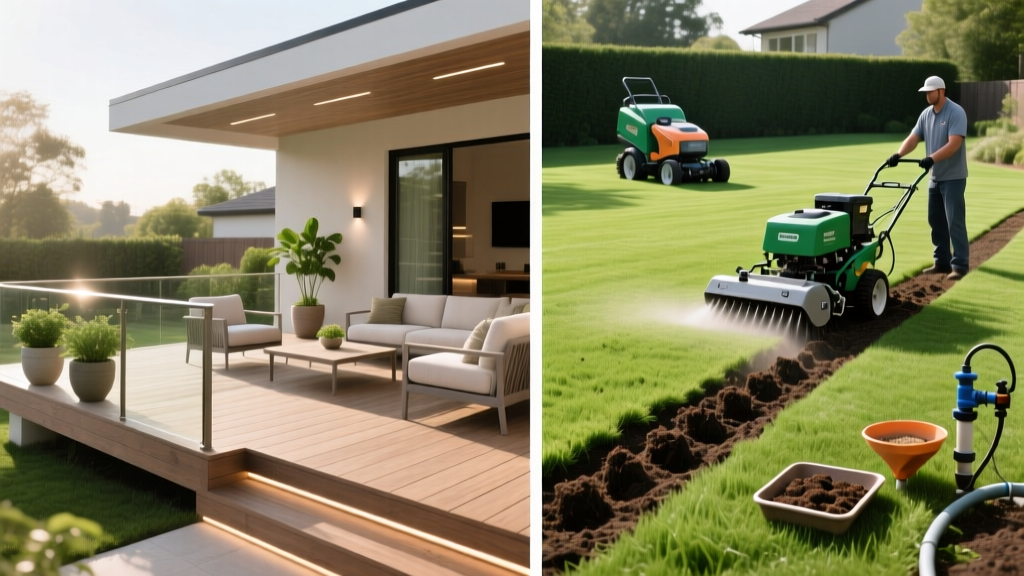
Deck vs Patio Costs 2026: Lawn Aeration & Seeding
Sarah ChenPublished
The Hidden Landscaping Costs of Outdoor Entertaining in 2026
As homeowners plan their outdoor entertaining spaces for the 2026 season, the debate between building a deck or installing a patio remains at the forefront of landscape design. Most budgeting guides focus strictly on hardscaping materials, labor, and permits. However, as turf management and lawn care specialists, we look at the ground beneath the project. What most contractors fail to mention is the severe soil compaction, turf destruction, and drainage disruption that accompanies hardscape installation. When you factor in the essential post-installation lawn recovery—specifically core aeration and overseeding—the true cost comparison between a deck and a patio shifts dramatically.
Choosing between a deck and a patio is not just about the surface you walk on; it is about how the installation process impacts your soil profile and the long-term health of your surrounding lawn. In this comprehensive 2026 guide, we break down the financial and agronomic realities of both options, emphasizing the aeration and seeding protocols required to restore your yard to a lush, entertainment-ready state.
Patio Installation: Heavy Machinery and Soil Compaction
Patios are ground-level structures that require extensive excavation. To build a durable paver or stamped concrete patio in 2026, contractors must remove the existing topsoil and turf, excavate up to 12 inches deep, and compact a base of crushed gravel and sand. While this creates a stable, level surface for your outdoor furniture, it is a catastrophic event for the surrounding soil biology.
The heavy machinery used for digging, the skid steers hauling away dirt, and the repetitive foot traffic of the installation crew cause severe soil compaction in the staging areas and along the patio perimeter. Compacted soil lacks the pore space necessary for oxygen, water, and nutrients to reach turfgrass roots. Furthermore, patios create massive impermeable surfaces that alter natural yard drainage, often leading to water pooling and turf drowning in adjacent lawn zones. To recover the lawn around a new patio, aggressive core aeration and heavy overseeding are non-negotiable expenses that must be included in your 2026 landscaping budget.
Deck Construction: Elevated Footings and Staging Damage
Decks offer a different set of landscaping challenges. Because they are elevated structures, decks preserve the natural ground cover beneath them and require far less topsoil excavation. However, they are not entirely harmless to your lawn. Deck construction requires digging deep footing holes for concrete piers, which disrupts local root systems and creates localized zones of highly compacted, clay-heavy subsoil when the holes are backfilled.
Additionally, the staging of lumber, composite decking materials (like the popular 2026 Trex Transcend Lineage series), and scaffolding heavily compresses the turf in the construction zone. While the overall footprint of turf destruction is generally smaller with a deck than with a patio, the surrounding grass still suffers from reduced soil aeration and mechanical damage. Post-deck lawn recovery focuses heavily on liquid or core aeration around the footings and slit-seeding the material staging pathways to restore uniform turf density.
2026 Cost Comparison: Hardscaping Plus Turf Recovery
To provide an accurate financial picture, we must combine the average 2026 hardscaping costs with the necessary lawn restoration services. The following table illustrates the estimated costs for a standard 300-square-foot outdoor entertaining space, including the vital aeration and seeding recovery work.
| Cost Category (300 sq ft project) | Patio (Paver/Concrete) | Deck (Composite/Elevated) |
|---|---|---|
| Base Hardscape Materials & Labor | $7,500 - $13,500 | $10,500 - $22,500 |
| Excavation & Dirt Hauling | $1,200 - $2,500 | $400 - $800 (Footings only) |
| Core Aeration (Surrounding Zone) | $250 - $400 | $150 - $250 |
| Overseeding & Starter Fertilizer | $300 - $500 | $200 - $350 |
| Topdressing & Soil Amendments | $400 - $600 | $150 - $250 |
| Total Estimated 2026 Project Cost | $9,650 - $17,500 | $11,400 - $24,150 |
While the deck remains the more expensive hardscape investment upfront, the patio incurs significantly higher hidden landscaping and turf recovery costs due to the sheer volume of soil disruption and the larger perimeter requiring aeration and seeding.
The Post-Installation Aeration Protocol
Once the hardscape is complete, the clock starts ticking on lawn recovery. According to turfgrass experts at the University of Minnesota Extension, alleviating soil compaction is the single most important step in restoring turf health after heavy construction traffic. For 2026 lawn recovery, we recommend a two-pronged aeration approach.
Step 1: Deep Core Aeration for Perimeter Zones
For the areas immediately surrounding a patio or deck staging zone, mechanical core aeration is required. Using a heavy-duty walk-behind aerator (such as the Billy Goat Outback AET60 or a Classen C-500HD), extract soil plugs that are at least 3 inches deep and 0.5 inches in diameter. This physically removes the compacted soil cores, allowing atmospheric oxygen to reach the surviving root systems. Leave the plugs on the lawn to break down naturally, as they contain beneficial soil microorganisms that will help decompose thatch and construction debris.
Step 2: Liquid Aeration for Tight Spaces
Around deck footings, retaining walls, and tight patio corners where mechanical aerators cannot reach, utilize a liquid aeration treatment. Modern 2026 liquid aerators utilize advanced surfactants and humic acids to break the ionic bonds in compacted clay soils, creating microscopic channels for water and air without the need for heavy machinery.
2026 Seeding Strategies for High-Traffic Entertaining Zones
Aeration is only half the battle; introducing resilient, modern turfgrass genetics is essential for lawns that border outdoor entertaining spaces. The Penn State Extension emphasizes that proper seed-to-soil contact and selecting the right cultivar are paramount for successful overseeding.
Choosing the Right Seed Blend
Lawns adjacent to patios and decks endure high foot traffic, spilled beverages, and shifting shade patterns. For 2026, we recommend using advanced Rhizomatous Tall Fescue (RTF) or Turf-Type Tall Fescue (TTTF) blends. These deep-rooted grasses are incredibly drought-tolerant and possess the lateral spreading ability to recover from the wear and tear of outdoor parties. If you are in a northern climate with heavy patio shade, a fine fescue and Kentucky Bluegrass mix will offer better shade tolerance and density.
Slit-Seeding and Topdressing
After core aeration, use a mechanical slit-seeder to carve shallow trenches into the soil and drop the seed directly into the earth. This guarantees optimal seed-to-soil contact. Follow this with a light topdressing of compost or a product like PennMulch to retain moisture and protect the seed from birds and wind. Finally, apply a 2026-formulation starter fertilizer containing mesotrione, which provides essential phosphorus for root development while simultaneously preventing summer annual weeds from invading your newly seeded turf.
Drainage, Runoff, and Long-Term Turf Health
One of the most overlooked aspects of the deck vs. patio debate is water management. A patio acts as a giant umbrella over the soil, shedding thousands of gallons of rainwater during summer storms. If the patio is not graded perfectly away from the house and surrounding lawn beds, this runoff will erode your newly seeded topsoil and drown your turf. When planning your patio, ensure your contractor installs French drains or permeable paver edges to disperse water gently into the lawn.
Decks, conversely, allow rainwater to pass through the board gaps, distributing it more naturally to the soil below. However, the soil beneath a deck is deprived of direct sunlight and natural rainfall patterns, often leading to dry, hydrophobic dirt. Homeowners with decks must invest in specialized shade-tolerant seed blends and utilize soaker hoses beneath the structure to maintain soil moisture during the peak heat of late summer.
Final Verdict for the 2026 Landscaping Season
When comparing the costs of decks and patios for outdoor entertaining, the hardscape price tag is only the beginning. Patios demand a larger budget for post-installation lawn recovery, requiring aggressive core aeration, extensive overseeding, and careful drainage management to fix the damage caused by deep excavation. Decks, while more expensive to build, preserve the broader soil ecosystem and limit turf destruction to localized footing and staging zones. By budgeting for professional aeration and premium 2026 seed blends from day one, you ensure that your new outdoor living space is framed by a thick, vibrant, and resilient lawn ready for years of entertainment.

