
Landscaping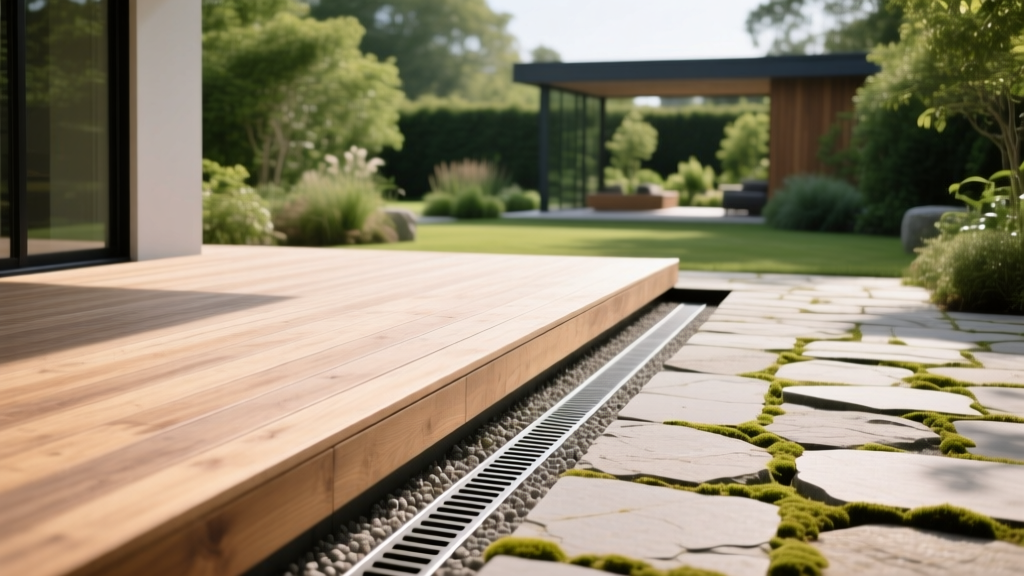
Deck vs Patio Cost Comparison 2026: French Drain Guide
Robert HayesPublished
The 2026 Outdoor Entertaining Boom: Decks vs. Patios
As homeowners in 2026 continue to invest heavily in outdoor living spaces, the debate between building a deck or a patio remains at the forefront of landscape design. Both structures offer incredible value for outdoor entertaining, but evaluating them solely on surface-level material costs is a critical mistake. The true cost of any hardscaping project must account for subsurface water management. From the perspective of a drainage contractor, the choice between a deck and a patio is fundamentally a question of hydrology. How will rainwater, snowmelt, and groundwater interact with your new entertaining space? Ignoring this question leads to cracked pavers, rotting joists, and flooded basements.
In this comprehensive guide, we break down the 2026 cost comparison between decks and patios, specifically analyzing how the necessity of French drain installation impacts your overall budget, design choices, and long-term landscape sustainability.
Base Cost Comparison: Decks vs. Patios in 2026
Before factoring in drainage solutions, it is essential to understand the baseline material and labor costs for outdoor entertaining spaces in the current 2026 market. Supply chain stabilization has leveled out extreme price fluctuations, but premium materials and skilled labor command a premium.
| Material Type | Average Installed Cost (per sq. ft.) | Lifespan & Maintenance |
|---|---|---|
| Pressure-Treated Wood Deck | $12 - $18 | 15-20 years; requires annual sealing |
| Composite/PVC Deck (e.g., Trex, TimberTech) | $18 - $35 | 25-50 years; low maintenance |
| Poured Concrete Patio | $12 - $22 | 25-30 years; prone to cracking without proper base |
| Paver Patio (e.g., Belgard, Unilock) | $22 - $45 | 30+ years; individual pavers replaceable |
At first glance, a basic composite deck and a mid-range paver patio appear to have overlapping price points. However, when you introduce the topography of your yard and the required drainage infrastructure, the financial scales tip dramatically.
The French Drain Factor: Why Drainage Dictates Design
A patio is essentially a giant, impermeable umbrella. When it rains, water hits the surface and must be aggressively directed away from the home and the patio base. A deck, conversely, acts like a sieve; water passes through the gaps between the boards, concentrating runoff directly into the soil below. According to EPA Green Infrastructure guidelines, managing localized runoff is critical to preventing soil erosion and protecting structural foundations. This is where the French drain—a trench filled with gravel and a perforated pipe that redirects groundwater and surface water—becomes the hidden hero (or hidden expense) of your project.
Patio Drainage Requirements and French Drain Costs
Because patios are solid surfaces built directly on the ground, they are highly susceptible to hydrostatic pressure and frost heave. If water pools beneath or directly adjacent to a paver or concrete patio, the freeze-thaw cycles of winter will shift the base, causing severe cracking and uneven settling.
To prevent this, a properly installed patio in 2026 requires a comprehensive perimeter drainage system. This typically involves:
- Perimeter French Drains: Trenching along the edges of the patio to catch water migrating through the soil.
- Channel Drains: Linear drains embedded in the concrete or between pavers that tie directly into a solid PVC pipe, which then daylight or connect to a dry well.
- Base Preparation: A deep, compacted aggregate base that allows for minor percolation, though the bulk of the water must be evacuated via the French drain network.
If your patio is situated on a slope or near the home's foundation, you will almost certainly need to install a French drain system along the uphill side of the patio to intercept groundwater before it washes out your polymeric sand or concrete sub-base. The University of Minnesota Extension water management resources emphasize that intercepting water before it reaches hardscaping is the most cost-effective way to prevent structural failure.
Deck Drainage Requirements and French Drain Costs
Decks allow water to pass through, which might seem like a drainage advantage. However, this concentrated dripping creates localized soil erosion beneath the structure. If your deck is attached to the house, the primary concern is foundation protection. The soil grading around your home must slope away at a minimum of 5% over the first 10 feet. If building a deck prevents you from maintaining this grading, or if the deck is built over a basement window well or a low-lying area, a French drain is mandatory.
Furthermore, homeowners in 2026 are increasingly utilizing under-deck drainage systems (like Trex RainEscape or aluminum ceiling panels) to create dry entertaining spaces below the deck. These systems capture 100% of the runoff and funnel it into gutters. If those gutters cannot daylight safely away from the property, they must be tied into an underground French drain or catch basin system, adding significant trenching costs to the project.
2026 French Drain Installation Cost Breakdown
When budgeting your outdoor entertaining space, you must allocate funds for subsurface drainage. In 2026, the national average for professional French drain installation ranges from $45 to $85 per linear foot, depending on soil composition, depth, and pipe material. Here is a detailed breakdown of the components you will need to factor into your deck or patio budget:
- SDR-35 PVC Pipe vs. Corrugated Pipe: While cheap corrugated black pipe costs less upfront, professional landscapers in 2026 strongly recommend rigid SDR-35 PVC for its durability and resistance to root intrusion and crushing. Expect to pay a 20% premium for PVC materials, but it will save you thousands in future yard excavation repairs.
- Catch Basins ($250 - $450 each): Essential for patios with channel drains or decks with concentrated downspout runoff. These surface-level grates capture high-volume water and feed it into the French drain line.
- Dry Wells ($900 - $1,800 installed): If your municipality prohibits daylighting drainage pipes into the street or storm sewer, you will need to install an underground dry well or rain garden infiltration system to handle the water captured by your patio's perimeter drains.
- Trenching and Restoration: Digging the trench is only half the battle. Restoring the landscaping, sod, or hardscaping over the trench adds $15 to $30 per linear foot to the final bill.
Scenario Comparison: The True Cost of Entertaining
Let us look at two hypothetical 400-square-foot entertaining spaces built in a yard with moderate clay soil and a slight negative grade toward the home.
Scenario A: The Paver Patio
Base installation (400 sq ft x $30): $12,000
Required Perimeter French Drain (60 linear feet x $65): $3,900
Channel Drain & Catch Basin Integration: $1,200
Total Project Cost: $17,100
Scenario B: The Composite Deck
Base installation (400 sq ft x $25): $10,000
Under-Deck Gutter System: $1,500
Foundation French Drain (40 linear feet x $65): $2,600
Dry Well for concentrated runoff: $1,200
Total Project Cost: $15,300
In this specific topography, the deck emerges as the more cost-effective option because the elevated structure requires less extensive perimeter trenching than the solid, water-shedding patio. However, if the yard was perfectly flat with sandy, well-draining soil, the patio's French drain requirements would drop to near zero, making it the cheaper alternative.
Long-Term Maintenance and ROI
The USGS urbanization and water quality reports highlight how impervious surfaces like patios drastically increase localized runoff velocity. If you opt for a patio, your French drain system will require annual maintenance. The gravel trenches must be inspected for sediment buildup, and the catch basins must be cleared of autumn leaves and debris to prevent system backup. A backed-up French drain beneath a patio can lead to catastrophic base washouts.
Decks with integrated underground drainage require less frequent subsurface maintenance, provided the above-ground gutters and downspouts are kept clear. Ultimately, a properly drained hardscape—whether deck or patio—will yield a 70% to 80% return on investment at resale, while an improperly drained space will show up on a home inspector's report as a major liability, costing you leverage during negotiations.
Conclusion: Let Water Guide Your Design
When planning your 2026 outdoor entertaining space, do not let the allure of surface materials blind you to the realities of subsurface water management. A patio offers a seamless, ground-level connection to your garden but demands a robust, expensive French drain network to combat hydrostatic pressure and surface runoff. A deck provides an elevated vantage point and natural permeability but requires careful foundation drainage and under-structure water routing.
Before signing a contract with a hardscaping crew, consult with a licensed drainage specialist. Have them perform a percolation test and evaluate your yard's micro-topography. By budgeting for the French drain installation alongside your deck or patio materials, you ensure that your new outdoor oasis remains beautiful, structurally sound, and completely dry for decades to come.

