
Landscaping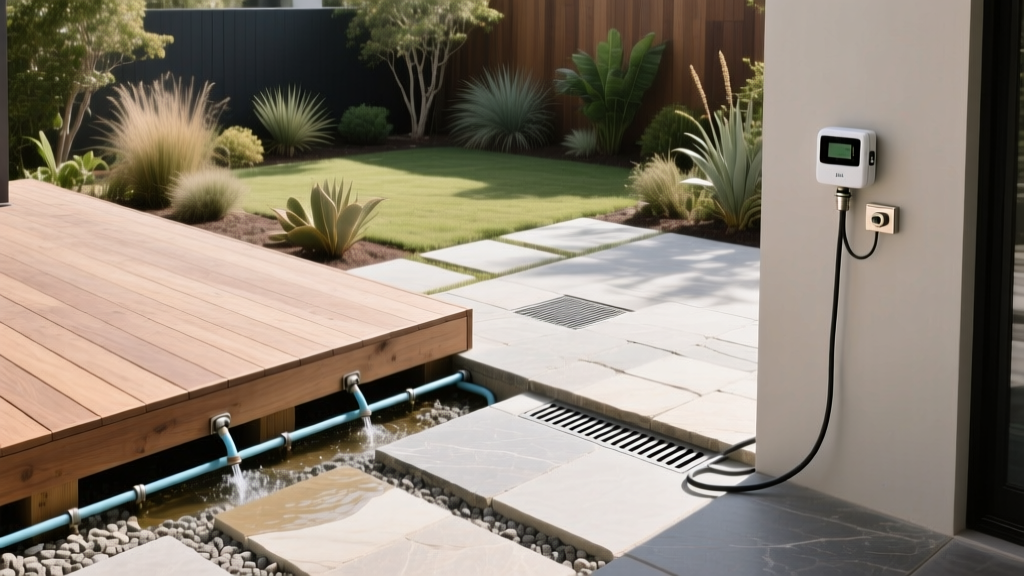
Deck Vs Patio Cost 2026: Irrigation & Drainage Factors
Mike RodriguezPublished
The Hidden Costs of Outdoor Entertaining Spaces
When homeowners begin budgeting for a new outdoor entertaining area, the focus is almost entirely on the visible materials: composite decking boards, stamped concrete, natural stone pavers, and outdoor kitchen appliances. However, as landscaping and irrigation experts, we frequently see budgets blow past their limits because of a forgotten subterranean network. Your existing sprinkler and irrigation system will inevitably clash with your new hardscape footprint. In 2026, with stricter municipal water regulations and advanced smart irrigation technology, integrating your hardscape with your watering system is not just an afterthought—it is a critical phase of the design process.
Whether you are debating a raised composite deck or a ground-level permeable paver patio, the true cost comparison must include irrigation relocation, microclimate adjustments, and subsurface drainage. Below, we break down the deck versus patio cost comparison for 2026, viewed entirely through the lens of sprinkler systems, drip irrigation, and water management.
Baseline Material Costs: Decks vs. Patios in 2026
Before diving into the irrigation implications, it is essential to establish the baseline construction costs for 2026. Material and labor shortages have stabilized, but premium outdoor living materials have seen a steady price increase tied to advanced manufacturing and sustainable sourcing.
Decking Costs
A high-end composite deck (such as Trex Transcend Lineage or TimberTech Advanced PVC) currently averages between $55 and $85 per square foot fully installed. This includes the substructure, footings, and premium fascia. Wood decks, while cheaper upfront ($35 to $50 per square foot for pressure-treated pine), require significantly more maintenance and are highly susceptible to the moisture traps created by poor irrigation planning.
Patio Costs
Ground-level patios generally range from $30 to $65 per square foot. Stamped concrete sits on the lower end, while premium permeable pavers (like Belgard's eco-friendly lines) and natural flagstone push the upper limits. Permeable pavers are highly recommended in 2026 due to municipal stormwater runoff credits, but they require a highly specific, deeply excavated aggregate sub-base that drastically alters how water moves through your yard.
How Patios Impact Your Irrigation System
Patios are built directly on the ground, meaning they will almost certainly pave over existing pop-up sprinkler heads, rotary nozzles, and subsurface drip lines. The cost to address this depends on the size of the patio and the complexity of your existing zone layout.
Relocating Sprinkler Heads and Trenching
If your new patio covers three existing spray heads, you cannot simply cap them off without creating dry spots in the adjacent lawn or garden beds. You must trench new PVC or poly piping around the perimeter of the patio to relocate those heads. In 2026, professional irrigation trenching and head relocation costs average $18 to $28 per linear foot. For a standard 400-square-foot patio, expect to pay between $600 and $1,200 just to reroute your sprinkler zones and maintain proper head-to-head coverage.
Perimeter Drip Irrigation
Patios create intense heat radiation and dry out the soil immediately adjacent to their borders. To keep your foundation plantings and border gardens alive, installing subsurface drip irrigation (such as Netafim Techline CV) along the patio perimeter is highly recommended. Drip irrigation bypasses the evaporation issues caused by hardscapes and delivers water directly to the root zone. Adding a dedicated drip zone around a new patio typically adds $400 to $800 to your irrigation budget.
Permeable Pavers and Runoff Management
According to the Environmental Protection Agency (EPA), outdoor water use accounts for nearly 30% of total household water consumption, much of which is lost to runoff. Permeable pavers allow rainwater and irrigation overspray to infiltrate the ground rather than pooling on the surface. While the pavers themselves cost 20% more than standard concrete, they can eliminate the need for expensive trench drains and catch basins, balancing out the hardscape budget.
How Decks Impact Your Sprinkler System
Unlike patios, elevated decks do not pave over the soil, but they create massive, shaded microclimates that completely disrupt your sprinkler system's efficiency. Watering the area beneath a deck is a primary source of water waste and landscape disease in modern landscaping.
The Overspray and Shading Problem
When a deck is built over an existing lawn or garden bed, that area is plunged into deep shade and shielded from rainfall. However, if your sprinkler heads are located under the deck, they will continue to water the underside of the floor joists, leading to wood rot, mold, and wasted water. If the heads are outside the deck, they will overspray onto the decking surface, causing premature wear on composite materials and creating slippery hazards.
Capping Zones vs. Converting to Drip
The most cost-effective irrigation adjustment for a deck is capping off the sprinkler heads underneath it and removing that area from your active watering zones. This costs roughly $150 to $300 per zone. However, if you plan to use the space under the deck for shade-tolerant ferns, hostas, or storage, you should convert the overhead spray heads to a low-volume drip grid. This prevents water from hitting the deck structure while keeping the underlying soil appropriately moist.
Deck Planters and Privacy Screens
Modern deck designs heavily feature built-in planter boxes and living privacy screens. These require dedicated drip irrigation lines routed up through the deck joists. Running poly tubing up through the substructure and installing inline drip emitters for deck planters typically costs $25 to $40 per linear foot, requiring a specialized irrigation technician to ensure the lines are hidden and protected from foot traffic.
2026 Cost Comparison: Irrigation & Drainage Add-Ons
The following table illustrates the estimated hidden irrigation and drainage costs associated with building a 400-square-foot deck versus a 400-square-foot patio in 2026.
| Irrigation & Drainage Feature | Patio (400 Sq Ft) Estimated Cost | Deck (400 Sq Ft) Estimated Cost |
|---|---|---|
| Sprinkler Head Relocation / Trenching | $600 - $1,200 | $150 - $300 (Capping off) |
| Subsurface Perimeter Drip Lines | $400 - $800 | $0 (Not applicable) |
| Deck Planter / Privacy Screen Drip | $0 | $500 - $1,200 |
| Surface Drainage (Channel Drains) | $800 - $1,500 | $0 |
| Under-Structure Drainage System | $0 | $2,000 - $3,500 (e.g., Trex RainEscape) |
| Smart Controller Upgrade & Sensors | $350 - $600 | $350 - $600 |
Smart Irrigation Adjustments for Hardscapes
Building a deck or patio fundamentally changes the sun exposure, wind flow, and evaporation rates of your yard. In 2026, relying on a legacy timer-based irrigation controller is a guaranteed way to overwater your hardscapes and kill your adjacent landscaping. Upgrading to a Wi-Fi-enabled smart controller, such as the Rachio 4 or Hunter Hydrawise, is practically mandatory when installing large hardscapes.
Smart controllers utilize hyper-local satellite weather data and on-site soil moisture sensors to adjust watering schedules dynamically. According to the Irrigation Association, smart irrigation controllers can reduce outdoor water use by up to 20% annually. When you build a patio that reflects heat onto a nearby garden bed, a smart controller paired with a soil moisture sensor will detect the accelerated drying rate and adjust the drip zone accordingly, preventing the plants from scorching without wasting water on the pavers themselves.
Furthermore, integrating a master valve and a flow sensor into your system will immediately alert your smartphone if a pipe breaks beneath your new patio or if a drip line is severed on your deck, preventing catastrophic water damage to your new investment.
Crucial Drainage Considerations
Irrigation is only half the battle; getting excess water away from your hardscape is equally vital. As noted by the University of Minnesota Extension, improper yard drainage is a leading cause of foundation failure and hardscape heaving.
Patio Drainage
Patios must be pitched away from the home at a minimum slope of 1/8 inch per foot. If your yard is flat, you will need to install trench drains or channel drains along the patio edges to catch irrigation overspray and rainwater, routing it to a dry well or municipal storm drain. This excavation and piping work can add $1,000 or more to your patio budget.
Under-Deck Drainage
If you want to use the space beneath your deck for entertaining or storage, you must install an under-deck drainage system. These systems consist of corrugated panels attached to the joists that catch water and route it to a gutter system. While this protects the substructure from rot and keeps the lower level dry, it also completely blocks rainwater from reaching the soil below, meaning any landscaping under the deck will require a fully independent, artificially irrigated drip system.
Conclusion
When comparing the cost of a deck versus a patio for outdoor entertaining in 2026, the materials are only the beginning of the financial equation. Patios demand extensive sprinkler relocation, perimeter drip irrigation, and surface drainage solutions. Decks require under-structure water management, specialized planter irrigation, and the strategic capping of shaded zones. By factoring in these hidden irrigation and drainage costs, and by upgrading to smart watering technology, you can ensure your new outdoor living space is both beautiful and water-efficient for decades to come.

