Gardening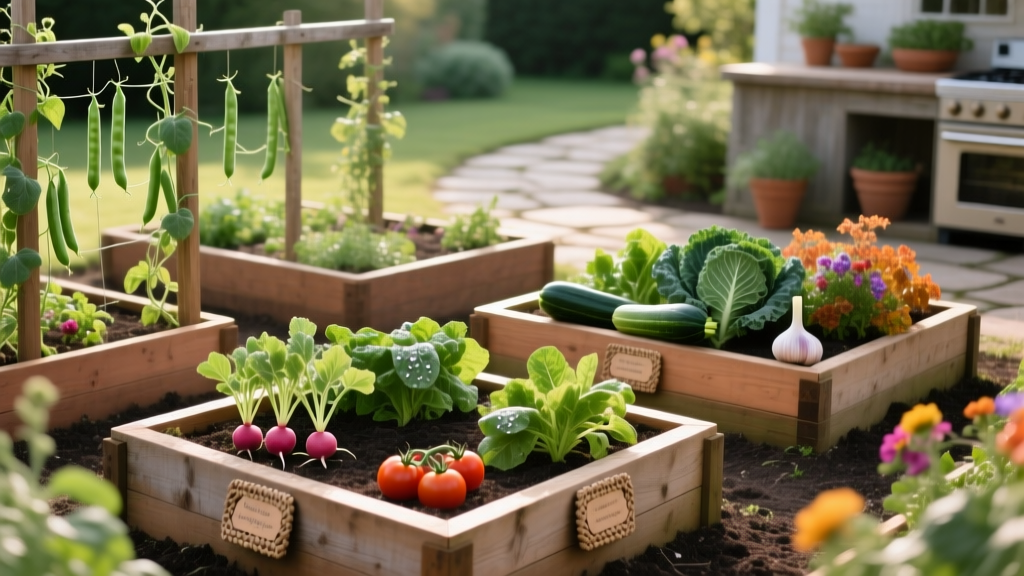
Ultimate Guide to Designing a Potager Kitchen Garden
James MillerPublished
The Philosophy of the Potager
The term 'potager' (pronounced po-tah-zhay) originates from France, translating roughly to 'a garden for the soup pot.' However, unlike a traditional row-crop vegetable garden focused purely on caloric yield, a potager is a masterclass in edible landscaping. It merges the geometric symmetry of French formal gardens with the lush, romantic abundance of the English cottage garden. Designing a potager requires a shift in perspective: you are no longer just planting vegetables; you are curating a living tapestry where a head of Red Russian kale is treated with the same aesthetic reverence as a prize-winning rose. For the modern home gardener, this approach maximizes small urban or suburban spaces, turning functional food production into a stunning visual focal point right outside the back door.
Planning the Geometry and Hardscape
A successful potager relies heavily on structural geometry. Before selecting a single seed, you must plan the hardscape. The most practical and visually pleasing layout utilizes a symmetrical grid of raised beds intersected by wide, accessible pathways.
Optimal Raised Bed Dimensions
For ergonomic maintenance and standard lumber sizing, design your beds to be exactly 4 feet wide by 8 feet long. This allows you to reach the center of the bed (2 feet) from either side without stepping on and compacting the soil. The depth should be between 12 and 18 inches to accommodate deep-rooting crops like tomatoes and parsnips.
Pathway Sizing and Materials
Pathways should be a minimum of 36 inches wide. This specific measurement allows for the easy passage of a standard garden wheelbarrow and provides enough space to kneel comfortably. For a classic potager aesthetic, avoid plain wood mulch. Instead, invest in decomposed granite (DG) or pea gravel laid over a heavy-duty woven landscape fabric. Decomposed granite typically costs between $1.50 and $2.50 per square foot, providing a permeable, low-maintenance surface that contrasts beautifully with the green foliage of the beds.
Budgeting Your Hardscape Materials
Designing a potager is an investment in your property's landscape architecture. When planning your budget, consider the longevity of the materials used for the raised bed frames. Untreated pine is cheap but will rot within 3 to 5 years. Instead, opt for rough-sawn Western Red Cedar or composite lumber.
- Western Red Cedar (2x10x8 boards): Approximately $25 to $35 per board. A single 4x8 bed requires four boards and corner brackets, totaling roughly $150 to $180 in materials.
- Composite Lumber: Upfront costs are higher (around $300 to $400 per bed), but it offers a 25-year lifespan with zero risk of chemical leaching or rot.
- Corner Brackets: Use heavy-duty galvanized steel corner brackets ($15 per set of four) to ensure the beds do not bow outward under the lateral pressure of wet soil.
Vertical Architecture and Focal Points
A flat garden lacks visual dynamism. In potager design, verticality is achieved through the use of obelisks, trellises, and archways. Place a tall, architectural element at the four corners of your garden grid or at the central intersection of your pathways. A 7-foot-tall cedar obelisk (costing around $80 to $120) serves as a stunning focal point while providing essential support for climbing edibles like Scarlet Runner Beans, Malabar Spinach, or Sweet Peas. Alternatively, install a 16-foot cattle panel arched over a central pathway to create a tunnel of vining crops, maximizing yield per square foot while creating an immersive garden experience.
Design Principles: The Thriller, Filler, Spiller Method
Container gardeners are familiar with the 'thriller, filler, spiller' concept, but this principle is equally vital when designing the interior of a potager raised bed. Treat each 4x8 bed as a massive container.
- The Thriller: Tall, dramatic plants that anchor the bed. Examples include trellised Indigo Rose tomatoes, towering Amaranth, or a central dwarf fruit tree.
- The Filler: Mounding, textural plants that hide the soil and provide bulk. Examples include Swiss chard (Bright Lights variety for neon stem colors), curly parsley, and purple basil.
- The Spiller: Low-growing plants that cascade over the cedar edges of the bed, softening the hardscape. Examples include nasturtiums, creeping thyme, and trailing strawberries.
Four-Season Potager Planting Chart
To maintain visual interest and continuous harvests, your design must account for seasonal succession. Below is a structured planting plan for a single 4x8 bed that transitions beautifully through the year.
| Season | Edible Anchor (Thriller) | Ornamental Companion (Filler/Spiller) | Design Function & Yield |
|---|---|---|---|
| Spring | Sugar Snap Peas (trellised) | Pansies, Radishes, Dill | Vertical green screen with delicate white/purple blooms; fast harvest. |
| Summer | Cherokee Purple Tomatoes | Orange Nasturtiums, Purple Basil | Bold color contrast; heavy fruiting; basil masks tomato scent from pests. |
| Fall | Red Russian Kale | Ornamental Cabbage, Swiss Chard | Architectural foliage; deep burgundy and blue-green hues as frost hits. |
| Winter | Overwintering Garlic | Evergreen Creeping Thyme, Cold-frame | Low-profile structure; dormant period with subtle evergreen groundcover. |
Companion Planting and Ecological Design
In a potager, companion planting is not just an organic pest-control strategy; it is a vital design element. Interplanting flowers with vegetables breaks up the monotony of green foliage and attracts vital pollinators.
According to the Cornell University College of Agriculture and Life Sciences (CALS), integrating flowering companions like sweet alyssum and dill into vegetable beds not only enhances visual continuity but also supports vital populations of predatory insects, such as parasitic wasps and hoverflies, which naturally manage aphid populations without the need for disruptive chemical pesticides.
Design your bed borders with a dense planting of French Marigolds (Tagetes patula). Their vibrant oranges and yellows provide a striking color wheel contrast to deep purple brassicas, while their roots exude compounds that suppress harmful soil nematodes.
Soil Architecture and Preparation
The foundation of a beautiful potager is its soil. Because you are growing intensively in raised beds, native ground soil is inadequate. You must engineer a soil profile that provides perfect drainage, aeration, and slow-release nutrition. Avoid bagged 'topsoil,' which is heavy and prone to compaction.
Instead, utilize a modified square-foot gardening mix. Fill your 4x8x1.5-foot beds (which requires roughly 48 cubic feet of soil) with the following ratio:
- 40% High-Quality Compost: Use a diverse blend (e.g., mushroom, cow manure, and homemade leaf mold) to provide a broad spectrum of micronutrients.
- 30% Coconut Coir: A sustainable alternative to peat moss that retains moisture while keeping the soil light and fluffy.
- 30% Coarse Vermiculite or Perlite: Ensures permanent aeration and prevents the soil from compacting over time.
To jumpstart the soil biology in a new potager, incorporate 2 cups of an organic granular fertilizer like Jobe's Organics Vegetable & Tomato granular fertilizer per bed at the time of planting. Top-dress the beds annually with 2 inches of fresh compost and a product like FoxFarm Ocean Forest potting soil to replenish the organic matter consumed by heavy-feeding crops.
Final Thoughts on Garden Planning
Designing a potager kitchen garden is an exercise in balancing the wildness of nature with the order of human design. By carefully planning your hardscape geometry, investing in durable cedar or composite materials, and utilizing the thriller-filler-spiller planting method, you can create a space that is as productive as it is beautiful. Remember to view your garden not just as a source of food, but as an outdoor room—a living, breathing extension of your home's architecture that provides sustenance for both the body and the soul.
