Tree Care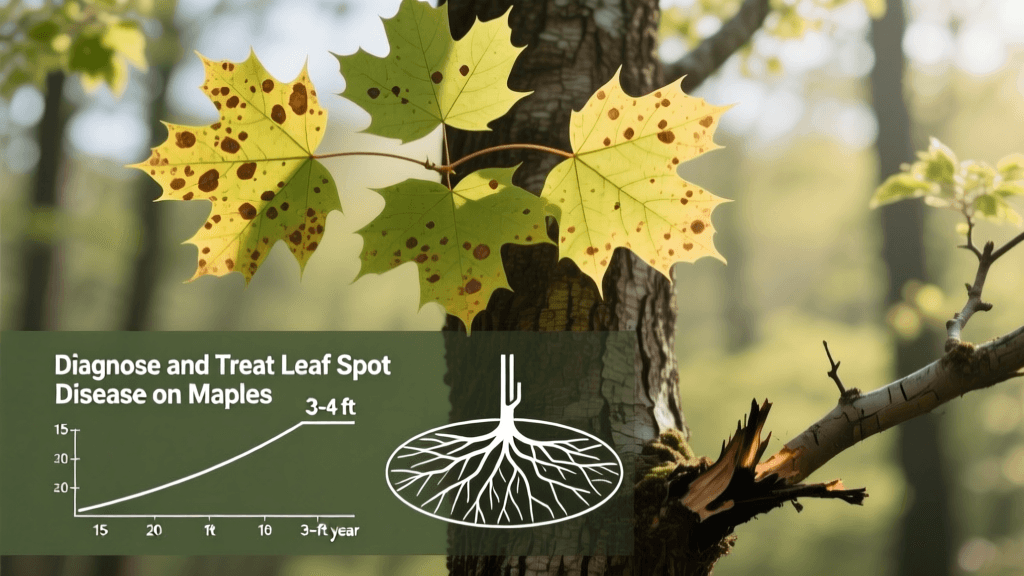
Diagnose And Treat Leaf Spot Disease On Maples
Understanding Leaf Spot Disease in Maple Species
Leaf spot disease on maples is not a single pathogen but a syndrome caused primarily by fungi—including Phyllosticta minima, Discula campestris, and Acericola aceris—that colonize leaf tissue during cool, wet spring conditions. Symptoms typically appear as circular or irregular brown to black lesions with yellow halos, often coalescing into large necrotic areas. While rarely fatal to mature trees, repeated defoliation over three or more consecutive years weakens vigor, reduces photosynthetic capacity, and increases susceptibility to secondary stressors like drought or borers.
Maple species vary significantly in susceptibility. Norway maple (Acer platanoides) exhibits moderate resistance, while sugar maple (Acer saccharum) and red maple (Acer rubrum) are highly susceptible. Silver maple (Acer saccharinum) shows intermediate vulnerability but compensates with rapid growth—reaching 24 inches per year under optimal conditions (USDA Forest Service, 2021). This fast growth rate, however, correlates with shallow, wide-spreading root systems that extend up to 3× the tree’s canopy radius—up to 50 feet for a mature 35-foot-tall silver maple.
Species-Specific Growth and Root Architecture Data
Accurate diagnosis and treatment require understanding species-specific biology. The following table compares key structural metrics across common landscape maples:
| Species | Average Growth Rate (in/yr) | Mature Height (ft) | Root Spread Radius (ft) | Canopy Spread (ft) | Soil pH Tolerance Range |
|---|---|---|---|---|---|
| Sugar maple (A. saccharum) | 12–18 | 60–75 | 40–45 | 35–50 | 5.5–7.3 |
| Red maple (A. rubrum) | 18–24 | 40–60 | 35–42 | 30–40 | 3.7–7.0 |
| Norway maple (A. platanoides) | 15–20 | 40–50 | 30–38 | 35–45 | 5.0–7.5 |
Diagnostic Protocols Aligned With ANSI A300 Standards
Per ANSI A300 Part 3 (Tree Health Management, 2021), diagnosis must differentiate leaf spot from abiotic disorders such as manganese deficiency (common in alkaline soils) or herbicide drift. Visual inspection alone is insufficient: symptomatic leaves should be collected from at least three quadrants of the crown and submitted to a certified diagnostic lab—such as the Cornell Plant Diagnostic Clinic in Ithaca, NY—or the University of Minnesota Extension Plant Disease Clinic in St. Paul.
Key diagnostic criteria include:
- Lesion margins: Fungal spots typically feature defined, dark-brown borders; nutrient deficiencies produce diffuse interveinal chlorosis.
- Seasonal timing: Primary infection occurs between bud break and mid-June; late-summer spotting suggests secondary colonization of senescing tissue.
- Presence of fruiting bodies: Microscopic examination reveals pycnidia (for Phyllosticta) or acervuli (for Discula) embedded in lesion centers.
Integrated Treatment Strategies
Treatment prioritizes cultural management before chemical intervention. According to ISA Best Management Practices (ISA, 2020), fungicides should be reserved for high-value specimens with documented history of severe defoliation (>40% leaf loss for ≥2 years).
Cultural Controls
Rake and destroy all fallen leaves each autumn—Phyllosticta minima overwinters in infected debris. Avoid overhead irrigation; use drip emitters or soaker hoses placed within the dripline but outside the trunk flare. Maintain soil moisture at 15–20% volumetric water content during drought periods—measured via calibrated tensiometers installed at 6-inch and 18-inch depths.
Pruning must follow ANSI A300 Part 1 (Pruning, 2023) standards: remove only dead, diseased, or crossing branches during late winter dormancy. Never prune between April 15 and July 15 in USDA Hardiness Zones 5–7—the peak period for spore dispersal. When thinning crowns, retain ≥60% of live foliage and avoid removing >25% of total branch length in a single session.
Preventive Planting and Site Selection
Site selection directly influences disease pressure. Maples planted in compacted soils with poor drainage experience elevated root stress—reducing carbohydrate reserves needed for defense compound synthesis. At the Morton Arboretum in Lisle, IL, researchers observed a 3.7-fold increase in leaf spot severity in red maples grown in clay loam (bulk density = 1.45 g/cm³) versus those in amended sandy loam (bulk density = 1.12 g/cm³).
Spacing is critical: plant sugar maples no closer than 30 feet apart to ensure adequate air movement and reduce foliar humidity. For urban settings, prioritize cultivars with documented resistance—such as ‘Legacy’ sugar maple (tested at the Holden Arboretum in Kirtland, OH) or ‘Armstrong’ red maple, which showed ≤12% lesion coverage in multi-year field trials.
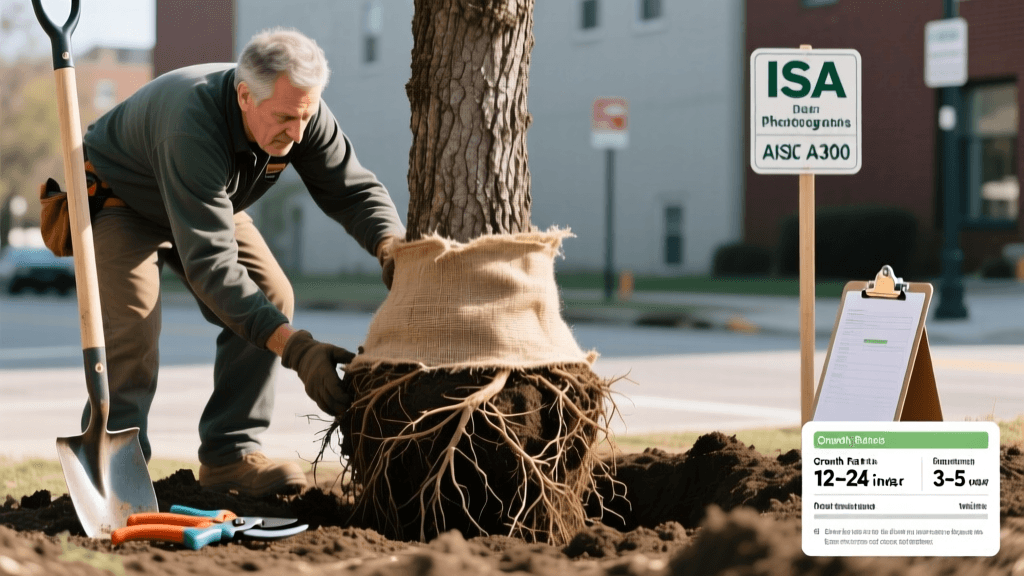
Root zone protection is non-negotiable. Install root barriers at installation if planting within 15 feet of pavement or foundations. The root protection zone (RPZ) radius equals 12 inches of horizontal distance per inch of trunk diameter measured at 4.5 feet above grade—for a 12-inch DBH sugar maple, the RPZ extends 144 inches (12 feet) from the trunk base.
Soil pH adjustment may be necessary: sugar maples decline below pH 5.2 due to aluminum toxicity. Apply dolomitic lime at 50 lbs per 1,000 ft² to raise pH by 0.5 units—verified via pre- and post-application soil testing at the Ohio State University Soil Testing Laboratory.
Monitor newly planted maples intensively during the first three growing seasons. Young trees allocate limited energy to defense; saplings under 2 inches DBH show 2.3× higher infection rates than established specimens (ISA, 2020). Water deeply every 7–10 days during establishment—delivering 10 gallons per inch of trunk diameter weekly.
When removal becomes necessary—typically after chronic defoliation (>60% for ≥4 years) combined with structural defects—follow ANSI A300 Part 5 (Tree Risk Assessment, 2021). Assess decay presence using resistograph readings; sound wood registers >100 psi penetration resistance at 12-inch depth. Removal should occur outside nesting season (March 15–July 31) to protect migratory birds protected under the Migratory Bird Treaty Act.
Replanting requires species diversification. At the Chicago Botanic Garden, post-removal protocols mandate planting no more than 10% of total canopy with any single genus—preventing future monoculture vulnerabilities. Recommended alternatives include disease-resistant oak cultivars (Quercus bicolor ‘Fosteri’) or native serviceberry (Amelanchier laevis), both with compatible root spread profiles and similar growth rates (15–20 in/yr).
Documentation matters: record all interventions—including pruning dates, fungicide applications, and soil amendments—in a permanent arboricultural log. The International Society of Arboriculture recommends retaining these records for minimum 10 years to track long-term health trends and inform future management cycles.
Consultation with a Certified Arborist is required for trees exceeding 25 feet in height or exhibiting advanced symptoms. ISA-certified professionals complete ≥24 hours of continuing education annually, including modules on fungal pathology and ANSI A300 compliance—ensuring interventions align with peer-reviewed science rather than anecdotal practice.
“Effective leaf spot management hinges not on eradicating pathogens, but on shifting the host-pathogen-environment balance toward tree resilience.” — ISA Tree Health Management Standards Committee, 2020
Long-term success depends on integrating biological knowledge with standardized practice. Whether managing a century-old sugar maple in Boston’s Arnold Arboretum or a newly installed red maple along Portland’s SW Naito Parkway, adherence to species-specific data, ANSI protocols, and site-adapted care remains the foundation of sustainable maple stewardship.