Tree Care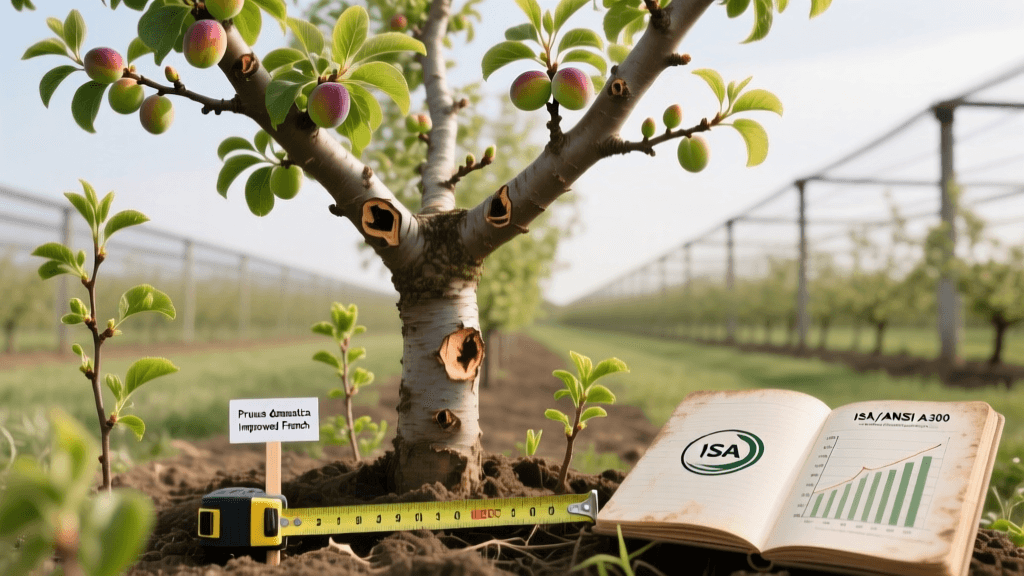
Prune Fruit Trees For Maximum Yield Spring Guide
Timing and Objectives of Spring Pruning
Spring pruning of fruit trees serves two primary objectives: structural refinement and yield optimization. Unlike dormant-season pruning—which focuses on shaping and size control—spring pruning targets live, actively growing tissue to redirect energy toward fruiting wood. According to the International Society of Arboriculture (ISA), “pruning during active growth should emphasize thinning over heading cuts to minimize stress and encourage balanced carbohydrate allocation” (ISA, 2021). This principle is especially critical for early-flowering species such as apricot (Prunus armeniaca) and peach (Prunus persica), where cutting after bloom can remove developing fruit buds and reduce harvest by up to 40% if mis-timed.
Species-Specific Pruning Protocols
Each fruit tree genus responds uniquely to spring interventions. Apple (Malus domestica) and pear (Pyrus communis) tolerate light spring thinning better than stone fruits due to their biennial bearing habit and slower sap flow. In contrast, plum (Prunus domestica) and cherry (Prunus avium) are highly susceptible to bacterial canker and silver leaf disease when pruned in cool, damp spring conditions—making late-spring (after petal fall and when temperatures consistently exceed 60°F) the safest window.
Peach and Nectarine Guidelines
Peaches require aggressive annual renewal pruning to maintain productivity. Mature trees produce fruit only on one-year-old wood, so removing older, non-fruiting branches is essential. At Cornell University’s New York State Agricultural Experiment Station in Geneva, NY, trials demonstrated that pruning 30–50% of previous season’s growth annually increased average fruit size by 18% and reduced disease incidence by 22% compared to unpruned controls.
Apple and Pear Structural Training
For apple and pear, focus on maintaining a central leader or modified leader system. Remove competing leaders, crossing limbs, and water sprouts—especially those emerging within 12 inches of scaffold branch junctions. The ANSI A300 (Part 1: Tree, Shrub, and Other Woody Plant Maintenance—Standard Practices) specifies that “branch removal should not exceed 25% of total leaf surface area in a single season to avoid compensatory stress responses” (ANSI A300.1-2023).
Root System Considerations in Pruning Decisions
Pruning above ground directly influences below-ground dynamics. Fruit trees allocate photosynthates preferentially to roots during active shoot growth; excessive canopy reduction therefore disrupts root vitality and soil stability. Root spread data from the University of California Cooperative Extension shows that mature dwarf apple rootstocks (e.g., M.9) extend laterally up to 12 feet beyond the drip line, while standard-size ‘Bartlett’ pear trees develop root systems spanning 35 feet horizontally and penetrating 6 feet deep. Similarly, mature sweet cherry trees at the USDA-ARS Temperate Tree Fruit Research Lab in Wenatchee, WA, exhibit root zones averaging 28 feet in diameter—nearly double the crown spread.
- ‘Honeycrisp’ apple on G.935 rootstock: average height 10–12 ft, full maturity reached in 4–5 years
- ‘Elberta’ peach on Lovell rootstock: grows 18–24 inches per year, reaches 15–20 ft at maturity
- ‘Stanley’ plum root spread: 22 feet radius at age 12, with 75% of absorbing roots in top 12 inches of soil
- ‘Bing’ cherry trunk diameter growth: averages 0.35 inches/year under optimal irrigation
- ‘Comice’ pear canopy volume increase: 3.2 cubic meters per year in first decade post-planting
Tools, Techniques, and ANSI Compliance
Use bypass pruners for stems under ¾ inch, lopping shears for ¾–1½ inch limbs, and pruning saws for anything larger. All cuts must be clean, angled at 30–45°, and positioned just outside the branch collar—never flush-cutting or leaving stubs. ANSI A300 standards mandate that “wound surface area must be minimized through proper cut placement and tool sharpness; dull tools increase tissue crushing and pathogen entry risk” (ANSI A300.1-2023). Disinfect tools between trees using 70% isopropyl alcohol or diluted household bleach (1:9 ratio) to prevent cross-contamination of fire blight or brown rot spores.
Thinning vs. Heading: When to Use Each
Thinning removes entire branches at their point of origin and is preferred for improving light penetration and air circulation. Heading—cutting back part of a branch—stimulates vigorous regrowth and is appropriate only for training young trees or rejuvenating neglected specimens. For mature fruit trees, thinning should constitute ≥85% of all spring pruning work.
When thinning, prioritize removal of:
- Branches growing vertically upward (water sprouts)
- Limbs crossing or rubbing adjacent branches
- Interior branches receiving less than 30% full sunlight
- Spurs older than three years on apple and pear (non-productive)
- Any branch with a crotch angle less than 30° (structurally weak)
Post-Pruning Care and Monitoring
Immediately after pruning, apply no wound dressings—research from the Morton Arboretum confirms they inhibit natural compartmentalization and may trap moisture, encouraging decay (Morton Arboretum, 2019). Instead, monitor for signs of stress: delayed leaf emergence, chlorotic foliage, or premature fruit drop. Record pruning dates, species, and estimated canopy volume removed; this data supports long-term yield modeling and informs future interventions.
Soil moisture management becomes critical following spring pruning. Trees with reduced transpirational surface require 15–20% less irrigation than unpruned counterparts—but root-zone drying still poses greater drought vulnerability. Mulch applications of 3–4 inches of shredded hardwood, kept 6 inches from the trunk, buffer soil temperature fluctuations and reduce evaporation by up to 35%.
“The most effective pruning is invisible to the untrained eye: it enhances fruit quality without sacrificing structural integrity or long-term vigor.” — Dr. Linda Chalker-Scott, Washington State University Extension, 2020
Regional Climate Adjustments
Pruning timing must align with local phenology—not calendar dates. In USDA Hardiness Zone 5b (e.g., Minneapolis, MN), wait until average daily highs exceed 55°F for three consecutive days before pruning apples. In Zone 9b (e.g., Sacramento, CA), peach pruning often concludes by early March to avoid disrupting bud swell. The Texas A&M AgriLife Extension Service recommends delaying all stone fruit pruning in the Hill Country until after the last expected frost—typically April 10–15—to prevent cold-damaged cuts from serving as infection points.
At the Arnold Arboretum of Harvard University in Boston, MA, long-term phenological records show that apple bloom onset has advanced by 5.2 days per decade since 1980—underscoring the need for adaptive, observation-based pruning schedules rather than fixed dates.
Young trees (1–3 years old) benefit most from formative pruning in early spring, prior to bud break. Scaffold limb selection should occur when lateral shoots reach 6–8 inches in length. Remove competing leaders and retain only those spaced ≥6 inches apart vertically and ≥120° apart radially around the trunk.
Mature orchards require systematic recordkeeping. Track annual pruning weight (in pounds), number of cuts made, and average branch diameter removed. Data collected across 12 seasons at the Michigan State University Southwest Michigan Research and Extension Center revealed that consistent annual removal of 12–15 lbs of wood per mature apple tree correlated with stable yields of 650–720 lbs/tree—whereas erratic pruning (>25 lbs one year, <5 lbs the next) caused yield swings exceeding ±30%.
Never prune during rain or high humidity. Wet conditions facilitate pathogen dispersal and slow wound drying. If unexpected rainfall occurs within 48 hours of pruning, inspect cuts for oozing sap or discoloration—early indicators of infection.
Root pruning is occasionally warranted near foundations or utilities but must be performed cautiously. For example, severing >20% of major lateral roots within the critical root zone (defined as a circle with radius = 1 × tree height) risks toppling or decline. ISA guidelines state that “root pruning should occur no closer than 3 feet from the trunk for trees under 12 inches DBH, and never during active root growth periods (April–June in most temperate zones)” (ISA, 2021).
Finally, recognize that pruning alone cannot compensate for poor site selection. Soil pH outside 6.0–7.0, compaction exceeding 1.4 g/cm³ bulk density, or seasonal water tables within 24 inches of the surface will limit response regardless of technique. Always conduct soil testing before initiating intensive pruning programs.
| Species | Average Annual Growth Rate (inches) | Root Spread Radius at Maturity (ft) | Optimal Spring Pruning Window (Zone 6) |
|---|---|---|---|
| Peach (P. persica) | 18–24 | 15–20 | Mid-March to Early April |
| Apple (M. domestica) | 12–18 | 20–30 | Early April to Late April |
| Sweet Cherry (P. avium) | 10–16 | 25–35 | Late April to Mid-May |