Pest Control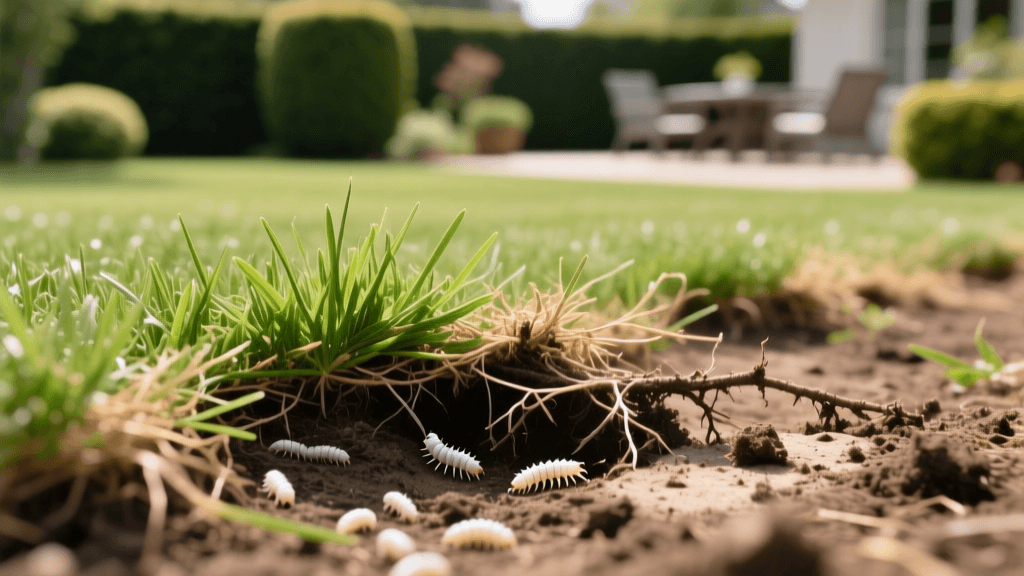
Diagnose and Troubleshoot White Grub Damage in Lawns
Introduction to White Grub Damage in Lawns
White grubs are the larval stage of various scarab beetles, including Japanese beetles, June bugs, and European chafers. These C-shaped, cream-colored pests live just beneath the soil surface and feed aggressively on the root systems of turfgrass. When left unchecked, a severe grub infestation can destroy an otherwise healthy lawn in a matter of weeks, leaving behind vast patches of dead, brown grass that can be rolled back like a loose carpet.
However, one of the most common mistakes homeowners make is misdiagnosing grub damage as drought stress, fungal disease, or dog urine spots. Furthermore, many turf managers and homeowners experience failed grub treatments due to improper timing, incorrect product selection, or poor application techniques. This comprehensive troubleshooting guide will help you accurately diagnose white grub activity, differentiate it from other lawn ailments, and resolve issues when your pest control applications fall short.
Step 1: Accurate Problem Diagnosis (Is it Really Grubs?)
Before purchasing any chemical controls, you must confirm that white grubs are the actual culprits. Grub damage typically appears in late summer to early fall (August through October) or in early spring (April through May) as the grubs return to the root zone after overwintering deeper in the soil. The primary symptom is irregularly shaped brown patches of turf that feel spongy underfoot.
The Tug Test
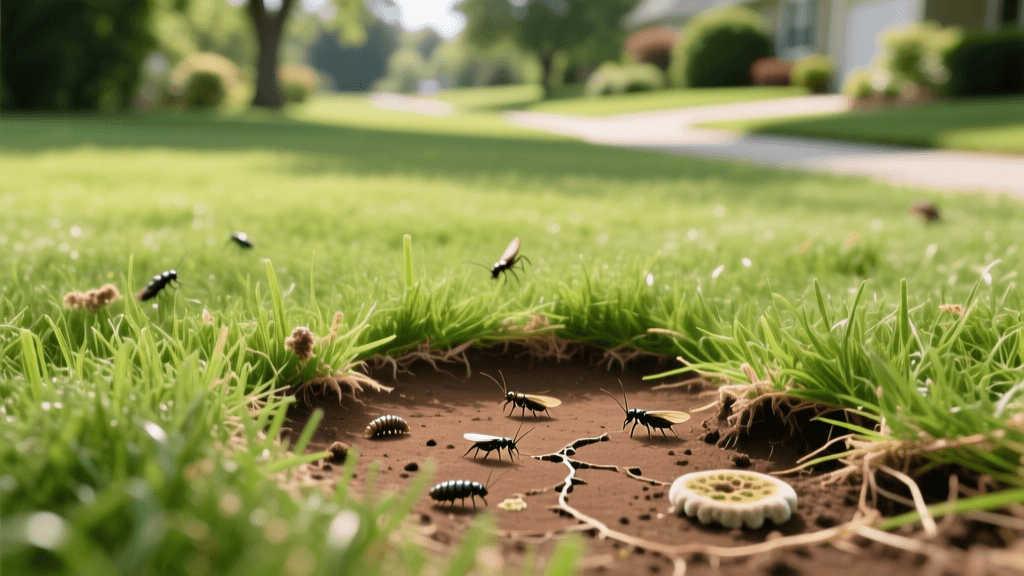
The most reliable method for diagnosing grub damage is the tug test. Grasp a handful of grass at the edge of a brown patch and pull gently. If the grass pulls up easily with little to no resistance and you notice a lack of healthy white roots, grubs have likely severed the root system. You should also inspect the top two inches of the exposed soil for C-shaped, white larvae with brown heads and six legs near the thorax.
Secondary Signs: Animal Foraging
Often, the first sign of a grub problem is not the brown grass, but the damage caused by foraging wildlife. Skunks, raccoons, crows, and armadillos will actively tear up your lawn, flipping over large chunks of sod to feed on the protein-rich grubs beneath. If you notice shallow, cone-shaped holes or large divots of torn turf accompanied by brown grass, a grub infestation is highly probable.
Differential Diagnosis: Grubs vs. Other Lawn Issues
Use the comparison chart below to distinguish grub damage from other common turfgrass problems.
| Symptom / Sign | White Grubs | Drought Stress | Chinch Bugs | Dog Urine Spots |
|---|---|---|---|---|
| Turf Pull Test | Pulls up like loose carpet; no roots | Roots remain intact; grass resists pulling | Roots intact; grass resists pulling | Roots intact; grass resists pulling |
| Pattern of Damage | Irregular brown patches, often near edges or light fixtures | Uniform browning across large areas or high spots | Starts as small yellow patches, merges into large dead zones in sunny areas | Distinct circular brown spots, often with a dark green ring around the edge |
| Visible Pests | C-shaped white larvae in top 2 inches of soil | None | Tiny black and white insects at the thatch/soil interface | None |
| Wildlife Activity | High (skunks, raccoons, birds digging) | None | Low to None | None |
The Soap Flush Test
If you suspect chinch bugs or sod webworms rather than grubs, perform a soap flush. Mix two tablespoons of liquid dish soap with two gallons of water and drench a one-square-yard area at the edge of the damaged turf. Wait ten minutes. If chinch bugs or caterpillars are present, they will surface and writhe on the grass. Grubs, however, will not surface from a soap flush; you must physically dig into the soil to find them. According to the University of Minnesota Extension, a threshold of 10 or more grubs per square foot warrants immediate curative treatment.
Step 2: Identifying the Grub Species
While treatment protocols are generally similar across species, identifying the specific grub can help you understand the lifecycle and anticipate future damage. Examine the raster pattern (the arrangement of tiny hairs and spines on the underside of the grub's abdomen near the tail end).
- Japanese Beetle Grubs: Feature a distinct Y-shaped pattern of spines on the raster. They are the most common turf pest in the eastern United States.
- June Bug (May Beetle) Grubs: Have a zipper-like pattern of spines. They can take up to three years to mature, causing prolonged, multi-season damage.
- European Chafer Grubs: Have no distinct pattern, just a random scattering of spines. They are highly destructive and tolerate colder climates well.
Troubleshooting Failed Grub Treatments
Applying a grub control product does not guarantee a grub-free lawn. If you have applied a treatment but are still seeing active grubs or fresh damage, troubleshoot your approach using the following common failure points.
Issue 1: Wrong Timing (Preventative vs. Curative)
The most frequent reason for treatment failure is applying the wrong chemical at the wrong time of year. Grub control products are strictly divided into two categories: preventatives and curatives.
- Preventatives (e.g., Imidacloprid, Chlorantraniliprole): These products must be applied in late spring to early summer (May through July) before the eggs hatch. They remain in the soil and kill the young, vulnerable grubs as they begin feeding in late summer. If you apply a preventative in September when grubs are already large and actively destroying roots, the product will fail.
- Curatives (e.g., Trichlorfon / Dylox): These are fast-acting contact poisons used in late summer or early fall (August through October) when active, mature grubs are discovered. If you attempt to use a curative in May, it will degrade in the soil before the new generation of eggs hatches in August.
Issue 2: Improper Watering-In
Grubs live in the soil, not on the grass blades. Granular grub control products must be watered into the soil profile to be effective. If you apply a product and rely on a light morning dew or a brief, light rain shower, the active ingredient will remain trapped in the thatch layer and degrade under UV sunlight.
Pro Tip: Always apply 0.5 to 0.75 inches of irrigation immediately after applying granular grub control. Use a rain gauge or empty tuna cans placed around the yard to measure the exact amount of water applied. This ensures the chemical washes off the grass blades and penetrates the top two inches of soil where grubs feed.
Issue 3: The Thatch Barrier and Soil pH
A thatch layer thicker than 0.5 inches acts as a physical sponge, intercepting the insecticide and preventing it from reaching the root zone. If your lawn has severe thatch buildup, your grub treatments will fail regardless of timing. Core aeration and dethatching prior to application are mandatory troubleshooting steps.
Additionally, the curative insecticide Trichlorfon (Dylox) is highly sensitive to alkaline conditions. According to Rutgers University, Trichlorfon degrades rapidly in soil with a high pH (above 7.2) or in irrigation water with high bicarbonate levels. If your soil is highly alkaline, the chemical may break down before it can kill the grubs. In high-pH environments, rely on preventative applications of Chlorantraniliprole instead.
Issue 4: Post-Treatment Animal Digging
A common homeowner complaint is: "I applied the grub killer, but skunks are still tearing up my lawn!" This occurs for two reasons. First, curative products like Trichlorfon take 24 to 72 hours to kill the grubs. During this window, the grubs are still present and emitting the scent that attracts wildlife. Second, even after the grubs are dead, their decaying bodies can continue to attract foraging animals for a week or two. To troubleshoot this, use animal repellents or lay down bird netting over the most damaged areas for 10 days following your chemical application to break the animals' foraging habits.
Actionable Treatment and Recovery Plan
Once you have diagnosed the problem and identified why previous treatments may have failed, follow this structured action plan to reclaim your lawn.
1. Late Summer / Fall Curative Rescue
If it is currently August, September, or early October and you have confirmed an active infestation of 10+ grubs per square foot, you must use a curative product.
- Active Ingredient: Trichlorfon (Common brand name: Dylox).
- Application Rate: Follow the manufacturer's label, typically applying enough to deliver 1.0 to 1.5 lbs of active ingredient per acre.
- Execution: Mow the lawn short, remove excessive thatch, apply the granules evenly with a rotary spreader, and immediately water in with 0.5 inches of water. Expect grubs to die within 3 to 5 days.
2. Spring / Early Summer Preventative Strategy
If you are planning ahead for the following year, or if you are dealing with a very young, early-summer grub population, use a long-residual preventative.
- Active Ingredient: Chlorantraniliprole (Common brand name: Scotts GrubEx) or Imidacloprid (Common brand name: Merit).
- Timing: Apply Chlorantraniliprole in April or May, as it takes 60 to 90 days to fully activate in the soil. Apply Imidacloprid in mid-June to early July.
- Execution: Apply to dry or slightly moist turf, water in thoroughly, and maintain consistent soil moisture throughout the summer to keep the chemical active in the root zone.
3. Turf Recovery and Repair
Chemical control will stop the bleeding, but it will not bring dead grass back to life. Once the grubs are eliminated, you must repair the lawn.
- Roll the Turf: If animals or the tug test have lifted large sections of turf that still have some viable roots, press them back into contact with the soil and roll the area with a light lawn roller.
- Overseed: In early fall or early spring, rake out the dead thatch and debris from the brown patches. Apply a high-quality turfgrass seed blend suited to your region, top-dress with a thin layer of compost, and keep the seed consistently moist until germination.
- Nematode Application (Organic Alternative): For those seeking an organic troubleshooting alternative to chemical curatives, applying beneficial nematodes (Heterorhabditis bacteriophora) in late summer can effectively parasitize and kill white grubs. Ensure the soil is moist and apply in the late evening to avoid UV degradation.
Expert Sources and Further Reading
Effective integrated pest management (IPM) relies on continuous education and region-specific data. The troubleshooting steps and biological thresholds outlined in this guide are supported by leading agricultural extensions. For localized grub lifecycle charts and state-specific pesticide regulations, consult the following authoritative resources:
- Penn State Extension: White Grubs in Home Lawns - Provides excellent visual guides on grub species identification and raster patterns.
- University of Minnesota Extension: White Grubs - Offers detailed insights into cold-climate grub behavior and damage thresholds.
- Rutgers NJAES: White Grubs in Turfgrass - A comprehensive fact sheet detailing the chemical efficacy and soil pH interactions of various grub control insecticides.