Pest Control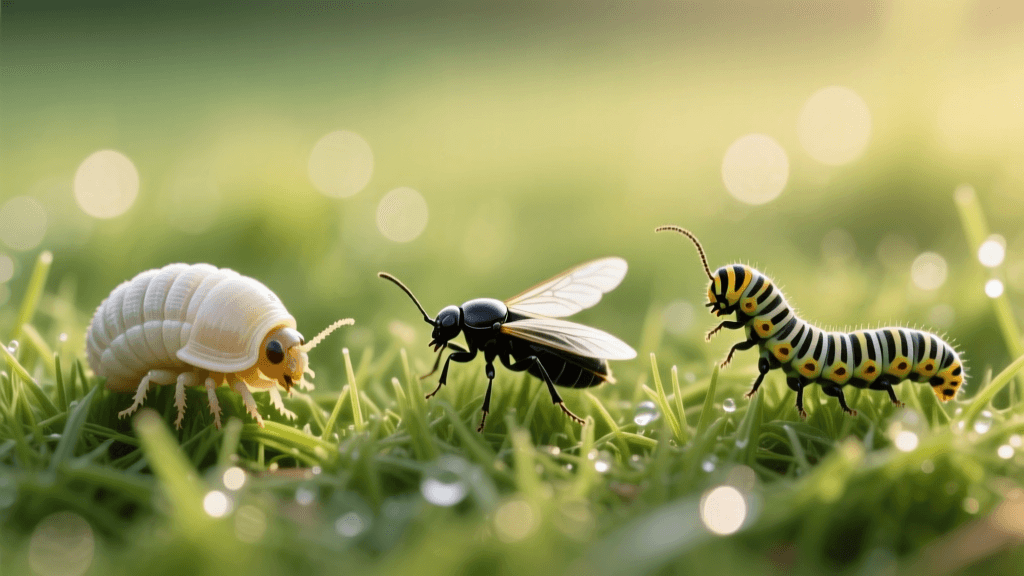
Diagnosing Summer Lawn Pests: Grubs, Chinch Bugs, Armyworms
Troubleshooting Summer Lawn Pests: A Diagnostic Guide
Troubleshooting brown patches in the lawn during the peak of summer is a common headache for homeowners and turf managers alike. Is it drought stress, a fungal disease, or a subterranean pest invasion? Misdiagnosing the problem can lead to wasted money on the wrong fungicides or insecticides, while your turf continues to deteriorate. When it comes to rapid summer lawn damage, the "Big Three" insect culprits are white grubs, southern chinch bugs, and fall armyworms. Each requires a distinct diagnostic approach and a tailored treatment plan to save your grass.
The Diagnostic Process: Rule Out Abiotic Factors First
Before reaching for pesticides, you must rule out environmental and abiotic factors. Drought stress, poor irrigation coverage, and soil compaction often mimic pest damage. Check your sprinkler heads for clogs and test your soil moisture with a simple screwdriver test—if the blade cannot easily penetrate 3 inches into the soil, your lawn may simply be thirsty. If the soil is adequately moist but the grass is wilting, turning yellow, or detaching from the soil entirely, you likely have a pest problem. Always inspect the leading edge of the damaged area, as this is where active feeding occurs.
Suspect #1: White Grubs (The Root Destroyers)
Symptoms and Identification
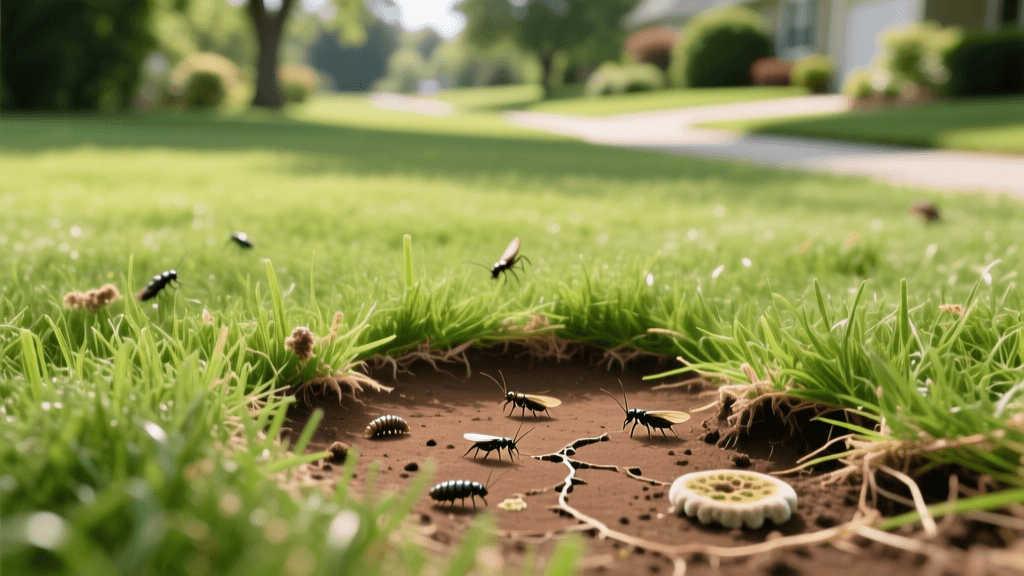
White grubs are the larval stage of various beetles, including Japanese beetles, June bugs, and European chafers. Because they feed on the root system just below the soil surface, the primary symptom is turf that wilts despite adequate watering. The classic diagnostic sign is a "spongy" feeling underfoot. In severe infestations, the grass roots are completely severed, allowing you to roll back the dead turf like a loose carpet. You may also notice increased activity from crows, skunks, or raccoons digging up the lawn to feed on the larvae.
Diagnostic Testing
To confirm a grub infestation, perform a spade sample test. Cut a 1-foot by 1-foot square of turf on three sides with a spade, peel it back, and count the grubs in the top 2 inches of soil. According to Penn State Extension, finding more than 5 to 10 grubs per square foot warrants immediate curative treatment.
Treatment and Costs
- Preventative (Timing: Late Spring to Early Summer): Products containing Chlorantraniliprole (e.g., Scotts GrubEx) or Imidacloprid. These cost roughly $20-$30 per bag and must be watered in deeply to reach the root zone before eggs hatch.
- Curative (Timing: Late Summer to Early Fall): If you find active grubs causing damage in August or September, you need a fast-acting contact insecticide like Trichlorfon (e.g., Bayer Advanced 24 Hour Grub Killer Plus). A 10-pound bag typically costs around $45 and treats up to 5,000 square feet. Apply to a moist lawn and irrigate immediately to move the chemical into the soil profile.
Suspect #2: Southern Chinch Bugs (The Turf Suckers)
Symptoms and Identification
Southern chinch bugs are notorious for devastating St. Augustine grass, though they will also attack Zoysia and Bermuda grass. Unlike grubs, chinch bugs feed on the surface, using their piercing-sucking mouthparts to extract plant sap while injecting a salivary toxin that kills the grass blades. Damage usually begins in hot, dry, sunny areas near sidewalks, driveways, or foundations—often mistaken for drought stress. The turf transitions from yellow to a straw-brown color and dies rapidly.
Diagnostic Testing
The most reliable way to diagnose chinch bugs is the "Coffee Can Float Test." Remove both ends of a metal coffee can, push it 2 inches into the soil at the margin of the damaged area, and fill it with water. Wait for 5 minutes. If chinch bugs are present, they will float to the surface. Finding 20 to 25 bugs per square foot indicates a damaging population requiring intervention, as noted by Texas A&M AgriLife Extension.
Treatment and Costs
- Chemical Control: Liquid applications of Bifenthrin or Lambda-cyhalothrin (e.g., Talstar P or Spectracide Triazicide) provide rapid knockdown. Liquid concentrates cost about $25-$40 and can cover 5,000+ square feet. Ensure thorough coverage of the thatch layer where the bugs hide.
- Organic/Biological Control: The beneficial fungus Beauveria bassiana can be applied to infect and kill chinch bugs naturally. Additionally, maintaining a thatch layer of less than 0.5 inches through regular aeration removes their preferred habitat.
Suspect #3: Fall Armyworms (The Foliage Devourers)
Symptoms and Identification
Fall armyworms are voracious caterpillars that can defoliate an entire lawn in a matter of days, particularly in late summer and early fall. They prefer Bermuda grass but will consume almost any turf species. Early signs include a "frosted" or translucent appearance on the grass blades where the surface tissue has been scraped away. As they grow, they consume entire leaves, leaving behind bare dirt and green fecal pellets (frass) the size of sand grains.
Diagnostic Testing
Use the "Soap Flush Test" to bring armyworms to the surface. Mix 2 tablespoons of liquid dish soap into a gallon of water and pour it over a 1-square-yard area at the edge of the damage. Within 3 to 5 minutes, the caterpillars will emerge, writhing on the surface. Spotting flocks of birds aggressively pecking at your lawn is also a massive secondary indicator of an armyworm outbreak.
Treatment and Costs
- Organic Control: Bacillus thuringiensis var. kurstaki (Bt) is highly effective against young armyworms and safe for beneficial insects. Products like Thuricide cost around $20 for a concentrate that treats several thousand square feet.
- Chemical Control: For severe, late-stage infestations, pyrethroids like Bifenthrin or Cyfluthrin are necessary. According to the University of Georgia Extension, treating in the early morning or late evening is crucial, as armyworms are most active and exposed during these cooler hours.
Pest Identification and Treatment Comparison Chart
| Pest | Primary Target Area | Key Diagnostic Test | Best Preventative Timing | Curative Treatment Option |
|---|---|---|---|---|
| White Grubs | Roots / Soil Interface | Spade Sample / Tug Test | April - June | Trichlorfon (Dylox) |
| Chinch Bugs | Stolons / Thatch Layer | Coffee Can Float Test | N/A (Monitor heat zones) | Bifenthrin / Lambda-cyhalothrin |
| Armyworms | Foliage / Grass Blades | Soap Flush Test | N/A (Migrate seasonally) | Bt (Organic) / Cyfluthrin |
Integrated Pest Management (IPM) for Long-Term Prevention
While chemical interventions are sometimes necessary to save a dying lawn, Integrated Pest Management (IPM) focuses on creating an environment where pests struggle to thrive. Implementing cultural controls is your first line of defense.
Cultural Controls
- Mowing Height: Never scalp your lawn. Keeping your turf at the higher end of its recommended mowing height (e.g., 3 to 4 inches for St. Augustine and Tall Fescue) promotes deep root growth that can tolerate minor grub feeding and shades the soil, making it less hospitable to surface pests.
- Irrigation Practices: Water deeply and infrequently (1 to 1.5 inches per week). Frequent, shallow watering encourages shallow root systems and creates the perfect humid microclimate for both chinch bugs and fungal diseases.
- Fertilization: Avoid heavy applications of quick-release nitrogen during the peak heat of summer. Lush, rapid, nitrogen-fueled growth acts as a magnet for armyworms and chinch bugs.
Biological Controls
For homeowners seeking organic, long-term grub control, beneficial nematodes (Heterorhabditis bacteriophora) are an excellent option. These microscopic worms naturally occur in soil and seek out grub larvae, infecting them with a fatal bacteria. Apply nematodes at a rate of 1 billion per acre in late summer when soil temperatures are between 60°F and 85°F. They must be watered in immediately and protected from UV light by applying them in the early evening.
Pro Diagnostic Tip: Always inspect the perimeter of the damaged area rather than the dead center. Pests like chinch bugs and armyworms feed at the leading edge of the damage. The center of the brown patch may already be dead, and applying insecticides there is a waste of product. Target the green, actively feeding margins for the best results.
Conclusion
Accurate problem diagnosis is the cornerstone of effective lawn pest control. By taking the time to perform simple diagnostic tests—the spade sample for grubs, the float test for chinch bugs, and the soap flush for armyworms—you can confidently select the right treatment. Whether you opt for fast-acting synthetic curatives or environmentally conscious biological controls, targeted troubleshooting will save your turf, your wallet, and your local ecosystem from unnecessary chemical exposure.