Lawn Care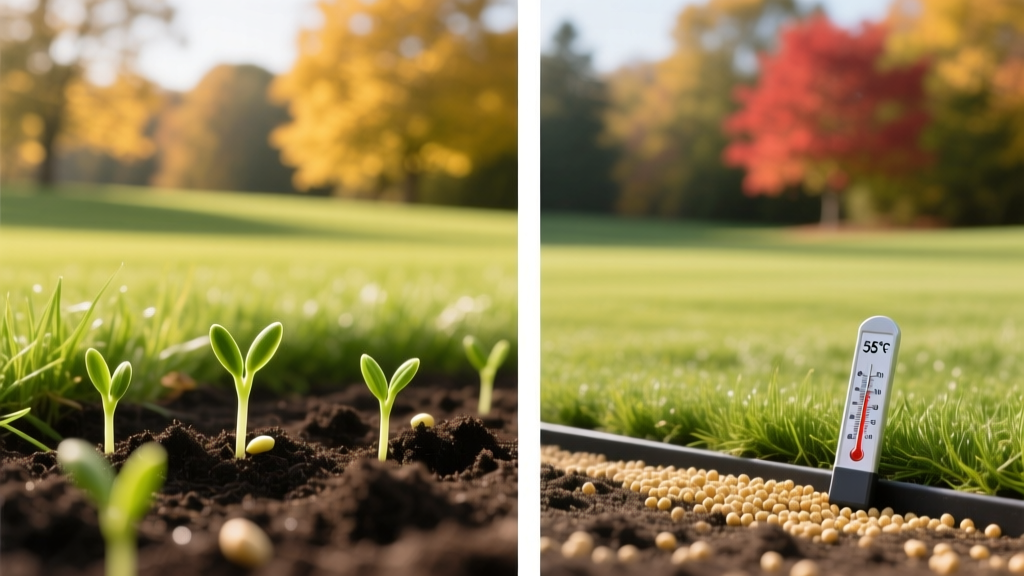
Dimension vs Prodiamine 2026: Fall Planning for Spring
The Fall Lawn Care Connection to Spring Weed Control
When most homeowners think of fall lawn care, they envision raking leaves, core aeration, and applying a winterizer fertilizer. However, as we navigate the 2026 lawn care season, professional turf managers know that autumn is actually the strategic planning phase for next year's weed control. The decisions you make during your fall lawn maintenance routine directly dictate your pre-emergent herbicide strategy for the following spring. Specifically, evaluating your turf's health, thickness, and weed pressure in the fall helps you decide between the two industry-standard pre-emergents: Dimension (dithiopyr) and Prodiamine (barricade). Understanding the nuances of Dimension vs Prodiamine spring timing is critical for anyone looking to achieve a pristine, crabgrass-free lawn in 2026.
While spring is when the application happens, fall is when the blueprint is drawn. Your autumn soil temperatures, the success of your fall overseeding, and the specific microclimates in your yard all influence whether you need the strict, early-spring barrier of Prodiamine or the flexible, early-post-emergent forgiveness of Dimension. Let us break down how your fall lawn care observations should guide your spring pre-emergent timing and product selection.
Understanding Prodiamine: The Early Spring Standard
Prodiamine is a dinitroaniline herbicide that works by inhibiting root development in germinating weed seeds. It is widely considered the gold standard for season-long crabgrass and broadleaf weed prevention. However, its primary limitation is its strict application window. Prodiamine is a true pre-emergent; it must be in the soil and activated by water before the weed seed germinates. Once the crabgrass seedling has sprouted and begun photosynthesis, Prodiamine is entirely ineffective.
From a fall planning perspective, if your lawn is thick, healthy, and requires no fall or early spring seeding, Prodiamine is an excellent, cost-effective choice. You can plan your early spring calendar to apply Prodiamine when soil temperatures consistently reach 50°F to 55°F at a 2-inch depth. In many transition zones and northern climates, shifting weather patterns in 2026 mean this window is arriving earlier than it did a decade ago. If you miss this narrow early-spring window, Prodiamine will fail to stop the first flush of crabgrass.
Understanding Dimension: The Flexible Post-Emergent Advantage
Dimension (active ingredient: dithiopyr) belongs to the pyridine carboxylic acid family and offers a unique dual-action benefit. Like Prodiamine, it creates a chemical barrier in the soil that prevents weed seeds from germinating. However, Dimension also possesses early post-emergent activity. It can control crabgrass that has already germinated and is in its early growth stages (up to the one- or two-tiller stage).
This flexibility is a game-changer for spring timing, especially if your fall lawn care routine revealed thin patches, disease damage, or areas that require late winter or early spring spot-seeding. Because Dimension can be applied slightly later in the spring—when soil temperatures reach 60°F to 65°F—it provides a wider application window. If you are busy with spring cleanup or if an unexpected late-spring cold snap delays your lawn care schedule, Dimension forgives minor timing errors that would result in a crabgrass outbreak if you were using Prodiamine.
Dimension vs. Prodiamine: Spring Timing Comparison
To help you plan your 2026 turf management calendar, here is a direct comparison of how these two herbicides perform based on spring timing and fall lawn conditions.
| Feature | Prodiamine (Barricade) | Dimension (Dithiopyr) |
|---|---|---|
| Active Ingredient | Prodiamine | Dithiopyr |
| Primary Mode of Action | Root Inhibitor (Pre-emergent only) | Root/Shoot Inhibitor (Pre & Early Post-emergent) |
| Ideal Spring Application Window | Early Spring (Soil temps 50°F - 55°F) | Mid-to-Late Spring (Soil temps up to 65°F) |
| Crabgrass Post-Emergent Control | None | Up to early tillering stage (1-2 leaves) |
| Fall Overseeding Compatibility | Requires 4-6 months before reseeding | Requires 3-4 months before reseeding |
| Estimated 2026 Cost per 1,000 sq ft | $8.00 - $11.00 | $13.00 - $16.00 |
How Fall Overseeding Impacts Your Spring Pre-Emergent Choice
The most critical fall lawn care practice that affects spring pre-emergent timing is overseeding. If you perform heavy core aeration and overseeding in the fall of 2025 or early winter of 2026, your new grass seedlings need time to establish. Applying a pre-emergent too early in the spring will inhibit the root growth of your new desirable turfgrass just as it is trying to mature.
According to turfgrass researchers at the NC State TurfFiles program, pre-emergent herbicides do not distinguish between crabgrass seeds and Kentucky bluegrass or tall fescue seeds. If you overseeded late in the fall, you must delay your spring pre-emergent application until the new grass has been mowed at least two to three times. This delay pushes you out of the safe window for Prodiamine. By the time your new grass is mature enough to handle a pre-emergent, soil temperatures may have already surpassed 55°F, meaning crabgrass has likely already germinated. In this scenario, Dimension is the superior choice. Its early post-emergent activity allows you to wait for your fall-seeded grass to establish, apply the Dimension later in the spring, and still successfully eradicate any crabgrass that managed to sprout during the waiting period.
Monitoring Soil Temperatures in 2026
Relying on the calendar or the blooming of forsythia bushes is an outdated method for timing pre-emergents. In 2026, with increasingly erratic spring weather patterns, tracking actual soil temperatures is mandatory. You should invest in a high-quality digital soil thermometer and begin taking readings at a 2-inch depth in late winter.
Experts at the University of Maryland Extension emphasize that crabgrass germination is triggered by soil temperatures reaching 55°F for three to five consecutive days. If your fall lawn care assessment showed a dense, mature turf with no need for spring seeding, you should plan to apply Prodiamine the moment this temperature threshold is met. Conversely, if you are utilizing Dimension, you can afford to wait until the soil warms closer to 60°F or 65°F, giving you an extra three to four weeks of flexibility. This is particularly useful in shaded areas of your yard where soil temperatures lag behind the sunny, south-facing slopes.
Split Applications and Fall Poa Annua Control
Advanced lawn care enthusiasts often use a split-application strategy. Prodiamine is highly effective when applied in the early fall to control Poa annua (annual bluegrass), a notorious winter weed. If you apply a half-rate of Prodiamine in September for Poa annua, you must carefully calculate your spring timing. The residual effect of the fall application will carry over into the spring, meaning your spring application window for crabgrass control will be slightly extended. However, tracking the exact degradation rate of the chemical in your specific soil type is complex. Dimension, on the other hand, is less commonly used for fall Poa annua control but excels in a single, robust spring application that covers both pre-emergent and early post-emergent crabgrass, simplifying the chemical calendar for the average homeowner.
Cost and Application Rates for the 2026 Season
Budgeting is a key component of annual lawn care planning. As of 2026, Prodiamine remains the more economical option, especially when purchased as a water-dispersible granule (WDG). A standard full-season rate of Prodiamine 65 WDG costs approximately $8.00 to $11.00 per 1,000 square feet. Dimension 2EW, being a liquid emulsifiable concentrate with dual-action capabilities, commands a premium, typically ranging from $13.00 to $16.00 per 1,000 square feet.
While Dimension is more expensive upfront, its ability to rescue a lawn from early crabgrass germination can save you the cost and hassle of applying specialized post-emergent chemicals like Quinclorac later in the summer. Furthermore, Penn State Extension notes in their crabgrass control guidelines that maintaining a thick, healthy turf through proper fall fertilization and mowing height reduction naturally suppresses weed germination, potentially allowing you to use lower, more cost-effective rates of either pre-emergent in the spring.
Finalizing Your Fall Strategy for Spring Success
The debate of Dimension vs Prodiamine spring timing is not about which chemical is universally better; it is about which chemical fits the specific condition of your lawn following your fall maintenance. Use your fall lawn care season to assess your turf. If your lawn is a thick, mature carpet of grass that requires no seeding, lock in Prodiamine and prepare for an early spring application as soon as soil temps hit 55°F. If your lawn suffered summer stress, requires fall or early spring overseeding, or if you simply want a wider, more forgiving application window, invest in Dimension. By making these strategic decisions in the autumn, you set the stage for a flawless, weed-free lawn in 2026.