Lawn Care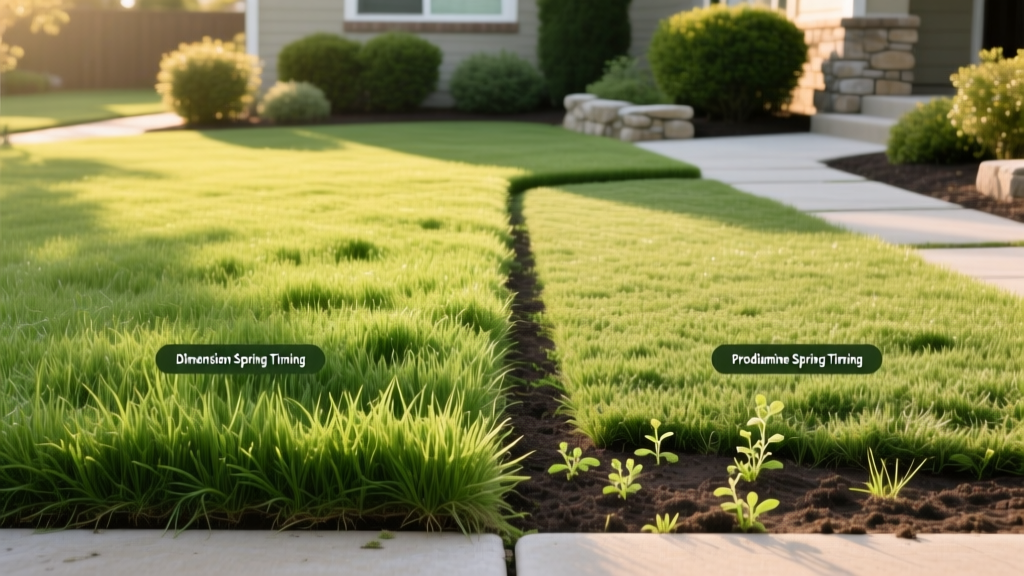
Dimension vs Prodiamine: 2026 Spring Timing for Fire Safety
Mike RodriguezPublished
The Hidden Wildfire Threat: Spring Weeds as Summer Flash Fuels
When homeowners think of fire-resistant landscaping, they often picture hardscaping, gravel paths, and carefully spaced drought-tolerant shrubs. However, one of the most critical—and frequently overlooked—aspects of creating a defensible space around your home is managing ground-level fine fuels. As we navigate the 2026 wildfire season, erratic spring weather patterns are causing early germination of highly flammable annual grasses like cheatgrass (downy brome), wild oats, and foxtail.
These invasive weeds sprout in the spring, rapidly grow, and then cure out into dry, highly combustible tinder by early summer. According to the Ready for Wildfire defensible space guidelines, managing vegetation in the critical 5-to-30-foot zone around your home is essential to stop a surface fire from climbing into tree canopies or reaching your structure. This is where strategic lawn care and turf management intersect with wildfire mitigation. By deploying pre-emergent herbicides in the early spring, you can stop these flash fuels from ever taking root, drastically reducing the fire hazard on your property.
Pre-Emergent Herbicides: Your First Line of Defense
Pre-emergent herbicides work by creating a chemical barrier in the top inch or two of the soil. When weed seeds germinate and their shoots pass through this barrier, cell division is interrupted, and the plant dies before it ever reaches the surface. For fire-resistant landscaping, this is a game-changer. Instead of spending your summer mowing dry, dangerous weeds or risking the use of string trimmers that can throw sparks against rocks, a well-timed pre-emergent application keeps the soil bare or allows desired, irrigated fire-resistant groundcovers to thrive without competition.
The two undisputed heavyweights in the professional and high-end consumer turf market are Dimension (dithiopyr) and Prodiamine. Both are exceptional tools for maintaining a lean, clean, and green defensible space, but their chemical behaviors, residual lengths, and timing requirements differ significantly. Choosing the right one for your 2026 spring application depends heavily on your local climate, soil temperatures, and specific fire-hazard weed pressures.
Dimension (Dithiopyr): The Forgiving Choice for Erratic Springs
Dimension is unique among pre-emergent herbicides because it possesses early post-emergent activity. While most pre-emergents must be applied before the weed seed germinates, Dimension can control certain annual grasses, like crabgrass and foxtail, even after they have sprouted, provided they are in the early growth stages (up to the one-tiller stage).
Why does this matter for fire-resistant landscaping in 2026? Climate shifts have led to highly unpredictable spring temperature swings. A sudden warm spell in late February or early March can trigger a massive flush of cheatgrass germination, followed by a return to freezing temperatures. If you applied a strict pre-emergent too late, you missed the window, and those fire-hazard weeds are now growing. Dimension provides a crucial buffer. If your soil temperatures hit the germination threshold earlier than expected, Dimension will still eliminate those nascent flash fuels, ensuring your defensible space remains secure.
Prodiamine: The Long-Lasting Chemical Barrier
Prodiamine, on the other hand, is a strict pre-emergent. It must be applied and watered into the soil before the weed seeds germinate. Once it binds to the soil organic matter, it forms a highly stable, long-lasting barrier that can remain active for four to six months, depending on the application rate and soil composition.
For large properties or rural estates where the defensible space perimeter extends well beyond 100 feet, Prodiamine is often the more cost-effective choice. Its extended residual means you can apply it once in the early spring and maintain a weed-free, fire-resistant buffer zone deep into the late summer, exactly when wildfire risks peak. However, its strict timing requirements mean you must be vigilant about monitoring soil temperatures. If you apply Prodiamine after the annual fire-weeds have already germinated, it will have zero effect on the existing threat.
2026 Spring Timing: Navigating Soil Temperatures
The golden rule for spring pre-emergent timing is to monitor soil temperatures at a 2-inch depth. The target window for both Dimension and Prodiamine is when soil temperatures reach 50°F to 55°F for three to five consecutive days. In 2026, with many regions experiencing earlier soil warming, relying on the calendar is a mistake. You must use a soil thermometer or rely on local university extension turfgrass tracking networks.
Cheatgrass, a primary wildfire culprit in the western and central United States, is a winter annual. It actually germinates in the fall, overwinters, and then explodes in growth during the spring. However, spring-germinating annuals like foxtail and wild oats also contribute massively to summer fine fuels. A split-application strategy is often recommended by turf professionals to maintain an unbroken barrier against both fall and spring germinating fire-weeds.
Head-to-Head Comparison: Dimension vs. Prodiamine for Fire Safety
| Feature | Dimension (Dithiopyr) | Prodiamine |
|---|---|---|
| Primary Use | Pre-emergent & early post-emergent control | Strict pre-emergent control |
| Target Fire-Weeds | Crabgrass, foxtail, annual bluegrass, wild oats | Cheatgrass, crabgrass, foxtail, broadleaf weeds (with specific mixes) |
| Timing Forgiveness | High (controls weeds up to 1-tiller stage) | Low (must be applied before germination) |
| Residual Length | 2 to 3 months | 4 to 6 months |
| Best Fire-Zone Application | Erratic springs, late applications, small urban lots | Large rural perimeters, predictable early springs, long-term barriers |
| Soil Temp Trigger (2") | 50°F - 55°F (can apply slightly after) | 50°F - 55°F (strictly before germination) |
Integrating Pre-Emergents into Fire-Resistant Zones
Applying the herbicide is only half the battle. To truly align your lawn care routine with NFPA Firewise USA principles, you must consider how your application and subsequent lawn maintenance affect the chemical barrier and the surrounding environment.
1. Watering In Without Creating Moisture Traps
Both Dimension and Prodiamine require about 0.5 inches of irrigation or rainfall to activate the chemical barrier in the soil. In a fire-resistant landscape, you want to avoid creating dense, moist thatch layers that can harbor pests or eventually dry out into fuel. Use low-volume, targeted irrigation to water in the pre-emergent. Avoid overhead watering that splashes soil and weed seeds onto hardscaped defensible space zones.
2. Avoid Soil Disturbance
The pre-emergent barrier exists in the top inch of the soil profile. If you aerate, dethatch, or aggressively rake your lawn after applying Prodiamine or Dimension, you will break the barrier and allow wind-blown weed seeds to penetrate the soil. In a fire-resistant landscape, minimizing soil disturbance is also key to preventing the germination of dormant weed seed banks. If you must aerate your lawn to improve water infiltration and drought tolerance, do it before your spring pre-emergent application.
3. Managing the Non-Irrigated Perimeter
Many homeowners maintain an irrigated, green lawn immediately adjacent to the house (Zone 1), but transition to a non-irrigated, naturalized area further out (Zone 2 and Zone 3). These outer zones are prime real estate for invasive cheatgrass. According to the University of California Integrated Pest Management program, downy brome (cheatgrass) is a severe fire hazard that cures early and ignites easily. Applying a granular Prodiamine treatment to these non-irrigated perimeters in the late fall or very early spring (relying on natural snowmelt or spring rains for activation) can keep these outer zones free of flash fuels without requiring summer irrigation.
Summary and 2026 Action Plan
Fire-resistant landscaping is a holistic approach to property management that extends far beyond plant selection. By viewing spring weeds not just as an aesthetic nuisance, but as a severe summer wildfire hazard, you can take proactive steps to protect your home.
For the 2026 season, monitor your local soil temperatures closely. If your region is prone to sudden, unpredictable spring warm-ups that trigger early weed germination, Dimension is your safest bet due to its early post-emergent capabilities. If you have a large property, a predictable spring, and need a long-lasting barrier to keep the outer defensible space zones clear of combustible grasses, Prodiamine is the superior, cost-effective choice. Apply early, water in thoroughly, and avoid disturbing the soil to ensure your landscape remains lean, clean, green, and resilient against the threat of wildfire.