Lawn Care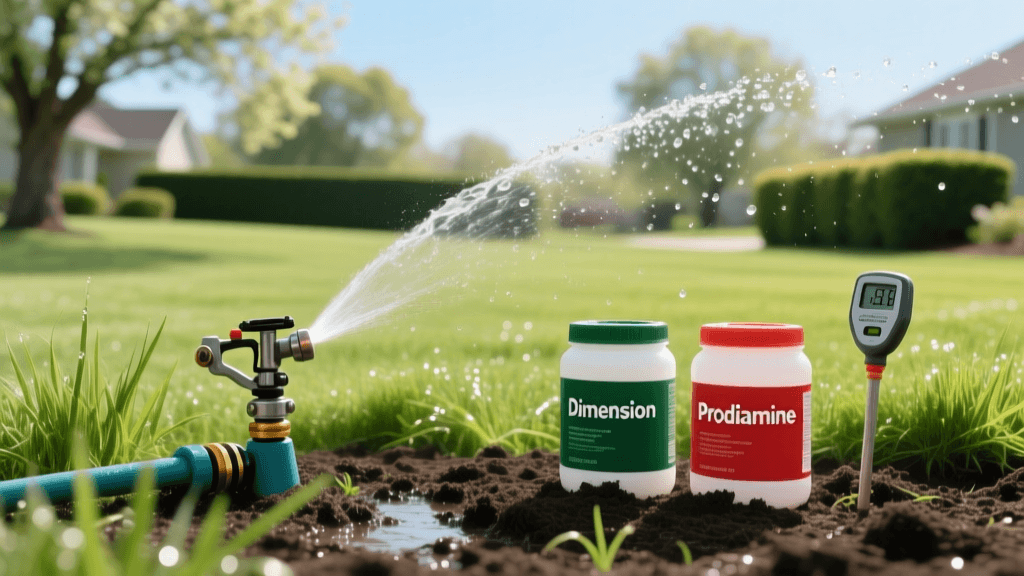
Dimension vs Prodiamine: 2026 Spring Irrigation & Timing Guide
Introduction: The Critical Role of Irrigation in Pre-Emergent Success
As we enter the 2026 lawn care season, homeowners and turf professionals alike are preparing for the annual battle against crabgrass and invasive summer weeds. While selecting the right pre-emergent herbicide is important, the true secret to a pristine lawn lies beneath the surface—specifically, in how you utilize your sprinkler and irrigation systems to activate the chemical barrier. Applying a pre-emergent without a precise irrigation strategy is essentially wasting your time and money. The chemical must be watered into the top half-inch of soil to form a continuous, impenetrable shield that stops weed seeds from germinating.
In this comprehensive guide, we will break down the two most popular pre-emergent herbicides on the market: Dimension (dithiopyr) and Prodiamine. We will explore their distinct spring timing requirements, how they interact with soil moisture, and exactly how to program your 2026 smart irrigation controllers to ensure perfect activation and longevity of the weed barrier.
Dimension vs. Prodiamine: Core Differences for 2026
Before we dive into sprinkler runtimes and precipitation rates, it is vital to understand the chemical nature of the two leading pre-emergents. Both are highly effective when used correctly, but they behave differently once they hit the soil and interact with water.
Prodiamine: The Long-Lasting Shield
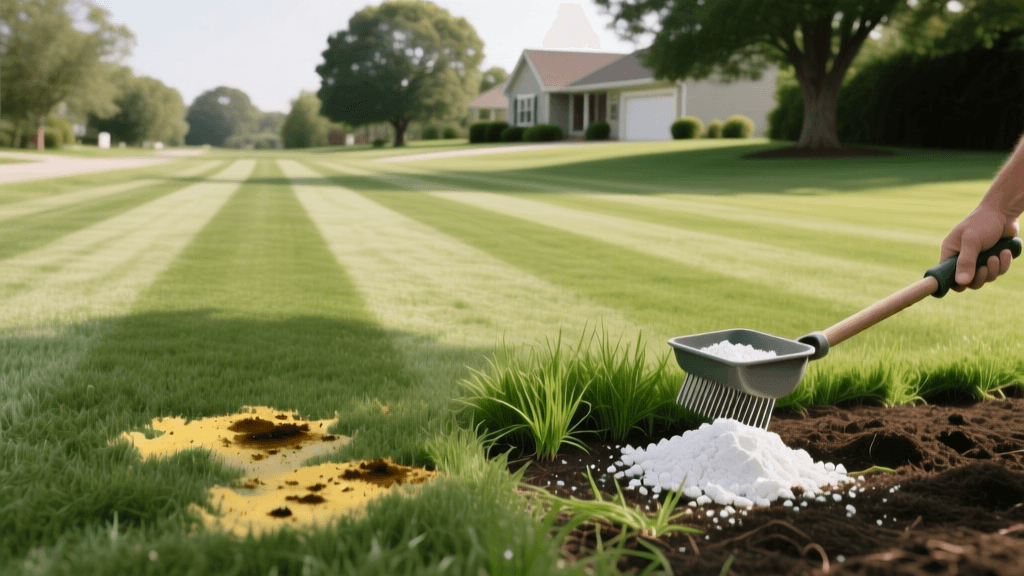
Prodiamine (often recognized by the brand name Barricade) is a strictly pre-emergent herbicide. It works by inhibiting root development in germinating weed seeds. Once watered in, Prodiamine binds tightly to soil organic matter and clay particles, making it highly resistant to leaching. This tight binding is why it offers the longest residual control on the market, often lasting 4 to 6 months depending on the application rate and your local climate. However, because it binds so tightly, it requires precise irrigation to move it into the thatch and upper soil layer before it degrades in the sun.
Dimension: The Flexible Post-Emergent Option
Dimension (dithiopyr) offers a unique advantage: it provides both pre-emergent and early post-emergent control. If you miss your ideal spring application window and crabgrass has already begun to sprout, Dimension can kill young crabgrass plants up to the one-tiller stage. Dimension is slightly more water-soluble than Prodiamine, meaning it requires careful irrigation management to prevent it from washing away or leaching too deeply into the soil profile, especially in sandy lawns.
Spring Timing: When to Apply Based on Soil Temperature
The old adage of applying pre-emergent when the forsythia bushes bloom is an outdated myth that has no place in modern 2026 turf science. Weed germination is driven by soil temperature, not air temperature or visual plant cues. According to turfgrass experts at Penn State Extension, crabgrass begins to germinate when soil temperatures at a 1-inch depth reach 50°F to 55°F for three to five consecutive days.
To track this, utilize a digital soil temperature probe or connect a smart soil sensor to your irrigation controller. Your goal is to apply the granular or liquid pre-emergent just before the soil consistently hits this 55°F threshold. Applying too early risks the chemical barrier breaking down before the main weed flush; applying too late allows early germinators to break through.
The Sprinkler Strategy: How to Water-In Your Pre-Emergent
Once the pre-emergent is applied, your irrigation system becomes the most important tool in your shed. Both Dimension and Prodiamine require between 0.25 and 0.5 inches of water to activate. This water washes the active ingredient off the grass blades and into the soil where it forms the barrier.
Calculating Your Sprinkler Output
Many homeowners make the mistake of guessing their sprinkler runtime. To apply exactly 0.5 inches of water, you must know your system's precipitation rate. Spray heads typically output 1.5 to 2.0 inches per hour, while rotary heads output 0.4 to 0.8 inches per hour. Follow these steps to calibrate your zones:
- Place 4 to 6 flat-bottomed containers (like tuna cans) evenly across a single irrigation zone.
- Run that specific sprinkler zone for exactly 15 minutes.
- Measure the depth of the water in each container using a ruler and calculate the average.
- Multiply the average by 4 to determine your inches-per-hour (IPH) rate.
- Divide 0.5 inches by your IPH to find the exact runtime needed to activate your pre-emergent.
Avoiding Runoff and Dry Spots
If your soil is heavily compacted or has a steep slope, running your sprinklers for 30 minutes straight to achieve 0.5 inches of water might cause runoff. If the water runs off into the street, your pre-emergent goes with it, leaving your lawn unprotected and polluting local waterways. Instead, use the 'cycle and soak' method on your irrigation controller. Apply 0.25 inches of water, wait 45 minutes for the soil to absorb it, and then apply the remaining 0.25 inches. This ensures the chemical is carried into the soil matrix without wasting a drop.
Smart Irrigation Integration for 2026
In 2026, smart irrigation controllers like the Rachio 4 and Hunter Hydrawise are standard for serious lawn care enthusiasts. These systems can be programmed to automate your pre-emergent activation. The EPA WaterSense program highlights that weather-based smart controllers can adjust watering schedules based on local evapotranspiration (ET) data, ensuring your lawn gets the exact moisture it needs without over-saturating the soil.
When you apply your pre-emergent, manually override your smart controller to run the precise activation cycle you calculated. Afterward, return the system to its smart schedule. However, be cautious with soil moisture sensors in the days immediately following application. If a heavy spring rainstorm occurs right after you water in your pre-emergent, ensure your smart controller's rain delay or soil moisture skip feature is active. Overwatering a newly applied pre-emergent—especially the more water-soluble Dimension—can push the chemical barrier too deep into the soil, rendering it useless against surface-germinating crabgrass.
Comparison Table: Dimension vs. Prodiamine
Use the following chart to determine which product best suits your lawn's specific irrigation and timing needs this spring.
| Feature | Prodiamine (Barricade) | Dimension (Dithiopyr) |
|---|---|---|
| Active Ingredient | Prodiamine | Dithiopyr |
| Primary Action | Strictly Pre-Emergent | Pre-Emergent & Early Post-Emergent |
| Ideal Soil Temp Timing | 50°F - 52°F (Slightly Earlier) | 53°F - 55°F (Slightly Later) |
| Water-In Requirement | 0.25 - 0.5 inches | 0.5 inches |
| Soil Binding Strength | Very High (Resists Leaching) | Moderate (Monitor Sandy Soils) |
| Residual Longevity | 4 - 6 Months | 3 - 4 Months |
| Best Irrigation Strategy | Standard activation, deep watering later | Cycle & soak to prevent leaching |
Maintaining the Barrier: Spring and Early Summer Watering
Activating the pre-emergent is only half the battle; maintaining it through the spring and early summer requires a shift in your irrigation philosophy. According to turf researchers at the University of Minnesota Extension, frequent, shallow watering encourages shallow root growth and can slowly degrade the pre-emergent barrier through constant, mild leaching.
Once your pre-emergent is watered in, transition your sprinkler system to a deep and infrequent watering schedule. Aim for 1 to 1.5 inches of water per week, split into two or three heavy watering days rather than daily 10-minute spritzes. This encourages your desirable turfgrass (whether Kentucky Bluegrass, Fescue, or Bermuda) to send roots deep into the soil, while the pre-emergent barrier remains undisturbed in the top inch where weed seeds reside.
Aeration and Irrigation Conflicts
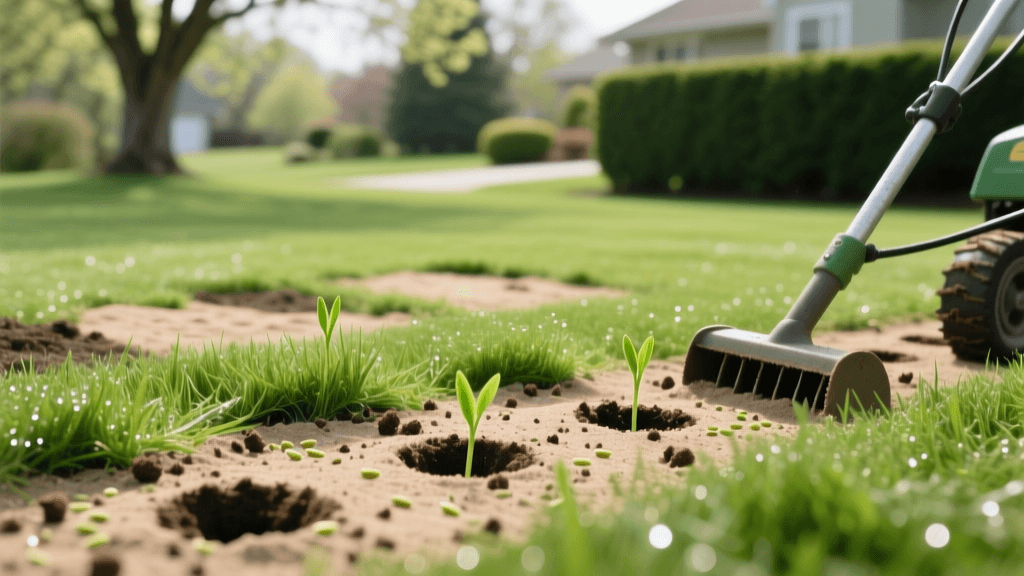
A critical note for 2026 spring routines: do not core aerate your lawn after applying a pre-emergent. Core aeration physically pulls plugs of soil from the ground, breaking the continuous chemical barrier you just spent time and money to establish via your irrigation system. If your soil is severely compacted and requires aeration, do it before your pre-emergent application, or wait until the fall season.
Conclusion
Winning the war against crabgrass in 2026 requires more than just spreading granules on the lawn. It requires a strategic alliance between chemistry and irrigation. By understanding the distinct binding properties of Prodiamine and the flexible post-emergent capabilities of Dimension, you can time your applications perfectly. Pair this knowledge with calibrated sprinkler runtimes, cycle-and-soak methods, and smart controller integrations, and you will establish an impenetrable weed barrier that keeps your lawn thick, green, and pristine all summer long.