Lawn Care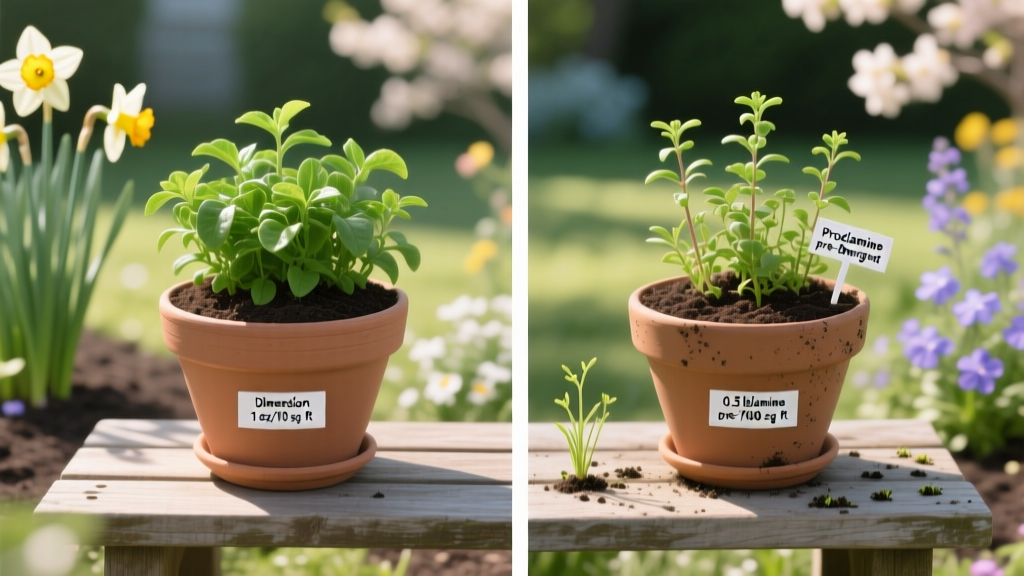
Dimension vs Prodiamine 2026: Spring Timing for Container Gardens
Emily WatsonPublished
Mastering Spring Weed Control in Container Gardens for 2026
As we navigate the 2026 growing season, container and pot gardening continues to dominate both urban balconies and sprawling suburban patios. While much of the lawn care industry focuses on vast turfgrass expanses, the unique micro-environment of potted plants presents distinct challenges for weed management. Weeds in containers are not merely an aesthetic nuisance; they aggressively compete with your prized ornamentals for limited water, expensive slow-release fertilizers, and vital root space. When a single crabgrass or spurge plant establishes itself in a 15-gallon patio planter, it can severely stunt the growth of your focal shrub or summer annuals.
To combat this, professional nursery growers and advanced home gardeners rely on pre-emergent herbicides. However, the two industry titans—Dimension (dithiopyr) and Prodiamine—behave very differently in the confined, soilless environments of container gardening. Understanding the spring timing, chemical mechanics, and plant sensitivities of Dimension versus Prodiamine is critical for a flawless 2026 container display.
The Unique Challenge of Soilless Potting Mixes
Before comparing active ingredients, we must address the medium. Unlike field soil, container plants are typically grown in soilless potting mixes composed of peat moss, coconut coir, composted pine bark, and perlite. These organic-heavy mixes have a high cation exchange capacity (CEC) and massive surface area, which can bind herbicide molecules tightly. According to research highlighted by Penn State Extension, this binding effect sometimes requires slightly adjusted application rates or more thorough watering-in techniques to ensure the chemical barrier reaches the root zone without being entirely locked up by the bark and peat.
Furthermore, containers have a high leaching fraction. Every time you water a pot, a percentage of that water exits the drainage holes, potentially taking your pre-emergent barrier with it. This makes the choice between Dimension and Prodiamine a matter of both timing and longevity.
Dimension (Dithiopyr): The Forgiving Pre-Emergent
Dimension (active ingredient: dithiopyr) is highly favored in the container nursery trade for its unique "early post-emergent" activity. While most pre-emergents only stop weed seeds from germinating, Dimension can actually kill young crabgrass seedlings up to the 1-leaf stage and suppress certain broadleaf weeds like spurge after they have sprouted.
For container gardeners, this is a massive advantage. Spring weather in 2026 has been notoriously erratic, with sudden warm spells triggering early weed germination. If you miss your exact pre-emergent window by a week, Dimension acts as a safety net, eliminating the early flush of weeds that have already breached the potting soil surface. Additionally, Dimension is known for its relatively low risk of root pruning in sensitive ornamental plants, making it a safer bet for delicate potted annuals and herbaceous perennials.
Prodiamine: The Long-Lasting Barrier
Prodiamine (often sold under the brand name Barricade or as generic 65 WDG formulations) is a strict pre-emergent. It works by inhibiting root cell division in germinating weed seeds, effectively stopping them before they emerge. Prodiamine is famous for its incredibly long residual activity, often providing 5 to 6 months of weed control in a single application.
However, Prodiamine carries a well-documented risk of root pruning in certain container-grown ornamentals if applied at rates that are too high, or if the potting mix lacks sufficient organic buffering. Because container roots are confined and constantly circling the pot, any chemical that inhibits root tip development can severely impact the overall vigor of the plant. Therefore, Prodiamine is best reserved for established, woody ornamentals in large patio planters, rather than tender annual flowers.
Spring Timing: Soil Temperatures and Phenological Indicators
The most common mistake home gardeners make is applying pre-emergents based on the calendar or air temperature. In 2026, with shifting climate zones and unpredictable spring warm-ups, relying on a calendar date is a recipe for failure. The chemical barrier must be established before weed seeds germinate, which is triggered by soil temperature, not air temperature.
The 50°F to 55°F Rule
For both Dimension and Prodiamine, the target application window is when the soil temperature at a 2-inch depth reaches 50°F to 55°F for three consecutive days. In containers, soil temperature fluctuates much faster than in the ground. A black plastic nursery pot sitting in full afternoon sun will heat up significantly faster than the surrounding earth. Invest in a digital soil probe thermometer and monitor your pots directly.
Phenological Indicators
If you do not have a soil thermometer, nature provides visual cues. The traditional indicator for spring pre-emergent application is the blooming of Forsythia bushes or the emergence of crabgrass in sunny, stressed areas of nearby lawns. The University of Minnesota Extension frequently references these phenological signs as reliable biological markers for soil temperature thresholds, which apply equally to the microclimates of your patio containers.
Comparison Chart: Dimension vs Prodiamine for Containers
Below is a detailed breakdown of how these two herbicides compare specifically for the 2026 container gardening season.
| Feature | Dimension (Dithiopyr) | Prodiamine |
|---|---|---|
| Primary Target Weeds | Crabgrass, Poa annua, spurge | Broad spectrum grassy & broadleaf weeds |
| Post-Emergent Activity | Yes (up to 1-leaf crabgrass) | None (strict pre-emergent) |
| Root Pruning Risk | Low | Moderate to High (in sensitive ornamentals) |
| Residual Control | 3 to 4 months | 5 to 6 months |
| Estimated Cost per 50 Pots | ~$18.50 (2026 pricing) | ~$14.00 (2026 generic pricing) |
| Best Container Use Case | Mixed annuals, perennials, missed timing | Large woody shrubs, established trees |
Step-by-Step Application Guide for Pots and Planters
Applying pre-emergents to containers requires precision. Over-application in a confined space can lead to phytotoxicity, while under-application leaves gaps in the chemical barrier where weeds can easily penetrate.
- Choose Your Formulation: For containers, liquid formulations (like Dimension 2EW or Prodiamine 65 WDG mixed in a pump sprayer) are generally preferred over granular. Granular products can bounce off the foliage of dense potted plants and fail to reach the soil surface, whereas a liquid spray can be directed precisely at the soil line.
- Calibrate Your Sprayer: Follow the 2026 label instructions for ornamental nursery drenches or directed sprays. Typically, this involves mixing a specific ounce ratio per gallon of water to treat a calculated square footage of pot surface area.
- Clear the Surface: Remove any existing, mature weeds by hand before application. Pre-emergents will not kill established weeds with deep taproots.
- Apply the Barrier: Spray the surface of the potting mix evenly, ensuring complete coverage from the center stem to the inner edge of the pot. Avoid spraying directly onto the foliage of sensitive plants to prevent contact burn.
- Water It In: This is the most critical step. Pre-emergents must be watered into the top 1 to 2 inches of the soilless mix to activate the chemical barrier. Apply approximately 0.25 inches of water immediately after spraying. In container terms, this means watering until you see a slight drip from the bottom drainage holes, but not so much that you flush the chemical entirely out of the pot.
Plant Sensitivities and Contraindications
Not all plants tolerate pre-emergent herbicides, and the confined root zone of a container amplifies these risks. The Environmental Protection Agency (EPA) mandates strict adherence to label instructions, which include extensive lists of sensitive species. Always read the 2026 product label before treating your patio planters.
Plants to Avoid with Prodiamine
Because Prodiamine inhibits root cell division, it can severely stunt or kill plants that rely on rapid, delicate root expansion. Avoid using Prodiamine in containers holding:
- Coleus and Impatiens
- Marigolds and Zinnias
- Unrooted or freshly transplanted cuttings
- Shallow-rooted succulents and sedums
When to Choose Dimension
Dimension is generally much safer for the sensitive annuals and herbaceous perennials listed above. If you are planting a mixed container garden featuring colorful summer annuals, Dimension is the undisputed choice for pre-emergent weed control. It provides the necessary crabgrass suppression without causing the catastrophic root pruning associated with higher rates of Prodiamine.
Environmental Safety and Leaching Concerns
Container gardening inherently involves water runoff. When you water a potted plant, the effluent exits the bottom of the pot and enters your patio, deck, or the surrounding landscape beds. In 2026, environmental stewardship remains a top priority for home gardeners. To prevent herbicides from leaching into storm drains or sensitive aquatic environments, place saucers under your containers for the first 48 hours after a pre-emergent application. This allows the potting mix to fully absorb the chemical and the water, minimizing runoff while maximizing the efficacy of your weed control barrier.
Conclusion
Winning the war against container weeds in 2026 requires more than just grabbing a bottle of herbicide and hoping for the best. By understanding the distinct differences between Dimension and Prodiamine, monitoring your soil temperatures, and respecting the unique dynamics of soilless potting mixes, you can maintain pristine, weed-free patio planters all season long. Choose Dimension for your sensitive annuals and late-spring safety nets, and reserve Prodiamine for your large, established woody ornamentals where long-term residual control is paramount. Happy gardening!