Pest Control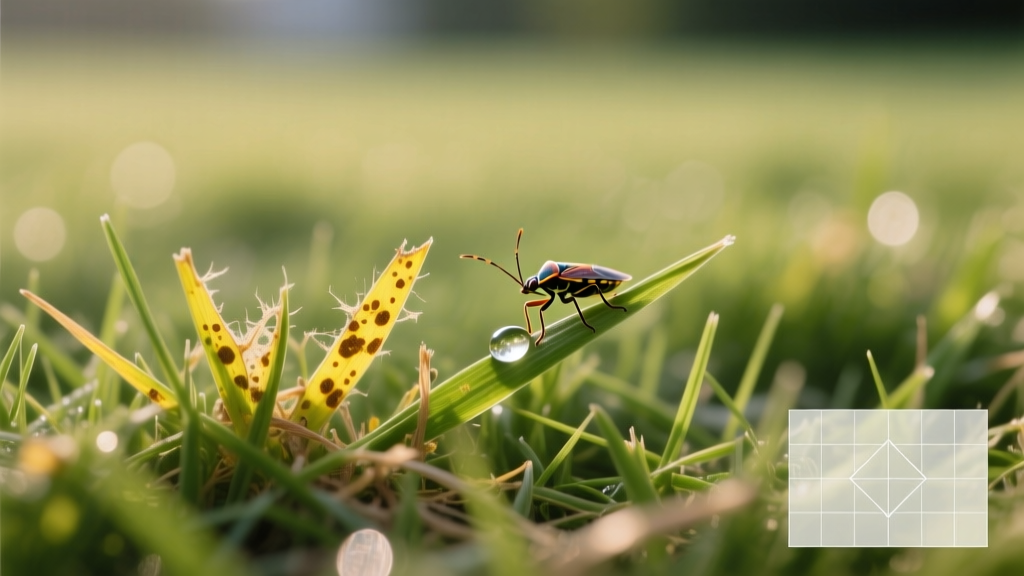
2026 Guide: Photographing Chinch Bugs & Bifen IT Treatment
Sarah ChenPublished
The Intersection of Turf Science and Visual Journaling
In 2026, the most successful lawn care enthusiasts aren't just applying chemicals blindly; they are documenting their turf's health through meticulous garden photography and visual journaling. When it comes to destructive turf pests, the southern chinch bug (Blissus insularis) is a prime candidate for this analytical approach. Because chinch bug damage closely mimics drought stress or fungal issues, visual documentation is the most reliable way to track the progression of the infestation and the efficacy of your treatment plan.
This guide merges the art of macro garden photography with the science of integrated pest management. We will explore how to visually identify chinch bug damage, capture the pests on camera, and rigorously document the application and results of Bifen IT (Bifenthrin 7.9%), the industry-standard liquid insecticide for turf pests.
Identifying Chinch Bug Damage Through the Lens
Before you can treat the problem, you must prove its existence. Chinch bugs feed by piercing grass blades and injecting a toxin that blocks the plant's vascular system. Visually, this creates a very specific pattern that is perfect for photographic documentation.
Capturing the 'Halo' Effect
Unlike drought stress, which affects the entire lawn uniformly, chinch bug damage typically begins in localized, irregular patches—often near sidewalks, driveways, or other heat-radiating surfaces. When photographing your lawn, focus on the transition zone, or the 'halo,' between the dead, straw-brown grass and the healthy green turf. Use a wide-angle lens on your smartphone or DSLR to capture the scale of the patch relative to hardscaping features. Documenting the expansion of these halos over a 7-day period provides undeniable proof of an active infestation rather than static environmental stress.
The Flotation Test: A Photographer’s Dream
To confirm the presence of the pests, turf experts recommend the 'flotation test.' Remove both ends of a metal coffee can, push it three inches into the soil at the edge of a damaged patch, and fill it with water. According to University of Florida IFAS extension guidelines, chinch bugs will float to the surface within five minutes. This is a phenomenal opportunity for macro photography. Position your camera directly above the water line. The contrast of the dark water against the floating insects makes for striking, high-contrast identification photos that you can log in your digital garden journal.
Macro Photography: Capturing the Culprit
To truly document your pest management journey, you need clear images of the insects themselves. The 2026 lineup of flagship smartphones features incredible 10x optical macro capabilities, but dedicated clip-on macro lenses or DSLR macro lenses (like a 90mm or 105mm f/2.8) still offer superior depth of field.
What to Focus On
- Adults: Look for the distinctive white, hourglass-shaped marking on their black backs. They are roughly 1/5 inch long. Focus your lens precisely on the dorsal marking to ensure your identification photos are textbook-ready.
- Nymphs: These are smaller, wingless, and range from bright orange to red with a white band across their abdomen. They are highly photogenic against the green thatch layer.
Lighting Techniques for Turf Macro
Midday sun creates harsh shadows in the thatch layer, hiding the insects. For the best documentation photos, shoot during the 'golden hour' just after sunrise, or use a portable LED macro ring light. A small, collapsible diffuser placed between the sun and the turf will soften the light, revealing the intricate textures of the grass blades and the glossy exoskeletons of the chinch bugs without blowing out the highlights.
Bifen IT (Bifenthrin 7.9%): The 2026 Treatment Standard
Once your photographic evidence confirms a chinch bug infestation (typically defined as 20 or more bugs per square foot, as noted by Texas A&M AgriLife Extension), it is time to deploy Bifen IT. Bifen IT is a liquid concentrate containing 7.9% bifenthrin, a synthetic pyrethroid that provides rapid knockdown and long-lasting residual control.
2026 Pricing and Mixing Ratios
As of 2026, a one-pint bottle of Bifen IT retails for approximately $28 to $32, which is enough to treat roughly 8,000 square feet of turf for chinch bugs. The standard mixing ratio for severe chinch bug infestations is 1 fluid ounce of Bifen IT per gallon of water per 1,000 square feet.
Documenting the Application Day
A true visual journaler doesn't just photograph the bugs; they photograph the process. Log the following data points in your journal alongside photos of your sprayer setup:
- Weather Conditions: Capture a screenshot of your local weather app showing wind speed (must be under 10 mph) and temperature (ideally below 85°F to prevent rapid evaporation).
- Safety Gear: Take a mirror selfie or set a timer to document your PPE—chemical-resistant gloves, long sleeves, and eye protection.
- Agitation: Photograph the milky-white emulsion in your tank sprayer to prove proper mixing before application.
According to NC State Extension turfgrass pest management protocols, bifenthrin must be watered in lightly after application to move the chemical past the thatch layer and into the soil where the nymphs reside. Photograph your sprinkler system or hose setup to document this crucial activation step.
The 28-Day Visual Recovery Tracker
The most satisfying part of garden documentation is watching the recovery. Bifen IT halts the feeding immediately, but the grass takes time to push new growth. Use the following structured timeline to guide your photographic journaling over the four weeks following your Bifen IT application.
| Timeline | Photo Focus | Action / Metric | Journal Notes to Record |
|---|---|---|---|
| Day 1 (Spray Day) | Wide shot of damaged patches; Sprayer setup. | Apply Bifen IT at 1 oz/gal; water in with 1/4 inch of irrigation. | Time of day, wind speed, exact gallons applied. |
| Day 3 | Macro shots of the thatch layer. | Perform a secondary flotation test. | Count of dead vs. live bugs. Note the 'knockdown' effect. |
| Day 7 | The 'Halo' transition zones. | Check for expansion of brown patches. | Patches should stop expanding. Note any new green shoots at the base. |
| Day 14 | Top-down grid shots of the lawn. | Apply light nitrogen fertilizer (if permitted by local 2026 ordinances). | Measure the diameter of the brown patches; they should be shrinking. |
| Day 28 | Before-and-After comparison composites. | Final assessment of turf canopy density. | Calculate percentage of recovery. Plan preventative spring 2027 strategy. |
Best Practices for 2026 Lawn Documentation
To make your visual journal truly useful for future seasons, consistency is key. Always take your 'wide' lawn photos from the exact same vantage points. Many garden photographers in 2026 use simple wooden stakes painted in bright, contrasting colors (like neon orange) driven into the flower beds as permanent focal markers. This ensures that your Day 1 and Day 28 photos align perfectly when you create time-lapse videos or side-by-side comparison grids for your lawn care blog or social media.
Furthermore, keep your metadata organized. Use your smartphone's native photo tagging features to label images with keywords like 'Chinch Bug', 'Bifen IT', 'Macro', and 'Flotation Test'. This creates a searchable, visual database of your lawn's pest history, allowing you to predict future outbreaks based on historical visual data.
Conclusion
Treating a lawn for chinch bugs is no longer just about mixing chemicals and spraying blindly. By adopting the mindset of a garden photographer and visual documentarian, you elevate your lawn care from a chore to a science. Capturing the intricate details of the chinch bug, meticulously logging your Bifen IT application, and tracking the 28-day recovery process not only guarantees a healthier lawn but also provides a deeply satisfying visual record of your hard work. Grab your camera, mix your sprayer, and start documenting your turf's journey to recovery today.