Gardening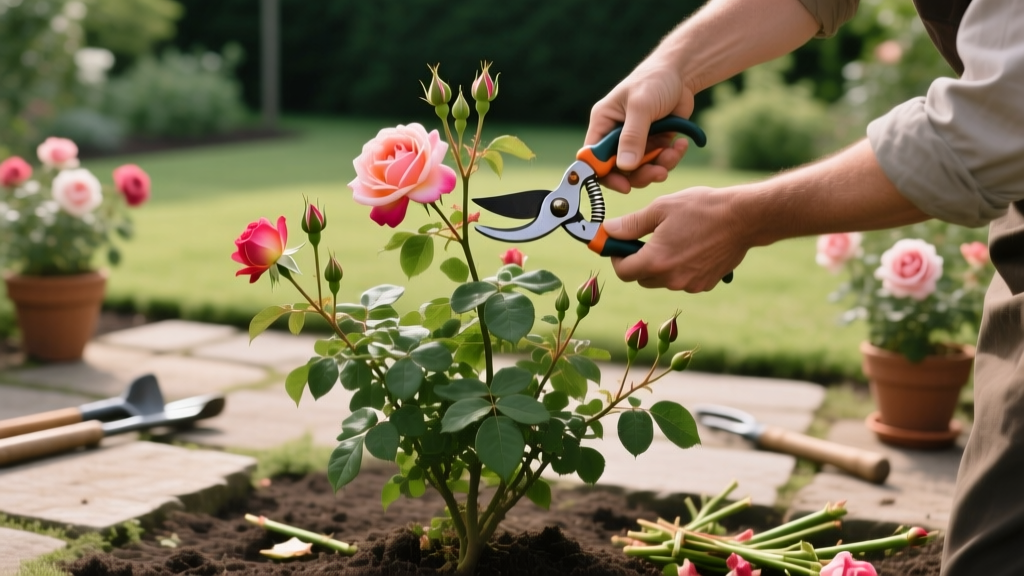
2026 Photo Guide: Hybrid Tea vs Floribunda Rose Pruning
Anna KowalskiPublished
The Intersection of Horticulture and Photography in 2026
As we enter the 2026 gardening season, the practice of garden documentation has evolved from simple journaling to a sophisticated blend of horticultural science and visual storytelling. For rose enthusiasts, understanding the distinct needs of Hybrid Tea and Floribunda roses is only half the battle; the other half is meticulously documenting their growth, pruning, and feeding cycles. By combining precise rose care techniques with modern garden photography, you can create a comprehensive visual database that tracks plant health, optimizes bloom production, and captures the fleeting beauty of your garden. This guide will walk you through the specific pruning and feeding requirements for Hybrid Teas and Floribundas, while providing actionable photography tips to document every stage of their 2026 growth cycle.
Understanding Your Subjects: Hybrid Tea vs. Floribunda
Before lifting your pruning shears or your camera, it is crucial to understand the architectural and botanical differences between these two popular rose classes. Hybrid Teas are prized for their long, sturdy stems and single, elegantly shaped blooms, making them the classic choice for cut flowers. Floribundas, on the other hand, produce abundant clusters of smaller blooms on shorter stems, offering a continuous, vibrant landscape display. Documenting these differences requires different photographic approaches and horticultural strategies.
| Feature | Hybrid Tea Roses | Floribunda Roses |
|---|---|---|
| Bloom Habit | Single blooms on long stems | Clusters of blooms on shorter stems |
| Pruning Goal | Open vase shape, 3-5 main canes | Moderate hedge shape, 5-7 main canes |
| Feeding Need | Heavy feeders, require consistent NPK | Moderate feeders, benefit from slow-release |
| Photo Focus | Macro shots of bud eyes, bloom form | Wide-angle cluster shots, landscape context |
The Art and Science of Pruning Documentation
Pruning is the most critical maintenance task for roses in late winter and early spring. According to the Royal Horticultural Society, proper pruning encourages vigorous new growth and prevents disease by improving air circulation. Documenting this process not only helps you remember which canes you removed but also allows you to analyze the plant's structure year over year.
Hybrid Tea Pruning: The Open Vase Technique
Hybrid Teas require a more severe pruning approach to produce those iconic, exhibition-quality blooms. Your goal is to create an open, vase-like structure that allows sunlight to penetrate the center of the plant. Begin by removing all dead, diseased, or damaged wood. Next, identify 3 to 5 healthy, outward-facing canes that form a wide angle. Remove any canes that cross through the center or grow inward. When making your cuts, always prune at a 45-degree angle, exactly 1/4 inch above an outward-facing bud eye. This prevents water from pooling on the cut surface, which can lead to dieback.
Floribunda Pruning: Shaping for Continuous Clusters
Floribundas are less demanding and require a more moderate pruning approach. Because they bloom in clusters, you want to maintain a slightly denser, hedge-like structure. Select 5 to 7 healthy canes and remove the rest. You do not need to prune Floribundas as severely as Hybrid Teas; cutting them back by about one-third to one-half of their overall height is usually sufficient. Remove thin, spindly growth (anything thinner than a pencil) as it will not support the weight of the heavy bloom clusters.
Photographic Techniques for Pruning Cuts
To properly document your pruning work, you need to capture the precision of your cuts. This is where macro photography becomes invaluable. Using a dedicated macro lens, such as a 90mm or 100mm f/2.8, allows you to get incredibly close to the cane without casting a shadow over your subject.
- Lighting: Late winter and early spring days are often overcast. This soft, diffused light is actually ideal for macro photography, as it eliminates harsh shadows and highlights the texture of the rose bark and the precise angle of the pruning cut.
- Camera Settings: Switch to Aperture Priority mode and set your aperture to f/8 or f/11. While f/2.8 provides beautiful background blur (bokeh) for artistic bloom shots, documenting pruning cuts requires a deeper depth of field to ensure both the bud eye and the slanted cut surface are in sharp focus.
- Composition: Frame the shot so the outward-facing bud eye is positioned on the left or right third of the frame, using the rule of thirds. This creates a dynamic image that clearly communicates the direction the new growth will take.
Feeding Regimens and Soil Documentation
Roses are notoriously heavy feeders, and establishing a consistent fertilization schedule is vital for a successful 2026 season. Documenting your feeding regimen helps you track how different nutrient ratios affect bloom size, foliage color, and disease resistance.
Spring Feeding and Visual Tracking
As soon as your pruning is complete and the first signs of new foliage appear, it is time to apply your first round of fertilizer. For both Hybrid Teas and Floribundas, an organic, granular fertilizer like Espoma Rose-tone (4-3-2 NPK) is an excellent choice for the 2026 season. The slightly higher nitrogen content promotes strong vegetative growth, while the added calcium and magnesium support robust cell wall development, making the plants more resilient to pests.
Apply 1/2 cup of Rose-tone per plant, sprinkling it evenly in a ring around the drip line (the outer edge of the canopy). Gently scratch it into the top inch of soil and water thoroughly. This is a prime opportunity for soil photography. Use a wide-angle lens or your smartphone's primary camera to capture the 'before and after' of the soil top-dressing. Over the next two weeks, take weekly photos of the emerging foliage. You are looking for a transition from pale, reddish-green new growth to a deep, glossy emerald green, which visually confirms that the plant is successfully uptake the nitrogen.
Pest, Disease, and Bloom Tracking via Macro Photography
Even with meticulous pruning and feeding, roses are susceptible to pests and fungal diseases like black spot and powdery mildew. The American Rose Society emphasizes that early detection is the key to managing rose diseases without resorting to heavy chemical interventions. Your camera is your best diagnostic tool.
Make it a habit to walk through your rose garden every three days with your macro lens. Inspect the undersides of the leaves, where aphids and spider mites often congregate. By documenting the early stages of an infestation or the first appearance of black spot lesions, you can create a visual timeline of the disease's progression. If you notice the telltale fringed black spots on the lower leaves of your Hybrid Teas, you can immediately apply a targeted organic fungicide and photograph the treated area to monitor its efficacy.
Capturing the Bloom Cycle
Once your feeding and pruning efforts pay off, the reward is the bloom cycle. Floribundas offer a unique photographic opportunity: the time-lapse. Because they bloom in dense clusters, setting up a camera on a sturdy tripod to capture a time-lapse of a Floribunda cluster opening over 48 hours provides a stunning visual record of your garden's vitality. Hybrid Teas, with their slow, spiraling bloom opening, are best captured using focus-stacking techniques, where multiple images taken at different focal distances are merged in post-processing to create a single, edge-to-edge sharp image of the intricate petal structure.
Building Your 2026 Rose Photography Journal
To make the most of your documentation, organize your images into a dedicated digital garden journal. Utilize cloud-based platforms or specialized gardening apps that allow you to tag photos with metadata, including the date, weather conditions, fertilizer applied, and pruning notes. By maintaining this rigorous visual and horticultural record throughout 2026, you will not only improve your rose care techniques for the following year but also build a beautiful, comprehensive archive of your garden's evolution. Whether you are growing towering Hybrid Teas for the vase or vibrant Floribundas for the landscape, the lens is just as important as the pruning shears in achieving rose perfection.
