
Landscaping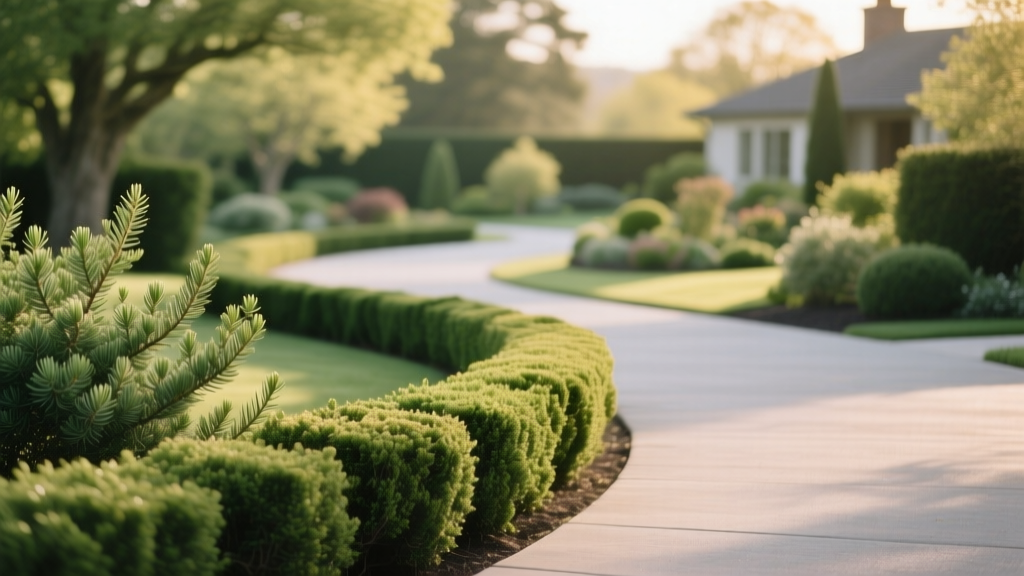
2026 Guide To Photographing Juniper Driveway Borders
Anna KowalskiPublished
The Art of Documenting Evergreen Hardscape Borders
In the realm of modern landscape photography, the intersection of hardscaping and softscaping offers some of the most compelling visual narratives. Driveway borders planted with low-growing junipers, such as Juniperus horizontalis 'Blue Rug' or 'Bar Harbor', are exceptionally popular in 2026 for their drought tolerance, erosion control, and year-round curb appeal. However, capturing the intricate texture of creeping juniper against the rigid geometry of a driveway requires a specialized approach to garden documentation. Whether you are building a professional landscaping portfolio, tracking the maturity of your own property, or contributing to a horticultural archive, understanding how to photograph these specific evergreen borders is essential.
Unlike towering trees or vibrant floral beds, low-growing junipers present a unique photographic challenge. They hug the ground, often cascading over concrete pavers or asphalt edges, and their scale-like needles possess a waxy cuticle that can cause severe glare under direct sunlight. This comprehensive 2026 guide will walk you through the gear, lighting techniques, and seasonal strategies required to beautifully document your juniper driveway borders.
Overcoming the Waxy Cuticle: Lighting and Polarization
The most common mistake garden photographers make when shooting junipers is dealing with specular highlights. The waxy coating on juniper needles, which helps the plant retain moisture during dry spells, acts like a mirror under harsh midday sun. To document the true silver-blue or deep green hues of the foliage, you must control the reflections.
In 2026, the standard solution remains the Circular Polarizer (CPL) filter, but modern multi-coated filters designed for high-resolution mirrorless sensors offer unprecedented clarity. By rotating the CPL, you can strip away the glare from the waxy needles, revealing the rich, saturated colors beneath. Furthermore, driveways—especially those made of stamped concrete or wet pavers—reflect a significant amount of ambient light. A polarizer will simultaneously deepen the contrast of the hardscape, making the low-growing juniper pop visually. For the best results, shoot during the golden hour or on bright overcast days, which provide soft, directional light that accentuates the creeping texture of the branches without blowing out the highlights.
2026 Camera Gear for Low-Angle Garden Macro
Because creeping junipers rarely exceed six to twelve inches in height, your camera perspective must match the plant's growth habit. Shooting from a standing position will flatten the border, making it look like a vague smudge of green against the driveway. You need to get your lens inches from the ground.
Modern 2026 mirrorless cameras with fully articulating screens and high-resolution electronic viewfinders are invaluable here. Cameras featuring AI-powered subject recognition can now lock onto the intricate fractal patterns of evergreen foliage, ensuring tack-sharp focus even in challenging wind conditions. Pair your camera body with a 90mm or 100mm macro lens. This focal length allows you to capture intimate, abstract details of the juniper's overlapping scales while maintaining a comfortable working distance from the ground. Additionally, a sturdy, low-profile tripod or a specialized ground-level beanbag rig is mandatory. When shooting at f/8 to ensure sufficient depth of field across the cascading branches, your shutter speed will often drop, making stabilization critical.
Composition: Leading Lines and Hardscape Contrast
A driveway border is inherently linear. Use the edge of the driveway as a leading line to draw the viewer's eye through the frame. Position yourself at the end of the driveway or at a gentle curve, placing the camera low to the ground so the juniper border dominates the foreground while the driveway stretches into the background.
Pay close attention to the boundary where the organic meets the inorganic. The soft, feathery overflow of a 'Blue Rug' juniper spilling slightly over a rigid steel edging or concrete curb creates a powerful textural contrast. In 2026, landscape architects heavily emphasize these permeable, soft edges for environmental benefits. According to the EPA Green Infrastructure guidelines, vegetated borders play a crucial role in intercepting and filtering stormwater runoff from impervious surfaces like driveways. Documenting this functional overflow not only creates a beautiful image but also tells a story of sustainable landscaping.
Seasonal Documentation Strategy
Evergreens are not static; they shift in color and density throughout the year. A complete documentation project should capture the juniper border across all four seasons. According to the University of Minnesota Extension, many low-growing junipers exhibit a natural winter bronzing or purpling, a physiological response to cold and light that should be documented rather than corrected in post-processing. For accurate botanical cataloging, always cross-reference your visual data with established taxonomic profiles, such as those provided by the Royal Horticultural Society (RHS), to ensure your metadata accurately reflects seasonal cultivar traits.
Below is a structured seasonal shooting schedule to help you plan your documentation sessions:
| Season | Foliage Color Profile | Lighting Strategy | Recommended Lens & Settings |
|---|---|---|---|
| Spring | Vibrant green/blue new growth tips | Soft overcast or early morning dew | 100mm Macro, f/5.6, ISO 200 |
| Summer | Mature silver-blue, high glare risk | Cross-polarization or deep open shade | 24-70mm f/2.8, f/8, ISO 100 |
| Autumn | Transitioning hues, warm contrast | Late afternoon directional golden sun | 35mm Prime, f/4, ISO 100 |
| Winter | Purple/bronze tones, snow contrast | Bright overcast (snowy days) | 16-35mm Wide Angle, f/11, ISO 100 |
Long-Term Time-Lapse and Growth Tracking
Low-growing junipers are relatively slow growers, typically spreading only a few inches per year. To truly document the establishment of a driveway border, consider setting up a long-term time-lapse project. In 2026, weather-sealed outdoor trail cameras with 4K macro capabilities and integrated solar panels make this easier than ever.
Mount a camera on a fixed post or stake at the edge of the driveway, ensuring it is angled down at a 45-degree perspective to capture the creeping edge. Set the intervalometer to capture one image per day at solar noon. Over three to five years, this will yield a mesmerizing video showing the juniper slowly knitting together, suppressing weeds, and gracefully creeping toward the asphalt. This type of documentation is highly sought after by landscape design firms to prove the long-term viability and maintenance requirements of their planting plans.
Post-Processing and AI Masking in 2026
When processing your RAW files, the goal is to enhance the natural textures without making the foliage look artificial. The 2026 generation of AI-powered masking in software like Adobe Lightroom and Capture One allows you to isolate the juniper foliage from the driveway hardscape with a single click. Once masked, you can selectively adjust the white balance of the foliage. For example, 'Blue Rug' junipers often photograph slightly greener than they appear to the naked eye due to ambient light bouncing off nearby lawns. By isolating the mask, you can gently shift the hue toward the cool blue spectrum and increase the texture slider to emphasize the scale-like needles.
Conversely, you can warm up the concrete or pavers of the driveway to create a complementary color grade (blue/green foliage against warm grey/tan hardscape). Always embed detailed metadata into your final JPEGs and TIFFs, including the specific cultivar name, planting date, soil type, and GPS coordinates. This transforms your beautiful garden photography into a robust, scientifically valuable horticultural archive, ensuring your driveway border documentation serves both aesthetic and educational purposes for years to come.

