Gardening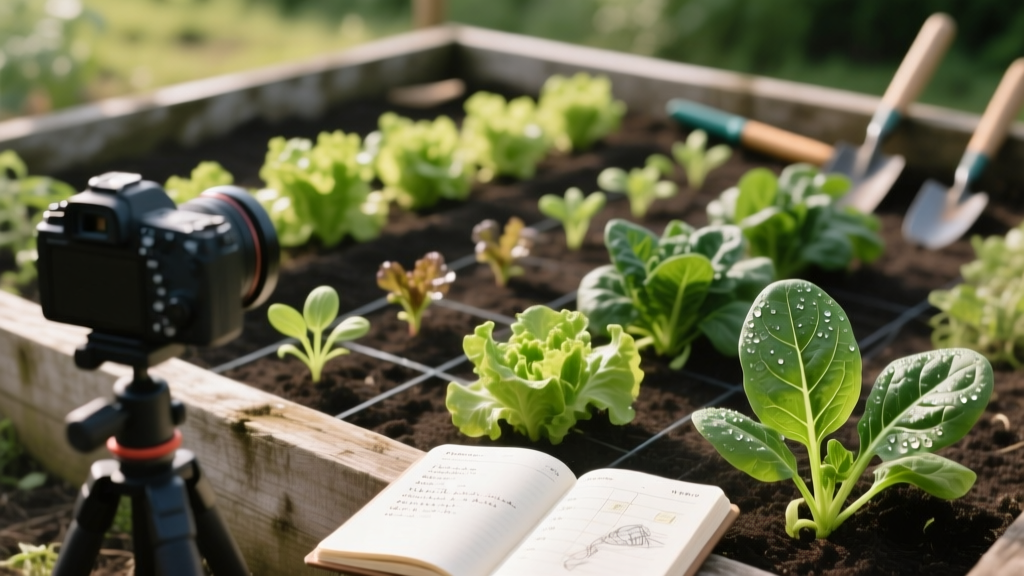
2026 Guide to Photographing Succession Planted Greens
David ParkPublished
The Intersection of Horticulture and Photography in 2026
Gardening is an inherently ephemeral art, but when you combine the continuous cycle of succession planting with modern garden photography, you create a living, breathing archive of your landscape. Succession planting leafy greens—specifically lettuce, spinach, and kale—ensures a non-stop harvest from early spring through late autumn. However, it also provides a rolling canvas for visual documentation. In 2026, the integration of high-resolution smartphone macro sensors, AI-driven garden journaling apps, and affordable weather-sealed time-lapse cameras has made it easier than ever to track the micro-stages of plant growth. Whether you are a horticulture enthusiast tracking germination rates or a garden photographer looking for vibrant textural subjects, documenting your succession-planted greens offers immense creative and scientific rewards.
The Philosophy of Succession Documentation
Succession planting involves sowing seeds at staggered intervals—typically every 14 to 21 days—to avoid a single massive harvest and instead enjoy a continuous supply of tender young leaves. From a documentation standpoint, this creates a staggered visual timeline. At any given moment in your garden, you will have seeds germinating, cotyledons emerging, true leaves expanding, and mature plants ready for harvest. According to Penn State Extension, maintaining a strict sowing schedule is vital for continuous yields, but keeping a photographic log of these intervals helps gardeners analyze how shifting microclimates and seasonal light changes affect growth rates. By photographing each succession block, you can visually identify which planting dates yield the most photogenic and robust crops.
Essential Camera Gear for Garden Documentation
The gear landscape in 2026 is heavily skewed toward computational photography and rugged portability. You no longer need a bulky DSLR setup to capture the intricate veins of a Lacinato kale leaf. Here is what you need for a modern garden documentation kit:
- Smartphone with Dedicated Macro Sensors: The latest flagship phones (such as the iPhone 17 Pro and Samsung Galaxy S26 Ultra) feature dedicated 5x to 10x optical macro capabilities, allowing you to capture dew drops on spinach leaves without casting a shadow over your subject.
- Weather-Sealed Mirrorless Cameras: For dedicated time-lapse and high-resolution wide shots, weather-sealed bodies like the OM System OM-1 series remain the gold standard for gardeners who shoot in damp morning conditions.
- Time-Lapse Intervalometers: Standalone time-lapse cameras, like the Brinno TLC200 Pro series, are perfect for setting up in a raised bed to capture the 21-day germination-to-harvest cycle without draining your primary camera battery.
- Portable LED Grow Panels: Small, adjustable-color-temperature LED panels are invaluable for lighting the understory of dense kale canopies during overcast days.
Photographing the Big Three: Lettuce, Spinach, and Kale
Each leafy green presents unique photographic challenges and opportunities. Understanding the botanical structure of these plants will drastically improve your garden portfolio.
Lettuce: Capturing Translucence and Texture
Lettuce, particularly loose-leaf and butterhead varieties, is all about translucence and delicate texture. The best time to photograph lettuce is during the 'golden hour' just after sunrise, when the low-angle light passes through the leaves, highlighting the intricate cellular structure and vein networks. When documenting your succession blocks, focus on the contrast between the ruffled edges of a mature 'Salad Bowl' lettuce and the smooth, rounded cotyledons of a newly sprouted succession row. According to the University of Minnesota Extension, lettuce thrives in cooler temperatures, meaning your best photographic lighting will often coincide with crisp, clear spring and autumn mornings. Use a shallow depth of field (f/2.8 or f/4) to isolate the tender inner rosette from the older, soil-splashed outer leaves.
Spinach: Managing Deep Greens and Shadows
Spinach leaves are rich in chlorophyll, resulting in a deep, dark green that can easily turn into a muddy black blob in digital photographs if not lit correctly. Avoid shooting spinach in harsh midday sun, as the high contrast will blow out the highlights on the waxy leaf surface while crushing the shadows. Overcast days act as a natural softbox, providing even, diffused light that renders the deep emerald tones accurately. When documenting the succession cycle, pay special attention to the 'bolting' phase. As spinach sends up its central flower stalk in response to lengthening days, the architectural shift from a low-lying rosette to a towering, seeded spire provides a fascinating macro subject for documenting the plant's complete life cycle.
Kale: Architectural Structure and Color Contrast
Kale is the structural heavyweight of the leafy greens world. Varieties like 'Red Russian' offer stunning purple stems and serrated edges, while 'Lacinato' (Dinosaur kale) provides deep, blistered, blue-green textures. The Royal Horticultural Society (RHS) notes that kale's flavor and texture actually improve after a light frost, which also adds a layer of visual magic to your photography. Frost-kissed kale leaves, covered in intricate ice crystal patterns, are a pinnacle of winter garden documentation. Use a clip-on macro lens on your smartphone to capture the geometric ice formations on the blistered surface of Lacinato kale, ensuring your focus is locked precisely on the leaf edge.
Setting Up a Time-Lapse for Succession Intervals
To truly capture the magic of succession planting, a time-lapse is essential. Because leafy greens grow rapidly, a time-lapse spanning 14 to 21 days can show the mesmerizing 'breathing' movement of leaves as they track the sun (heliotropism) and expand to fill the garden bed.
Set your camera on a sturdy ground-level tripod or a specialized garden stake mount. Position it at a 45-degree angle to the soil surface to capture both the emergence from the soil and the upward reach of the leaves. Set your intervalometer to capture one frame every 15 minutes during daylight hours. Over a 21-day succession cycle, this will yield roughly 1,300 frames, which compiles into a smooth, 45-second video at 30 frames per second. Ensure your lens is manually focused on the seed row, and use a fixed white balance to prevent the colors from shifting wildly as clouds pass overhead.
Data Table: Succession Planting & Photography Schedule
Use this structured schedule to align your gardening tasks with your photographic goals. This table assumes a standard 14-day succession interval for lettuce and spinach, and a 21-day interval for kale.
| Growth Stage | Days from Sowing | Photographic Focus | Camera Settings / Technique |
|---|---|---|---|
| Sowing & Soil Prep | Day 0 | Seed texture, soil tilth, trench depth | Macro lens, f/8 for depth of field, side-lighting |
| Germination | Day 5-7 | Cotyledons breaking the soil crust | Time-lapse (15-min intervals), low-angle perspective |
| True Leaves Emergence | Day 14 | First true leaves, varietal color identification | Overcast lighting, f/4, focus on leaf veins |
| Canopy Closure | Day 21-28 | Overlapping leaves, dense textures, dew drops | Golden hour backlighting, shallow depth of field |
| Mature Harvest | Day 35-45 | Harvest flat-lays, basket compositions, scale | Diffused overhead light, 50mm equivalent lens |
| Bolting (Spinach/Lettuce) | Day 50+ | Flower stalks, pollinator interactions, seed heads | Fast shutter speed (1/500s) to freeze insects |
Journaling and Metadata: The Digital Archive
In 2026, a photograph is only as valuable as the data attached to it. Modern garden documentation relies heavily on metadata and AI-assisted journaling. When you photograph your succession blocks, ensure your camera or smartphone is logging GPS coordinates and ambient temperature data via EXIF tags.
Utilize advanced garden journaling applications that allow you to tag photos with specific seed varieties, soil pH readings, and compost application rates. Many 2026 gardening apps feature AI image recognition that can analyze your weekly photos to detect early signs of pest pressure, such as the tiny 'shot-hole' damage caused by flea beetles on young spinach leaves, or the subtle powdery mildew that can afflict late-season kale. By cross-referencing your photographic timeline with your harvest weights, you can visually determine which succession intervals produced the highest quality, most visually appealing crops, allowing you to refine your planting calendar for the following year.
Conclusion
Documenting the succession planting of lettuce, spinach, and kale transforms a routine gardening chore into a captivating visual journey. By leveraging the advanced macro capabilities of modern smartphones, utilizing time-lapse technology to capture the rapid growth of leafy greens, and maintaining a rigorous metadata journal, you create a comprehensive archive of your garden's productivity. Whether you are sharing your frost-kissed kale macro shots on social media or analyzing your germination time-lapses to improve next season's yields, the fusion of photography and horticulture ensures that the fleeting beauty of your garden is preserved in stunning detail.
