Lawn Care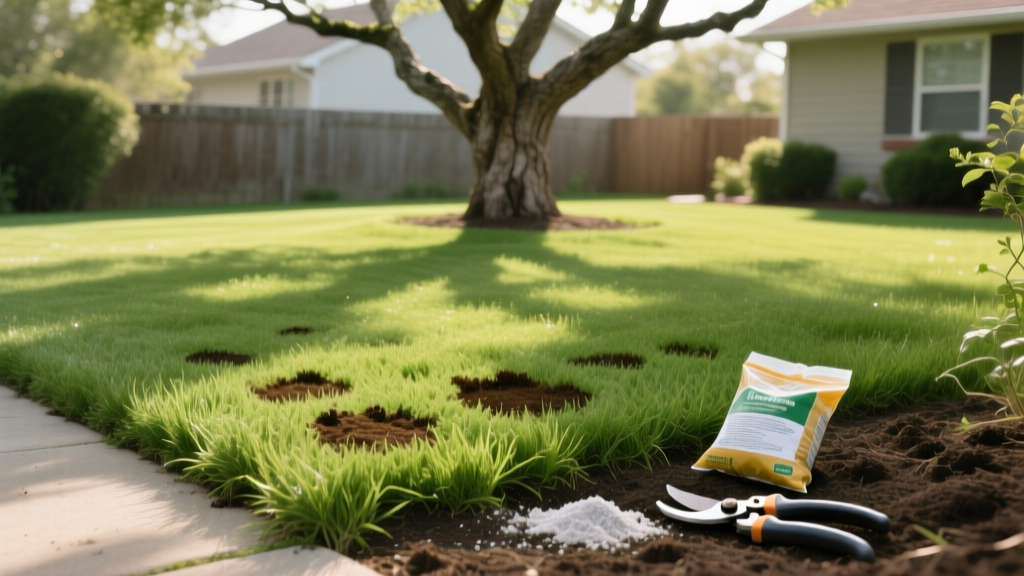
2026 Dog Urine Spot Repair: Gypsum, Reseed & Pruning
Mike RodriguezPublished
The 2026 Approach to Dog Urine Spot Repair
Dog urine spots are one of the most frustrating challenges for homeowners striving to maintain a pristine lawn. The high concentration of urea, nitrogen, and soluble salts in canine urine essentially burns the turfgrass, leaving behind unsightly brown rings surrounded by a halo of dark green, over-fertilized grass. However, in 2026, turf management professionals recognize that simply throwing grass seed on a dead spot is rarely enough. A holistic approach is required—one that addresses soil chemistry, utilizes targeted reseeding, and incorporates strategic landscape pruning to ensure the new grass receives adequate sunlight.
Many dogs develop a habit of using specific "marker" trees, shrubs, or garden ornaments as their preferred bathroom spots. These vertical landscape features often cast heavy shade, which weakens the underlying turf and makes it highly susceptible to urine burn. When you attempt to reseed these shaded, salt-laden areas without addressing the overhead canopy, the new seedlings inevitably fail. This comprehensive guide explores the synergy between soil amendment with gypsum, modern reseeding techniques, and the crucial pruning methods and timing necessary to restore your lawn in 2026.
Understanding the Soil Chemistry: Why Gypsum?
Before you can successfully reseed a dog urine spot, you must neutralize the soil environment. Dog urine deposits massive amounts of sodium and nitrogen into the soil profile. While the nitrogen causes the initial burn, the sodium is the long-term enemy of turfgrass health. Sodium destroys soil structure by causing clay particles to disperse, leading to severe compaction, poor drainage, and a crusted surface that repels water and suffocates roots.
According to turfgrass researchers at the University of Minnesota Turfgrass Science program, flushing the area with water is the first step, but it does not remove the sodium bound to soil particles. This is where gypsum (calcium sulfate) becomes essential. When applied to the damaged area, the calcium in the gypsum displaces the sodium on the soil's cation exchange sites. The displaced sodium then forms sodium sulfate, which is highly soluble and can be easily leached deep into the soil profile and away from the root zone with thorough watering. As of 2026, pelletized gypsum remains the most user-friendly and effective amendment for localized spot repair, costing approximately $18 to $25 per 40-pound bag at major garden centers.
Step-by-Step Gypsum Application and Reseeding Protocol
To effectively repair a dog urine spot, follow this precise 2026 protocol:
- Flush the Area: Immediately after noticing a fresh spot, or before beginning repairs on an old one, water the area deeply with at least 2 to 3 gallons of water to dilute the urea and begin leaching salts.
- Remove Dead Turf: Use a thatch rake or a hand cultivator to aggressively scratch the surface and remove all dead grass, thatch, and crusted soil. You need to expose bare, loose dirt for seed-to-soil contact.
- Apply Pelletized Gypsum: Broadcast pelletized gypsum directly over the bare spot at a rate of 2 cups per square foot of damaged area. Rake the gypsum lightly into the top inch of the soil.
- Water to Activate: Water the gypsum thoroughly. This initiates the chemical reaction that displaces the sodium. Allow the soil to drain and dry slightly over the next 24 hours.
- Reseed with Salt-Tolerant Blends: Choose a 2026-certified seed blend high in salt-tolerant perennial ryegrass or fine fescues. Avoid Kentucky bluegrass for these specific spots, as it is highly sensitive to salt and nitrogen burns.
- Topdress and Protect: Cover the seed with a thin layer (1/8 inch) of peat moss or a specialized seed accelerator mulch to retain moisture and protect the seeds from being eaten by birds or washed away.
The Pruning Perspective: Solving the "Marker" Shade Problem
Here is where many lawn care routines fail. If your dog repeatedly urinates on the base of a Japanese maple, an arborvitae, or a large oak tree, the grass in that spot is fighting a two-front war: chemical burn from the urine and starvation from lack of sunlight. To ensure your newly seeded, gypsum-treated spots actually thrive, you must apply proper pruning methods to the surrounding landscape. By modifying the canopy, you allow dappled sunlight to reach the turfgrass, promoting photosynthesis and robust root development.
Pruning Methods for Lawn Markers
When pruning trees and shrubs that serve as dog markers, the goal is to elevate the canopy and increase light penetration without harming the plant's structural integrity. The Arbor Day Foundation recommends specific techniques that align perfectly with turfgrass restoration:
- Crown Raising: This involves removing the lower branches of a tree to elevate the canopy. By raising the crown to a height of 6 to 8 feet, you not only allow morning and late-afternoon sunlight to hit the reseeded grass below, but you also prevent your dog's urine from splashing onto the lower foliage and bark of the tree, which can cause severe damage to the tree's cambium layer.
- Crown Thinning: For trees with dense canopies that cast deep, heavy shade, selective thinning is required. Remove 15% to 20% of the inner, crossing, or weak branches. This creates a "dappled" light effect on the lawn below, which is the ideal light condition for growing fine fescues and ryegrass in previously shaded dog spots.
- Shrub Selective Pruning: If your dog marks dense shrubs like junipers or yews, avoid using hedge shears. Shearing creates a dense outer shell of needles that blocks all light from reaching the soil. Instead, use bypass pruners to make selective heading cuts deep inside the shrub. This opens up the plant's architecture, allowing light to penetrate to the base and the lawn beneath.
The 3-Cut Method for Safe Branch Removal
When raising the crown of a marker tree by removing branches larger than 2 inches in diameter, always use the 3-cut method to prevent the heavy branch from tearing the bark down the trunk, which would invite disease and ruin the tree.
- The Undercut: Make a small cut on the underside of the branch, about 12 inches from the trunk, cutting one-third of the way through.
- The Top Cut: Move an inch or two further out on the branch and cut all the way through from the top. The branch will fall cleanly without tearing the bark.
- The Final Collar Cut: Remove the remaining stub by cutting just outside the "branch collar" (the swollen area where the branch meets the trunk). Never cut flush against the trunk, as this damages the trunk's natural defense zone.
Timing Your Pruning and Reseeding
Timing is everything when coordinating landscape pruning with lawn reseeding. In 2026, the recommended schedule for cool-season turfgrass repair and tree maintenance is as follows:
- Deciduous Trees: Perform crown raising and thinning during the dormant season (late February to early March). Pruning while the tree is dormant prevents the spread of diseases and allows the tree to heal rapidly once spring growth begins. This perfectly prepares the lawn area for early spring reseeding.
- Conifers and Evergreens: Prune pines, spruces, and arborvitae in late spring or early summer when the new "candles" (growth tips) are expanding. This timing prevents excessive sap bleeding and keeps the shrub healthy while opening up the base for summer lawn maintenance.
- Spring-Flowering Shrubs: If your dog marks lilacs or forsythias, wait to prune until immediately after they finish blooming in late spring. Pruning them in winter would remove the flower buds.
2026 Product and Application Matrix
The following table outlines the recommended products and application rates for repairing dog spots based on the level of shade and the pruning interventions you have performed.
| Spot Condition | Pruning Action Required | Gypsum Rate | 2026 Seed Recommendation | Watering Schedule |
|---|---|---|---|---|
| Full Sun / No Trees | None | 2 cups / sq ft | Salt-Tolerant Perennial Ryegrass | 3x daily for 10 mins (first 14 days) |
| Partial Shade / Low Branches | Crown Raise to 6 ft | 2 cups / sq ft | Fine Fescue & Ryegrass Blend | 2x daily for 15 mins (first 14 days) |
| Deep Shade / Dense Canopy | Crown Thin (20% removal) | 3 cups / sq ft | Creeping Red Fescue / Shade Mix | 1x daily for 20 mins (keep constantly moist) |
Long-Term Lawn and Landscape Harmony
Repairing dog urine spots is not a one-time event; it is an ongoing dialogue between your pet's habits, your soil's chemistry, and your landscape's architecture. By integrating gypsum applications to neutralize toxic sodium buildup, selecting modern, resilient seed varieties, and applying strategic pruning methods to eliminate suffocating shade, you create an environment where turfgrass can successfully compete and recover. Remember to keep a bag of pelletized gypsum and a pair of sharp bypass pruners in your garden shed this 2026 season. When you address both the soil below and the canopy above, those frustrating brown spots will quickly become a thing of the past, leaving you with a lush, healthy lawn and a beautifully structured landscape.